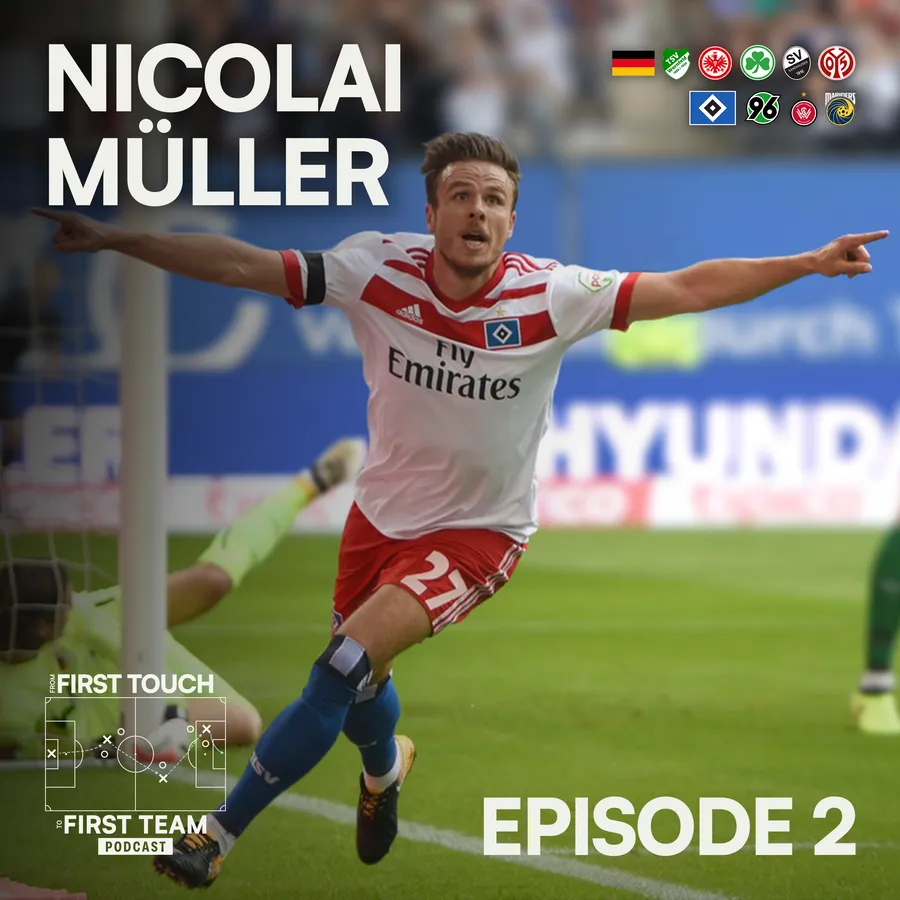
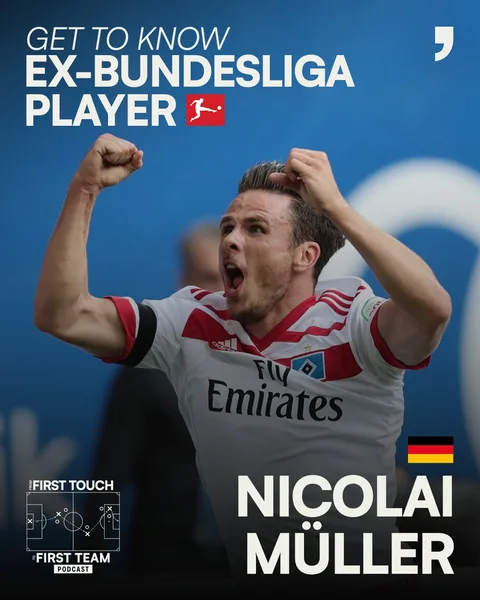
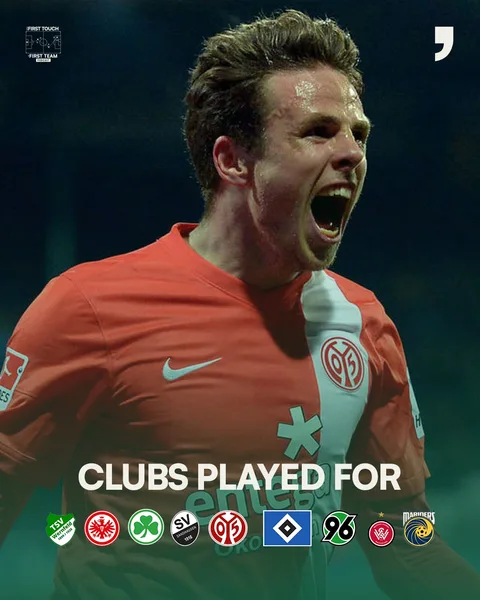
0:00 Jan Welcome to episode two. If you haven't already, please make sure you subscribe to our podcast and if after any of the next episodes you feel like you have an extra question or you need additional advice, feel free to reach out to us via our channels. For now, enjoy the episode with Nicolai Müller, a former Bundesliga professional that is now coaching in the A League Academy of McArthur Bulls And remember, enjoy your football journey. Nico, welcome to the podcast from First Touch to First Team. Great to have you on board. Before we dive into the first topic, maybe give everyone that doesn't know you yet. I think many people will know you like a 30 second rundown. Who is Nicolai Müller?
0:41 Nicolai Müller Yeah, first of all, thanks for having me. Yeah, who I am, a professional or retired professional player from Germany, played 200 games in the Bundesliga and now I'm coaching the Bulls Academy.
0:58 Jan and living in Sydney and today is one of these rare Sydney days where it's actually raining. I think we have been quite lucky with the weather. Yeah, we met in 2020, I believe, when I came to Australia and then you were signed for Wanderers. And I remember it was that weird COVID time and then we actually connected and did a few sessions on the pitch and tried to keep you on the ball. We will come back to that part later. I would like to start the topic first from the first touch. So we're going back in time. I hope you will still have broad memories of that time and when you were younger. What was your first memory connected to kicking a ball? Who got you into football and what was the start like for you in Germany?
1:43 Nicolai Müller Yeah, look, from my parents, I know they told me that I started pretty early with three, four years. When I saw a ball, I was always kicking the ball around, had like three, four balls at home. I was allowed to play inside our house at this stage. And yeah, where I go, where I went, I had a ball with me and I kicked on the street. We had a big wall next to our house and it was non-stop kicking the ball through.
2:16 Jan And was that always by yourself or did you already back then have like friends from around the corner that would join you or was it more like you go and I want to kick the ball?
2:24 Nicolai Müller First of all, just myself and my dad actually. When I'm growing a bit older, like six, seven, eight, then I live in a little small town. So we came around and we met at the soccer pitch to play together.
2:40 Jan You already said now that you are allowed to kick in the house. I know that your son is playing as well. Is he allowed to kick in the house or do you have to send him outside?
2:48 Nicolai Müller No, everything is allowed in our house with the ball. So same rules.
2:53 Jan Okay, same rules. And then are you getting him already to juggle the ball 150 times a day or how is that going for him?
2:59 Nicolai Müller Yeah, he's close to 100, but it's all up to him if he wants to it or not.
3:06 Jan Yeah, which I think is always a good approach. So no pressure from the dad.
3:11 Nicolai Müller Yeah, definitely.
3:12 Jan Yeah, so then let's go the next few years. What can you remember of like, playing for your first club, your first team? I imagine like football was like initially just fun.
3:23 Nicolai Müller Yeah, so I started with six with my first club. It was the city next to our small town. It was my first year. And then in the following year, I joined my hometown and my dad was my coach for the first year. I think it was called F-Jugend (U8-U9) at our stage,
3:44 Jan Yes.
3:45 Nicolai Müller maybe under eights or under sevens. Yeah, that's the way I started and I remember in my first season I scored a hundred goals straight away. So it was a good start.
3:58 Jan So what, you straight away played up top and you're like, okay, I'm going to score every single goal.
4:02 Nicolai Müller Yeah, we had actually a pretty strong team because my best friends, we played soccer, what I told you before, since we were five, six together. And then we were pretty strong. We had every position filled. I was like 10 striker, but we had also good defense, good goalkeeper. It was pretty enjoyable and we won the competition
4:22 Jan Yes.
4:23 Nicolai Müller actually.
4:23 Jan Nice, and then probably back then already, someone would have noticed you recognise you as like, this kid can can play, can score goals. What what happened after what was the next step?
4:33 Nicolai Müller So actually I had two seasons with my hometown. So the first one was 100 goals and then the next season I think was 99, was close to do it again. And then looked like some other parents who are involved in football, said, oh yeah, he has a big talent. And then together with my parents, they just thought, okay, let's give it a try. And we called first, I think, Nürnberg to come by to do a trial for one day. That doesn't work out. So they actually said, yeah, it's not good enough. Come next year again. standard answer, I would say.
5:19 Jan Yes.
5:19 Nicolai Müller But also like Nürnberg was like one and a half hours from my hometown and Frankfurt was like one hour. And so, and then I think it was two weeks later, we went to Frankfurt and did the same thing. The trial was Wednesday night. I remember pretty good. was not even on a grass pitch. It was on sand, like a tennis pitch, you know, and yeah, and trained with the boys. And the coach came after the session to me and said, look, we want to sign you up for next season. we... and make it possible with the long drive. Because of school think I was 12 years old, and 12, 11. So how we make this possible.
6:03 Jan Then yeah, mean, then you signed and then how did you guys make it possible? Like, was it mainly your parents that found a way to do it or?
6:10 Nicolai Müller Yeah, so my mom had own business, my dad was a normal worker and we started straight with four days training. So it was Monday, Tuesday night and Thursday, Friday night and then Saturday or Sunday the game. And Monday, Tuesday was my mom's turn and Thursday, Friday my dad's and on the weekend all together.
6:33 Jan Yeah, I mean, I guess like when a lot of Australians might be listening to this, they're like, one hour drive is nothing. But like if you think in Germany, people would say an hour drive is usually a big commitment just going to a training session. Like that's a fair bit of distance.
6:48 Nicolai Müller Yeah, definitely. Because in Germany, for the guys that don't know, we can drive a bit faster, so you can make more kilometres. But yeah, definitely. was a big commitment and late at home, you know. So I think 10pm we arrived back home and then the next day was school So it was a normal schedule.
7:10 Jan Yeah, I guess like what I sometimes pick up here in Australia is like, people talk a lot about the travel, but then in hindsight like many times dad say, yeah, I don't mind the travel because I actually get to spend time with my kid. Is that the discussion that you had like with your parents when you got older, you're like, well, like you actually spend so much time together traveling and then watching the training and going to games.
7:32 Nicolai Müller Yeah, like for my parents actually was never "oh" we have to drive. They enjoyed it and you have friends because other parents, they stayed there for two hours as well or even three with pre-activation and post-training. Yeah, yeah, we talked a lot actually, you know, because you're like one hour, one hour 10 in the car always together. When I was not sleeping, like when we talked
7:59 Jan this.
7:59 Nicolai Müller about everything.
8:01 Jan So not like these days where like the parents driving the kids are sitting in the back with the airpods in and just not talking to each other. Maybe that's something that the young listeners should think about that back then
8:10 Nicolai Müller you
8:11 Jan you had to talk. Otherwise there was nothing else to do in the car.
8:15 Nicolai Müller Yeah, exactly, at different time.
8:17 Jan What was your dad like when you like you were training, you were playing, did you guys discuss because you said he was initially your first coach. What was that like?
8:25 Nicolai Müller Yeah, he actually he gave me advice and he watched all the training session when he when he drove me so my mom she was sitting in the car or had some coffee with other parents and but my dad actually watched it the session he gave me feedback after every every training but it was actually more like helping or what I can do better not all you have to do this and this and this so was and not not not pressure at all.
8:53 Jan Yeah, which in the end probably the right way of approaching it. Would you say that's something you took off him to apply with your son?
9:00 Nicolai Müller Yeah, 100%. So there's pressure. think it doesn't help. Especially so my son is 12. The most important thing is for him to enjoy it, to go three nights to training and play on the weekend. And yeah, if he wants to, he gets a feedback, but yeah, if not, that's fine as well. So it's more about the fun and enjoyment.
9:23 Jan Yeah, and as you know, I'm like dealing with like these age groups of coaching as well. And sometimes I think back when I like when I was under 11s, under 12s, I have some vague memories and the training sessions definitely didn't look as they look these days. Is there like a comparison that you have when you think back about like, obviously it was like Bundesliga youth academy, but you compare like what you guys used to do in training to what you maybe see now your son doing a training?
9:48 Nicolai Müller That's a hard question because it's a long time ago. I
9:49 Jan Yeah.
9:51 Nicolai Müller actually can't remember. So definitely what we had, we had bigger space. But in the end, like, poah Yeah, we did a lot of game time, know, so and more passing. In Germany, it's a lot of passing. When
10:08 Jan Yes.
10:09 Nicolai Müller I'm watching my son's sessions or not even at my son's different clubs, there's not much passing. My daughter is playing as well, like on the lower level. And but there's no passing drills at all. And I need to say in Germany, there was a lot of passing, especially in the young age.
10:29 Jan Yeah, I would definitely agree. We've both been away from home now for over six years. So it's a harder to tell if that has changed. But the main thing I see as a difference or I wish was different was we never did things like ball mastery dribbling. I feel like back in the day, so was in Germany more like, yeah, you try to play with one, two, three touches and you set up to play, but you would not be encouraged to dribble as much. Let's go a little bit more forward then obviously. Under 11's, 12's at Frankfurt, then you're getting bit older. What does the next phase look like for you?
11:04 Nicolai Müller So it was, yeah, I was always playing, had good minutes. I was one of the smallest players in my team. And under 16s, yeah, to the next stage under 17s. So under 17s in Germany is the bigger age group. So there's more competitive and you play bigger teams in the competition. And yeah, Frankfurt basically said, yeah, that's not good enough. You're too small to, to make it to the under 17s. yeah. And that was like, man, a dream comes to a end. First of all, a couple of tears and disappointment, and think, yeah, that's it. And no professional career at all. yeah, the good part was, that the coach, who actually liked me, he gave Greuther Fürth a call. and the under 17s coach and yeah he said look come by and have a trial a training session with us and then yeah actually it works good out that he likes me as well and that he signed me in under 17s.
12:07 Jan Were they playing in the U17 Bundesliga as well or was that one level below?
12:11 Nicolai Müller I think at my stage I was still in the U17's Regionalliga.
12:16 Jan Yeah.
12:17 Nicolai Müller So the Bundesliga was in the U19's when I was in the U19's And now I think it's in the U17's as well.
12:24 Jan So in the end you still went to different club. yeah, Greuther Fürth is a smaller club than Frankfurt, obviously also what their first team is playing, but you were still playing at the same level against probably majority of the same quality players.
12:37 Nicolai Müller Yeah, exactly. it was basically the same level. Yeah, so was just a different club.
12:44 Jan And then is there any like memory for you where like, like you just said, a bit of tears, obviously a shock moment. I'm not going to be able to progress at Frankfurt. That was like, maybe felt like the closest way to becoming a professional. Did something change inside of you and to overcome the challenge of, yeah, now having to move to a different club and starting kind of new again.
13:05 Nicolai Müller Not actually, so I still stayed the same and tried to give my best because I was a hard worker and tried to give everything. yeah, the disappointment was maybe the most, but the good thing was that actually in Germany, it's a lot of clubs around or academies, so you have more options. for me it was clear. I don't give up now, so I want to try it. If maybe two or three other clubs would say no, then I need to accept it of course, but that wasn't the case.
13:40 Jan Yeah, because I feel like when you sometimes look at the careers of lot of players, for some of them, it went exactly the way for you that they might get cut somewhere and then they have to kind of find a new club and then actually going through that club, it gives them more opportunity in the long term, where I feel like here in Australia, it's players go the straight line. So let's say they stay in an A-League academy until under 18s and they never had to deal with, yeah, not getting retained. And then at the moment where they should go into senior football, they're actually getting released and then they don't know how to deal with it. Where you were a bit younger and you still had time in youth football to then still have these development years. Which I think every player has to sometimes in their career overcome these parts. And sometimes it's better if they come earlier. So you already know how to deal with it. Then maybe at the most important time, which probably for you then playing reserve grade in Greuther Fürth Back then I would assume that would have been considered semi-professional or was that lower than that?
14:40 Nicolai Müller No, no. It was like second team basically then in Greuther Fürth. So under 17s, 19s and then the second team. it's like semi-professional. So, but everyone is around like 18, 19 years old, you So you're under contract, but like you get a little bit of money because then other clubs can't grab you actually. So to be safe. the rest, it's like semi-professional.
15:07 Jan And then during that time, if we compare that, let's say, for example, Macarthur Bulls you coach now, was it similar that you had the second team, which is here the NPL team, you train with them, you play with them, and sometimes you got a chance to train with the first team.
15:20 Nicolai Müller Yeah, 100 % exactly the same. what I'm doing right now, so second team, I'm coaching them and yeah, in both ways. So if you perform good, you get invited to train in the A-League or like some scholarships, they're training with the A-League, pretty young, talented players. They're not in the squad on the weekend, then they're dropping down and playing to get some minutes because that's the most important thing. to get some minutes on the weekend. So in both ways, you know, so it was the same for me in Germany.
15:54 Jan So it's probably pretty good that you can really relate to the plays you're coaching now because you went through the same phase. Remind me how long did that phase go for you that you were playing just with Reserve Grade and had to build and train every single week to fight for that spot to maybe train up with the first team and then actually getting a chance.
16:12 Nicolai Müller Yeah, it's actually interesting because I felt it then in both ways. So first, like when I was part of the reserve grade, so and you try to work as hard as possible during the week. But then at my time, it was like the second Bundesliga pro dropped on the weekend and he has to play so you can
16:33 Jan Thanks.
16:34 Nicolai Müller You can train and work as hard as possible, but that's decisions what makes from the club or what's actually all right. But when I was the person who was dropping on the bench, that professional can tell I said to myself, that's not going to be like this. You know, I need to be this good that the coach think, have to, Mueller needs to play every week. doesn't matter who is dropping. So that was my, my goal for, for this first year. And then actually, I was just one year with the reserve grade and at this time I got the chance because of some injuries to actually be twice in the squad for the second Bundesliga at two games because I trained a couple of times up there. yeah, the coach brought me on for two games and the following year basically I signed my first professional contract to be fully part of the Bundesliga team.
17:27 Jan Yeah. Do you remember any of these moments where like the first time you kind of found out, I'm going to get a contract or the moment of the signature.
17:35 Nicolai Müller It looked like the first appearance. was a Friday night game and I was working for Audi at this stage and at 11am that was when they trained on the same day in the morning on the matchday, light session and then someone got injured and then the coach called me at work and said hey Nicolai you have to come to the training ground and you're going to the hotel with the boys. You are in the squad tonight, you know, and then like, okay, I'm ready. Yeah, coming. Give me 20 minutes and then I will be there. And so that
18:07 Jan Good.
18:11 Nicolai Müller was actually how it was then in the first place, you know, so.
18:15 Jan Did that go well with your boss at Audi? Was he like, yeah, yeah, you go and get your chance or?
18:20 Nicolai Müller Yeah, yeah, 100 percent, because there was a kind of agreement, you know, like even if I have to train with the pros, that I'd be free for working. So there was no problem. And he was actually happy that I got invited.
18:34 Jan Yeah, no, that's great. Before we go into that next chapter of professional football, when you think about your upbringing, your first start with football, your youth, is there something that you think back and would be like, if I could go back in time, I would do something different in terms of like how you structure your everyday life, in terms of training, in terms of approaching things.
18:54 Nicolai Müller Maybe I would go one more year earlier to live in Fürth. So the first year I went to Fürth, I travelled with the train, it was even longer and school was a bit left behind. But also, on the other hand, you have to leave your home. Your parents was quite hard as well. But also it was lot of travelling and not focused 100 % on football. When I moved then to Fürth, The year after, I just could train more even in the mornings and in the afternoon because I was there. Actually, I don't need to travel anymore.
19:32 Jan Yeah. And then last question around that part, is there like a person, a coach, family member, anyone that you think back is like, well, like they had a big part of why I managed to become a professional footballer.
19:44 Nicolai Müller It's just one answer, that's my parents.
19:47 Jan Yes.
19:48 Nicolai Müller To drive you four days a week or five with the game, like non-stop from August to June. Without them, it wouldn't be possible to be where I'm at now, to be a pro because it was just too far away. The academy is from my hometown, so it's just my parents.
20:10 Jan Yeah, I think that's a fair call. But let's go because like it's interesting to me as a coach as well. there like a specific coach during a certain age group that you remember that like maybe gave you one important advice or like that needed trust in the moment that you remember and feel like, well, that actually shaped me a little bit more or helped you.
20:28 Nicolai Müller Yeah, like under 19 said, Greuther Fürth the coach, he used the right words and he actually he made me believe that I'm very, very good player, you know, so, you know, like getting rejected or released at Frankfurt, you know, in the end, it was the best thing what could happen to go to Greuther Fürth to a smaller club to promote more players. But I would say I was never this top player in my team and I was an average player who could assist, could score and bring his performance. And in the under-19s, because then it goes also closer, who was making the next step to senior football. And the coach, yeah, he talked to me, he gave me advice, what I can do better and I'm actually was. than this player of his team, you know, so and to win games for him. And I believe to myself that I'm a very good player or I can be a very good player.
21:27 Jan Did you ever look up or follow up where he ended up with his coaching career?
21:31 Nicolai Müller yeah, we have been a couple of times he was assistant from Armin Veh think actually at Frankfurt as well and maybe Stuttgart. But I think the last time I spoke to him I saw him at Alex Meier's farewell game
21:47 Jan Yes.
21:47 Nicolai Müller when I was back in Germany he was an agent or he changed to agency now. But that was the last time I spoke to him like maybe four years ago,
21:57 Jan Yeah, cut.
21:57 Nicolai Müller four or six years. Yeah, full voice.
22:00 Jan Yeah, but I mean, like, I think every player needs at some stage in their career that one coach that makes them believe and gives them that reinforcement that, yeah, you're able to do it. So then, first pro contract Greuther Fürth Then afterwards, the move to Mainz. And I believe back then you played under Tuchel as well.
22:18 Nicolai Müller Yes.
22:20 Jan Like give us maybe a little bit more of like what are the main memories? Like what was the exciting part? Did that felt like a step up from Greuther Fürth Did something change inside of you or was there another challenge that came your way with that?
22:34 Nicolai Müller I like the challenge and yeah I'm first of all like what I need to add is like you think okay you signed a professional contract and you did it now yeah you are there but the first one and a half years and I found myself back to play reserves greater you know so and I had like like I said like two games in in as a reserve Grade And then the next one and a half years before I went on loan, I had five games, you know, and I was a fully part of the professional team. So it's, it's not say, okay, you signed a contract, you, you, you did it, you know, so that's like, actually, it's just started, you know, so to, make it happen. But it was also a good experience.
23:20 Jan Yeah, I think you made a very good point there. Probably that's me jumping ahead too far. I think that is the other part that Will Kennedy, who was the guest in the previous episode, used as well. It's like, I got my first pro contract, but now the next part starts at now I want to be in a starting 11 and I want to get my appearances. So then the next phase starts off like, okay, I've done the first step. And then as you said, now I have to actually play. not only 10 minutes coming off the bench, I actually want to be part of the squad every single time. I guess the question around that is, what was your way of always keeping yourself at like high standards and saying, okay, I need to work every single week, even though I have the contract, even maybe younger boys even getting dropped in between the first grade and the reserve grade.
24:05 Nicolai Müller Yeah, well it was a tough one and a half years actually and like even now to coming back where I'm working right now because I said before my boys going up and train but I also have the same example that like six maybe three four playing like every week with me they are part of the professional team so there is disappointment you know if you get the the call every Friday, you're not in the squad, you're playing with the NPL team or reserve grade. You're not happy because you want to be part of the professional team. What I learned or what I need to learn is you just work hard as possible from Monday to Friday or whatever the weeks look like and then in the end it's the coach's decision. We know in this business there's also a bit of luck You need to be at right moment at the right time, maybe some injuries. The coach says, okay, that's your game. That's what I learned and that's what I try to give to my boys right now as well, in both things. If it's a scholar or if you're not a scholar, work hard and then make it as hard as possible to not get dropped. work out after four or five weeks but also can like me as one and a half years you know so
25:23 Jan Yeah. And I guess then the more challenging part is as well, obviously, you knock on the door, for example, the A-League or then you back then like into the first grade. And even if you're just traveling with the team, it's a whole different experience. It's a whole different level. It's more professional, everything around that. But then if you would ask a player right now, that's maybe in a similar situation. It's like, would you rather have all of that, let's say, more professional fancy side, but you sit on the bench for 90 minutes or would you want to play 90 minutes this weekend? and actually develop your game. What do find with that? What did the players say or how do they approach that?
25:57 Nicolai Müller Yeah, first of all they always want to be in the squad and want to have this little chance to get on. The biggest difference from now to my time is we had just three subs, so the chance was even less to get on the pitch.
26:15 Jan smaller.
26:16 Nicolai Müller Or smaller, yeah, sorry. But now the chance is pretty high because in the end I think... like one player is just missing out if the coach uses all five subs. But yeah, like for me, game time is the most important thing. And I had a player, he was almost dropping every week with me now. So and he got actually better, better, better. And then yeah, he got the minutes now, the last two, three games in the A league and you could see the improvement, know, and it wouldn't be. happen if he was just on the bench like every week for 90 minutes. So definitely.
26:54 Jan Yeah, and I mean, it's great that you can give him that perspective as well. So I jumped the gun a little bit before, now we're talking a bit, okay, you were at Greuther Fürth, you were playing, and then how did it come about to then get you said you were going on loan
27:09 Nicolai Müller Yeah, I went on loan in the third division actually for six months and then I came back to Greuther Fürth after the six months. The club want me back to be a bigger part. And yeah, and then it took a while. think it was like the first 10, 12 weeks were not easy as well. I found myself back in the same role before I went on loan. Like I said, was one moment, a cup game, extra time. Actually, I think I yelled to the coach, bring me on. And then it was 2-2 and he brought me on for 15 minutes. Sometimes, in football, you need this luck and it's funny. I was there for the tap-in and from there on. I can say I was a different player because it gives you lot of confidence, but also I proved myself and the club, I can bring him on and he can score goals actually in the professional league. So that was the start actually.
28:16 Jan And then obviously from there you got a bit of trajectory, you got the confidence, you got maybe the trust from the coach a little bit more as well and then more game time.
28:24 Nicolai Müller More game time. I think I almost every game starting in the second Bundesliga. It maybe 20, 30 games actually. It was two seasons played for Greuther Fürth until Mainz came around the corner and wanted to sign me.
28:42 Jan And then another move, you move cities, move to Mainz Was that always easy for you to like, obviously at first it was like moving away from home to Fürth and from Fürth to Mainz How did you adjust with that?
28:53 Nicolai Müller It was pretty easy because it was my dream to play in 1st Bundesliga and Mainz was in 1st Bundesliga. When they offered me a contract and get me out of my contract at Fürth was for me clear. I wanted grab this opportunity and have a good conversation with Tuchel. So there was just one goal to go there.
29:19 Jan But then you had that part that you said, okay, the football part is the most important. I want to go over there. I want to get this opportunity. But was there something when you're back now where you're thinking, wow, I moved to a different city, obviously you your teammates, but then private life is as important as a player. How was that for you?
29:37 Nicolai Müller Yeah, at this stage I was already with my wife Jessica and she came from Greuther Fürth so I think for her it was a bit harder to leave, to Mainz But I said to her, look, that's my dream, I want to do it and she supported me and she went with me. So that was great and then if you come in a new city you have already someone around you, you have your daily basis the same. So was not a big thing. Maybe more for her, but She supported me from the start and she knew, if the opportunity comes, I will be the first one who grabs it.
30:12 Jan Yeah, that's great. then we don't want to go too much into detail into the professional career after you had obviously some amazing seasons, some very big moments. Maybe give us the top three moments of your professional career.
30:25 Nicolai Müller Top three moments? The second year in Mainz, under Tuchel, I think it was my breakthrough in the Bundesliga. I scored nine goals, eight assists, and in the end of the season, Jogi Löw called me. up to be part of the national team, to go with the team to America to have their two games. So I would say that would be one of my top picks, the best one to play for Germany, what I couldn't believe it. It was amazing. then the Bundesliga goal, I would say, was amazing. It was a special one against Borussia Dortmund at Mainz, first start for me in the Bundesliga. So that was very special. And then with my another move when I played for Hamburg the goal in the relegation Battle to stay up in the Bundesliga to score in extra time. That's the three moments I never forget.
31:25 Jan Yeah, if you wouldn't have said that one, I probably would brought it up because my dad is a big Hamburg supporter. So back then, obviously saved his next year watching Bundesliga. So he was quite happy with that. then, as you said, Mainz, Hamburg, first Bundesliga national team. Then the career went on. I think it stops at Frankfurt again, coming back to the club that... Yeah, released you initially in the youth environment. In these moments when that opportunity came across, did you ever think back about that time? Like, that coach at Frankfurt released me and now I'm back here and it's actually amazing to play professional football there.
32:07 Nicolai Müller Yeah, it was not about the release, I spent five, six years in Frankfurt in the academy. I was a ball boy in the old Waldstadion. I was there when they got promoted, when they stayed in the league. So it was so much emotions or things in my head. And when the offer came, I was clear, okay. to play for this club again, that would be amazing.
32:37 Jan Yeah, I mean, and you joined at like a pretty good time. Like Frankfurt was doing well. Was it Europa League, I believe? Yeah.
32:43 Nicolai Müller Yeah, Europa League, yeah, we played the Roppel League game.
32:45 Jan Yeah. Yeah. Yeah. And then obviously being back at your home club, we don't want to get too much now into the professional part. Obviously at some stage, the decision came across to move over to Hannover and then on loan, I believe. back to Frankfurt and then the decision came and I remember you telling me the call came from Marcus Babbel to contact you about coming to the A-League in Australia. Did you think back then that after that move six years later you're still going to be living in Sydney?
33:16 Nicolai Müller No, definitely not. I thought first I'd come here for six months and have a look how it is and now it's six years later so I'm still here. So, yeah, never believed it.
33:28 Jan Yeah, I mean, it's similar for me and I guess like that feeling will never really go away. What would you say the move over from Germany, from first and second Bundesliga to the A-League, what was like maybe the biggest differences you found when you arrived here?
33:44 Nicolai Müller The weather, you know, when I came here, I arrived and then I lived in Parramatta for the first couple of weeks and it was like 40 degrees and I trained two days later in Rooty Hill. I said, man, I can't do this, like it's too hot to train. Like even it was 10 a.m., like it was, yeah, not possible, the weather, but also... Yeah, look, was an adjustment in the league, you know, so it's a different league. was the first time for me to play overseas or in a different country. I just played in Germany So the good thing was that my coach was German and there was a couple of German speaking players in the team. So it makes it makes it easier to adjust and to feel welcome.
34:29 Jan Yeah, and then you went on to play for the Wanderers, for the Mariners. I remember back then when you were there, I feel like maybe we touched base or something, but I feel like back then you were already starting to consider what is going to happen after the player career. And then the first thoughts came across being like, OK, I want to become a coach. I want to start coaching. I think you and Alex Maier even had discussions around getting started, and he's a coach now as well. How did you find the transition from being a player to now being a coach?
35:01 Nicolai Müller Yeah, pretty good. Because when I finished with Mariners I started playing bit of NPL football for Hills United. And even there in my second year, I started coaching under 18s at Hills United, NPL 1 at this stage in youth. So, yeah, and I enjoyed it. I could feel, yeah, there's a lot to give for my side, like my experience, my knowledge and... I could feel the boys love it, they listen and that was basically the start to go in a coaching career.
35:36 Jan Did you find it hard to have that transition now to instead of being
35:37 Nicolai Müller Thank ~
35:39 Jan involved inside of the pitch to then look from the outside and actually approaching it in a completely different way?
35:44 Nicolai Müller yeah, still have it. I still want to join the A-League team when they do an exercise. I think that never stops, but my legs say no.
35:57 Jan And then when you're talking a little bit more about like your coaching path now, obviously you had a lot of different coaches during your time as a player. What would you say are the main attributes you maybe took off different coaches?
36:10 Nicolai Müller There's a lot of things. I still believe in is like under Tuchel. We trained in very small spaces. We played a lot of times with two touches, one touch and make the exercises as hard as possible. So, and he gave us as a team or me personally, like the feeling, hey, yeah, it's very hard now in this exercise and maybe I don't enjoy it. I need to find solutions. What can I do? then, but on Saturday I can go out on the pitch and think, man, how amazing is that? I have space, I can turn, I can...
36:50 Jan It's easy.
36:52 Nicolai Müller I can move forward. that's, yeah, try to replicate this as much as possible when it works out, you know, so that's like the big topic what I took from him.
37:04 Jan And when it comes to the management of the players, these days there's a lot of discussions around on the pro level, the coaches are not as much anymore like a coach, it's more like a manager, how you're approaching the team, how you're dealing with individual players, how do you find that part?
37:18 Nicolai Müller Yeah, it's interesting and it's a learning experience. And also, you know, it's I need to adapt a bit like to the Australian mentality to the Australian players. Because I have this feeling they're not like used to criticism or it was more like in general when the team was criticized or negative stuff, not like personally or addressed. actually what the person, what the player can do better. And yeah, I needed to adjust that, but I'm also, I think that's also my strength. I want to be like very, yeah, address it to the players to help them what they can make better. Because if you address it to the player, yeah, you have to do this better. He knows it instead of like, we have to do this better. So, and that's what I'm doing. also I have a lot of energy in training, you know, like even in the passing drills, you know, I want the perfect pass and not just like, okay, we're doing a passing drill because we're doing a passing drill. So high intensity. I also said to my boys, the training is for us the most important part during the week, you know, because we are NPL2 team. It could be a different level on the weekend, in our environment, we have the biggest quality and the high intensity.
38:42 Jan I think that's a very good point. You mentioned one of the differences between Germany and Australia. People say a lot about us Germans that we are very direct and sometimes maybe a little bit harsh. I found that many times as well that sometimes when I talk to someone or the parent or player, I would actually say, are you okay for me to give you honest feedback? And then if they say yes, I don't hold back. What would you say is maybe something else that you find as like a difference, maybe the way the players approach the game or how you found differences, maybe also comparing it how your son is playing now, is there differences that you see from when you were growing up and playing in Germany to now how the kids are growing up here and how the game is played?
39:21 Nicolai Müller Yeah, if I'm going in my son's space, for example, there's a lot of different positions he's playing. When I remember, there was always on the start, you're a defender, you stay defender. So now you can argue, is it good, is it bad? Give different players different challenges to play defenders. and what it changed it also and always different also like at my club for my son there is not about like winning and losing there's more like development and yeah okay we lost now but actually no one cares you know like in Germany you know it is okay we want to win like even if you're 12 years old or 11 so that's definitely different to Germany in my opinion or to my time. don't know exactly how it is now in Germany.
40:19 Jan from what I gather from like speaking with colleagues from back home and coaches, I think that part has changed a little bit as well that like in the younger ages, it's not as much about results and winning. But I agree with you that at some stage that winning mentality is ultimately going to make the difference if a player is going to maybe progress into the game in the long term or not. And because if we always just saying, we played well, but we don't really care about the result. And at some stage, it's going to be, yeah, I would say like a mentality gap.
40:46 Nicolai Müller Yeah.
40:47 Jan When you look at players, is there something that you now from the coach's perspective look at and be like, well, that player impresses me because he's doing one, two, three different parts.
40:57 Nicolai Müller Yeah, like first of all, I need to say like the quality or the talent in this country is massive, you know, so there is, I signed a boy this year, he's 16, like he is just class, you know, to give an example, he plays first grade. I don't care about the age, if you're you're ready, know, so, but yeah, the talent is massive. So when I try to figure out how we, promote more players to make the Australian football in general better. Because there's something lacking To promote more players actually.
41:37 Jan Yeah.
41:39 Nicolai Müller Facilities, more training sessions, it's a big part.
41:43 Jan Yeah, I agree with you. I would say there's obviously like in every country there's always going to be like conversations, a lot of like arguments, negatives around like what can be better. But I think what you just mentioned, you know, here in Australia it's actually done very well that a lot of young players get the chance to play first grade already. Like we can just take all the A-League academies. Sometimes there's players being 16, 17 that are too good for the age groups and there's no point for them to play. in their own age group in under 18s and they get already pushed up to play under 20s, NPL first grade and then maybe even some ones that like you said, they're ready. So they're going to get pushed on into the first team, which I think is a benefit that should be utilised way, way, more.
42:24 Nicolai Müller Oh yeah, 100%. And I think the pathway even for the young boys is Australia. You know, if you look at the A-League there's a lot of young boys and they're playing and even the last two years, you could see there's a lot of players and they had a move overseas, you know, even like America, Europe and they're staying there. like you said, even the NPL level. NPL 1 and it's a good level. It's not called second league and there was a little bit of a second league last year but NPL, if you play Marconi or even the bigger clubs up here, it's a good level, 100%.
43:06 Jan This is always a bit of a controversial question, but if you would have to compare the levels of say, NPL and the A-League to Germany, what is something that you would say? Is it comparable? Is it not?
43:19 Nicolai Müller It's hard. If you look at some games, or when I was playing, think it was some top games, say Wanderers against Sydney FC. I can remember there was a 1-1 top quality game. Then I would say, okay, there was a game, second Bundesliga, quality-wise. But then I also played games where you think, that was maybe just fourth division, whatever. similar to NPL like it's hard to find the right thing to say.
43:51 Jan Yeah, I think it's a fair assessment and I think there is always a gap. The top five, six, seven teams will always be maybe comparable higher in Germany and the lower ones will be maybe a league below. But I also think looking at the game, obviously it's played very different and that's maybe something you found when you were playing as well. It is more physical, it is more transitional. One question that I got asked in another podcast that I was in with Lewis your former assistant coach from the Under 20s, was like, we were talking about tactical education of players. And I said that I feel like many times here in Australia, the players don't really want to take that information on or they don't really want to train it as much as maybe we would have done in Germany because growing up in Germany, the tactical part of the game is so strong that maybe sometimes even too much. Is that something that you can find, obviously, at Bulls but also maybe seeing other football games here, that's something that applies?
44:47 Nicolai Müller Yeah, I agree. what I know, like even when I started from the 18s at Hills and my team played NPL youth, I versed like 90 % 4-3-3. So every coach played a 4-3-3 when we call it like this. Yeah, no, they say you can call it a four two three one but it was one striker was barely different formations, you know, like you have to like two clubs, maybe Sydney United that played with a diamond. But I when we grow up, like we were the tactical part, like I said, was was strong, you know, we grow up with different formations. We, we tried a lot of things. And even now, like in my space, you know, like I try as much as possible to replicate the A-League, what it has to be, because the boys need to be ready. If Mile calls them up, they need to jump in, whatever it is. They need to know the principles to make it happen. But yeah, there's definitely big learning for the Australian players, in my opinion.
46:00 Jan Yeah. So then if a young Australian player would sit in front of you today and they say, I want to make it professional Nico, what is kind of the advice and maybe roadmap you would give them?
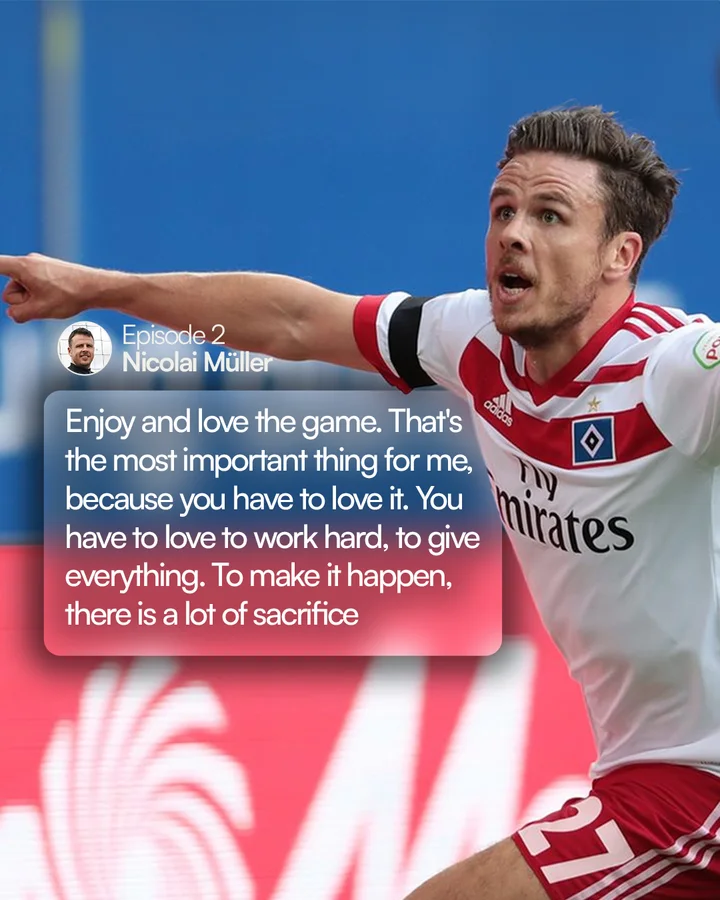
46:10 Nicolai Müller Enjoy it, know, enjoy it and love it, love the game. That's for me the most important thing because you have to love it. You have to love to work hard, to give everything. To make it happen, there is a lot of sacrifice. You need dedication, you know, like to put everything to make it happen, your dream. That's the bigger thing. like I said before, and you know, there's always a bit luck in this game as well, the right moment, right timing. But yeah, enjoy it. And not in your hands. Yeah,
46:43 Jan It's not in your hands, you have to wait for the moment that it maybe comes.
46:47 Nicolai Müller it's not in your hands, but you have to give everything to make it happen. then, yeah, it's a... especially in Australia, a big chance to make a professional career.
46:59 Jan Yeah, and I think it's important to stay on that, which I think you made a great point, is that for many players that might mean that they're not going to make it when they're 16, 17, 18 years old. It might be a story that maybe you inspired them a little bit now to say, I'm playing reserve grade, I am turning 18, 19, I'm going 20, 21, and I still haven't made that jump. But then that one moment happens where you need to be ready, the coach calls you up or you get the offer from another club. And then it can go very fast. And I think here in Australia we've seen it over the last years that there were players that were playing at Bulls. I remember Ollie Jones played NPL 2 first grade, had a few good games and now he's playing in Europe. And these stories I think will happen more and more because clubs will promote young players. But young doesn't need to mean they have to be making their pro debut at 16, 17 years old.
47:47 Nicolai Müller No, 100%. I'm a good example. My first Bundesliga appearance was 24 years old. That's where I played my first Bundesliga game. I was a late developer. Everyone knows my journey, but it's never too late. There's great examples, even in Newcastle. and there's so many boys that played NPL football but they won the premieres this year. it's amazing. There's always a chance.
48:19 Jan I think that's something very unique about Australia that the football community here should actually value that these things are happening because there are amazing stories that are happening in football here and I think that's something we got to celebrate. Nico, to close thanks a lot for making the time and taking up your time, that's very valuable. A few last questions that are maybe a little bit more fun, so answer however you want. Bundesliga or A-League, which dressing room had the better music playlist?
48:45 Nicolai Müller Definitely Bundesliga.
48:46 Jan Why?
48:47 Nicolai Müller I think the playlist in the A-League was the playlist in the Bundesliga 10 years ago, so they
48:54 Jan Okay.
48:54 Nicolai Müller have not the new songs.
48:56 Jan One thing you always had in your kit bag that had nothing to do with football.
49:00 Nicolai Müller I had like, I don't know how it's called in English, but there's like one little bottle of, because of my religion Weihwasser (Holy Water) in Germany called. Yeah, so that
49:10 Jan that, yeah. gosh.
49:13 Nicolai Müller was always in my bag.
49:15 Jan Love it. Yeah, that's a great one. I will look up what that is in English because I don't know it either. The
49:15 Nicolai Müller I don't know why, but I always say, yeah.
49:22 Jan most unexpected place your career took you. Now you can't say Australia.
49:26 Nicolai Müller What the club? ~
49:28 Jan Hahaha! Yeah. I mean, I remember one part for you that you could mention yesterday. I think you said you guys were going away. I'm not sure which team you traveled to. And then there was like the pre-warm up the activation in the morning and you just went to like a public park as a whole team and started to juggle and then dogs would run past. And you said like, well, that is definitely a difference to Germany. If like with Hamburg, Frankfurt, you would go to a public park. I don't think you would be alone.
50:16 Nicolai Müller Yeah, 100 % I think it was in Perth or Brisbane or whatever
50:21 Jan Nico, thanks a lot for today. I think there were a lot of valuable points. hope everyone who's listening got that point of what your career looked like, the resilience, especially for times where you had to prove yourself and stay patient to get that first appearance, to get the first pro contract, to keep moving. To finish this podcast, would like to just ask you for the best advice you would want to pass on to our next guest and all the players out there that want to go down the journey to professional football.
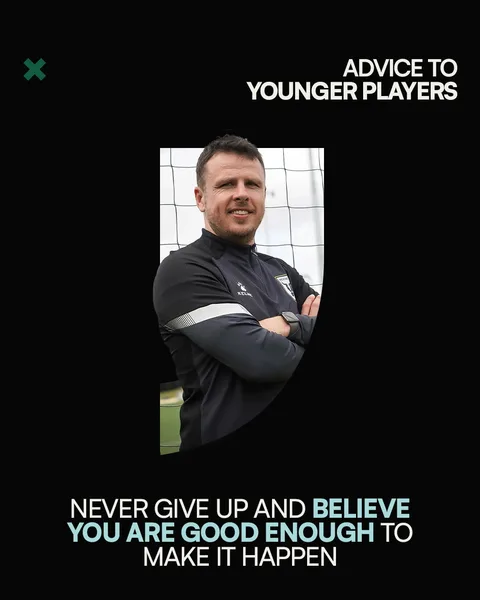
50:53 Nicolai Müller Never give up. It sounds simple and it's like... There are a lot of guys saying it, but I would say never give up and believe you are good enough to make it happen.
51:04 Jan Yes, I love that. Nico, thanks a lot. I'm sure we're going to see each other around and
51:07 Nicolai Müller Thank you.
51:08 Jan we'll follow up your coaching career now.
51:11 Nicolai Müller Yeah, definitely. Thank you very much.
51:12 Jan Thanks Nico, have a good day. Ciao ciao.
51:15 Nicolai Müller You too. Bye bye.