0:34 Jan Dylan, good afternoon. Welcome to the podcast from First Touch with First Team. Good to see you, my man. How have you been?
0:40 Dylan Watson Very well, mate. Very well. Looking forward to this one. It's been a while since we've had a good chance to catch up.
0:45 Jan Definitely it's been a while as well of us being on the pitch together. so we also met through football. it's been a few years actually. your career is officially done or are you still kicking around?
0:55 Dylan Watson Yep. No mate, the boots have officially been hung up. What about you? Are you you still kicking around now or?
1:01 Jan Yeah, I've been the last few seasons. next year is not yet decided. in a similar position to you. a few things to figure out. obviously the podcast is taking over a fair bit of time as well, and the coaching side. So let's see where that takes us. to start this episode, I would like to give you a chance to introduce yourself to anyone who doesn't know you. so maybe in a few seconds, a few different points, who's Dylan Watson?
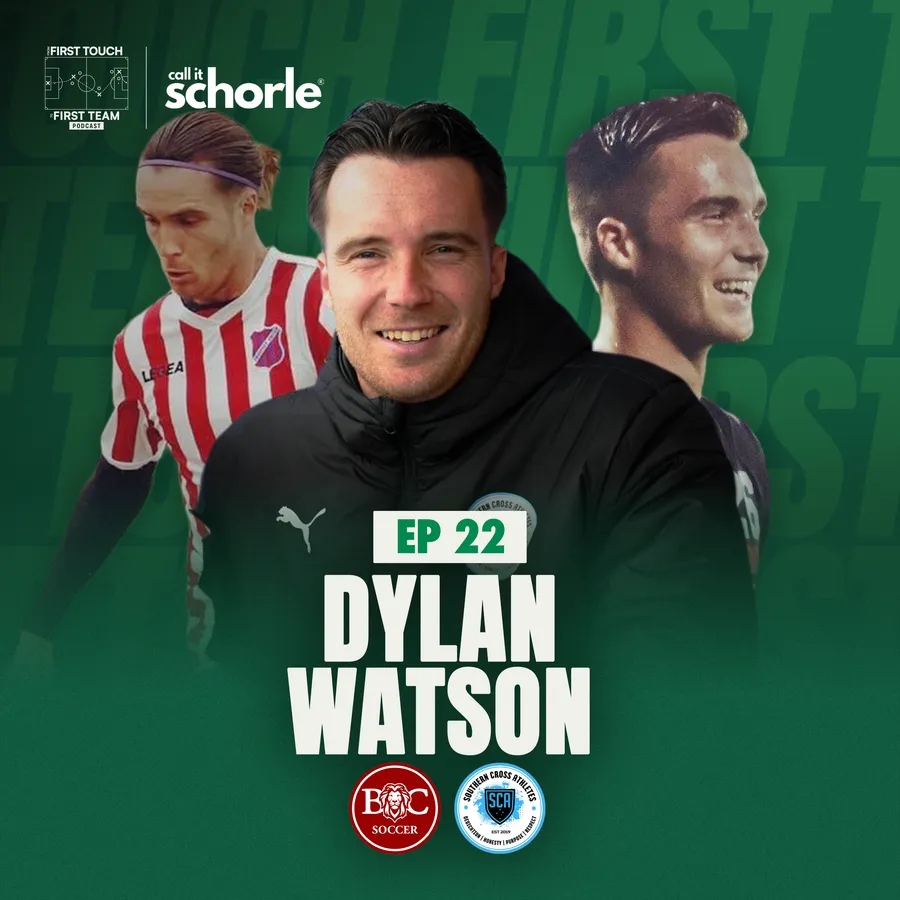
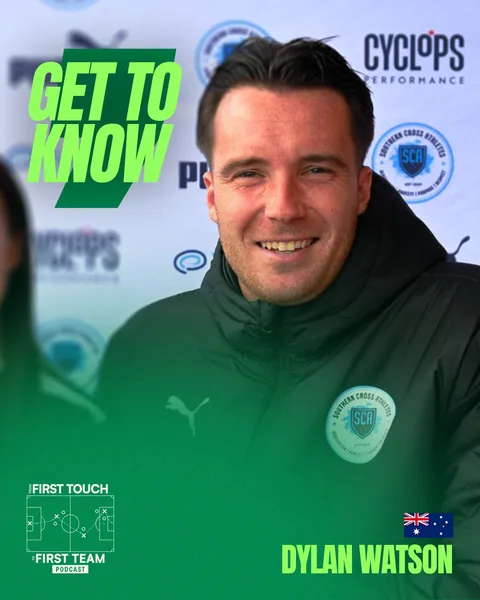
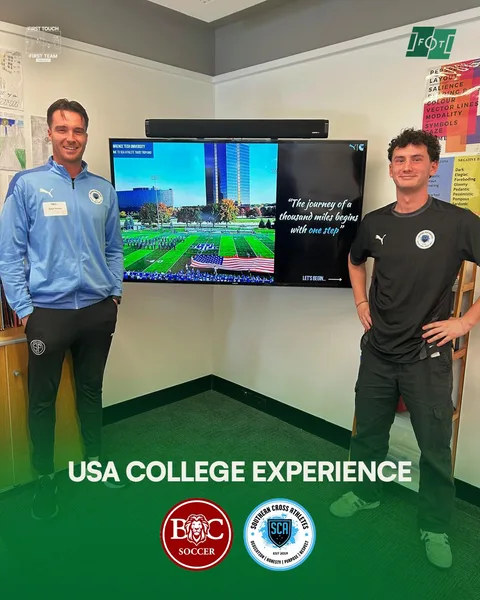
1:24 Dylan Watson Yeah, sure man. obviously run a run an agency called Southern Cross Athletes. that's probably what has taken the driving force in my life recently. We've also split off, we've created a separate brand called True Global Management as well, where we work with professional players, bring players to Australia, a little bit on the commercial side too. So that's a little bit about me. I grew up in the Eastern suburbs, playing football. I know that's, you know, one of the biggest markets that, you know, you guys sort of work in as well. Played for a couple of little clubs around there before heading over to America in twenty fourteen, was on a football scholarship there for five years before coming home and then bumping into you, doing a bit of coaching, and now this is, you know, taking off to to be my full time role.
2:11 Jan Amazing. And that's the main reason why we're sitting together today as well, because obviously this podcast is around the journeys of people that have built a career in football, whether that's professional players, whether that's people like you that played football but then decided to build something else inside of football. And the big part for me and why I wanna have you on the show is for a lot of young players there might be the question when they're turning seventeen, eighteen, nineteen, when they're finishing school. Okay, what
2:37 Dylan Watson Mm.
2:37 Jan is next? Is there a pathway in Australia or is there other pathways out there? so today I want to talk to you about the pathway to the US, which will be yeah, your first and experience because you went over there yourself. Before we go
2:49 Dylan Watson Yeah.
2:49 Jan down that route, through the next few minutes we're gonna show everyone what your story has been like. So maybe take us back in time for what you can remember. What was your first
2:55 Dylan Watson Yeah, sure. Yeah.
2:58 Jan touch? What was your first contact point with football?
3:01 Dylan Watson well, first first memories of football mayor was Queens Park Junior, right? This was well before it was all the SAP or the JDL or or even maybe private academies weren't a thing growing up really round here. Bar maybe one guy that I grew up training with him. There was a couple of really good players that went through him, a few years older than me. Grew up in the East as well. So my early years, yeah, we're playing Queen's Park and we had a very, very strong team, probably from about under nines through to about under twelves, going deep into the champions of champions and things like that before got to 13s and that was the year that everyone split, right? And some players went down the whole NPL route. other players probably stopped playing, but For me, that was a super strong team. we we would go the whole year winning every game. I think one year we conceded one goal and we were absolutely heartbroken that we'd conceded one goal right. so we were we we were strong, taking the piss a little bit in terms of the level. And then yeah, moving into thirteens, played for Sydney uni for a couple of years. that's back when the catchment of the eastern suburbs, it was a lot different to what it is now. Now you've kinda got Hakoah, Dunbar, UNSW, APIA, right? And I think back then it was I think Sydney Olympic actually had the catchment for the Eastern Suburbs. because I trialed there under 13s and made it like right the way through to the very end. I think it was like the last six players, didn't quite make it, and that was like the equivalent of NPL 1 back then. And then the only other team in the local area was then Sydney University. They had like the Eastern Suburbs catchment. So I played there for two years, equivalent of like NPL3 football. And then I got to the end of 14s, and that little core team that I had kind of dispersed and to be honest I probably went down the wrong path a little bit hanging out with the wrong kids in school. You know, I took a bit of a back seat in football to be honest. You know, it was a little little cheeky shit in high school so to speak. And I was playing park football for a couple of years just with mates and you know it would hadn't really football wasn't probably the driving force in my life for a few years and then it came back very much so. I went through a couple of different things back into high school. And then yeah, coming out of high school, I got the opportunity to go to America on a sports scholarship. And, back then it was putting a letter in your in your mailbox and being offered to go for a trial. There was no social media and you know, things like that. So I remember went to a trial, I got picked from there, and then at the time I went back to playing like proper football. it was always good, but, you I ha wasn't really taking it seriously anymore. And ended up playing for UNSW, who we both ended up playing for. Back then they made they were bottom of NPL, the probably the equivalent now. I think it was called State League Two, but it was like the bottom of NPL four the year before I went to America. But it was good to play men's football, the year before heading out. So Gives you a little bit of perspective on on sort of my journey that might be a little bit relatable to maybe a couple of the other lads that that you work with, for example.
6:24 Jan Would you say that now there's already when you think about that time, I could sense there's maybe a little bit of a regret around that time where you said you stopped focusing on football and focus on other things in life and obviously that's very easy to happen. is there something f look looking back you would say, if I would have done something different, your career could have taken a different turn?
6:45 Dylan Watson Look, I mean i i it's a it's a really good question, Jan, first and foremost. Do I regret it? No, because I am very happy with where my life is right now and I truly mean that, right? And I think if I look back on it, all the experiences that I've had have led me to this moment where I am right now, right? And I think it's it's kind of a it's almost like a little bit of a a beautiful thing that I had that experience. Like it happened, you know, to me, not for me, so to speak, because it was I can now look back on it and go, okay, those are the mistakes that I made along the way. And then I you know, sort of going back to your point, it was when I kind of got to America first year, I was like Yeah, I'm all in here, There was I remember times in my first year in the spring semester, the guys were going out, they were drinking and stuff, and I was, you know, staying in, I'd be on the pitch by myself the next day, gym in the afternoon, and I was like, bang, bang, bang, this is what I want. And it was a little bit too late, you know what I mean? Like you can't you can't be doing that at twenty, still trying to think that you can make it if you haven't been doing all the right things from Let's be real, mate, probably the age of ten or eleven onwards. so anti question, there's not not so much regret. I'm kind of glad that I did go through those experiences because it has shaped me now that if I am having chats with some of the younger players, the do really want to make it, it's I can look it back and go, well, this is where I went wrong. Don't make my mistakes. Now I can't sit here and go, hey, I was ever a professional footballer, but I can tell you where I probably failed in certain aspects of my life that I didn't quite get to that level, if that makes sense.
8:30 Jan That's yeah, that's a very good point. And I think then the next question for me is obviously you're dealing with a lot of players that are in the Australian system that wanna go overseas, that
8:38 Dylan Watson Please.
8:38 Jan are maybe playing in these levels, right? They're not your A League Academy player, they are maybe your NPL one,
8:44 Dylan Watson Yeah.
8:44 Jan NPL two, even NPL three level, because I believe looking at the system here, the differences from the individual players are actually not that big between NPL one to
8:52 Dylan Watson I agree.
8:53 Jan two and NPL two to three. So What would you say to a player that is like, I really want to do something with football, but I feel like I'm maybe not at the level that other players are in? Do I still have a chance to progress with football? What would you say to them? And what would you say maybe from your learnings to focus on?
9:10 Dylan Watson Yeah, okay. So do you want to progress in football? Then I I would probably get a little bit more granular with the player, what does that actually look like? First and foremost. that would be the question that I would ask them. Okay, you wanna progress with your football? What what does that mean? And 'cause a lot of kids are gonna go, I just want to play at a high level. Okay, what what does a high level actually look like? you can stay here and play NPL football and get paid and I think NPL is in a great spot right now, with the games that are on YouTube, you've got your commentators and stuff like A lot better than, in my opinion, going to some eighth division club in wherever the hell it is in Portugal or somewhere in Europe, right? You know, and so that would be the question, is like where where do you actually want to get to with your football? And again, you know, a lot of the stuff that we will do will be a lot, you know, driven towards the US college system. So it's like, okay, you've spent a lot of years, and I would call anyone in NPL 1, 2, 3, high performant athlete, right? Because you've got to dedicate a lot of time, a lot of money, a lot of energy, a lot of extra work to be playing at that level. You're not just playing park football, right? So my question to them is how important is football to you? do you want to get to the end of the road? we know Australia's like a a funnel system, right? Sixteens, age group taken away, eighteens, age group taken away. If you're not good enough by 20s to play first grade, what are you doing? Playing park football with your mates. You know, and you've invested a lot of time, money, need and energy to get there, how you gonna feel at the end of it if it's you know, if it's all for nothing? And it's not really for nothing, but there's no real substantial end goal, you know, and that's when we sort of push them and we go, Well, do you want a full time football environment? Do you want to travel the world? Do you want to have that experience? Do you want a degree on top of it as well? So for us that that's obviously one of the biggest pathways.
10:52 Jan So then on on on that on on on that point for you to come back maybe a little bit more to your story before we go into that next next part. What was the main motivation or main reason for you when that you said, okay, I want to explore the US route? I'm maybe not even in a spot to get a proper chance there, but I'm gonna try. What was the thinking and what can you remember from that period that you that something maybe switched in your thinking? It's like, okay, I still want to do something with football, I maybe not have the chance here in Australia. This is what I'm gonna do.
11:23 Dylan Watson Yeah, it's a it's a good question, yeah. 'cause at the time, right, I was still playing like I I was playing the equivalent of NPL men's football now, like obviously different name changes at the bottom of that tier. What was it that really drew me in? It was to be honest, man, like I got to the end of high school and I like, shit, I don't know what I want to do. I I deferred a year of university. I was working a full time job in construction, mate. I was going up at five AM every day, slogging it, getting covered in crap, and I was kinda like this is this is what I don't want to do moving forward. I'm like it's great now, the money's good and whatnot, and I'm not slagging anyone that's in construction, you know, but it just wasn't for me. And so that opportunity popped up in front of me and I was like, Shit, go play football every single day, like go to America, like It it was just an absolute no-brainer for me. And to be honest, I didn't do a lot of due diligence jumping into it. And that probably stung me on the arse a little bit because when I went, I'd gone through an agency where they pulled me into a service office, we had a 20-minute chat, and it was like selling me the dream. I'm like, yeah, I'm in. I had no idea what the different levels were. I didn't know what the NCAA was, didn't know what the NAIA was. I didn't have my parents guiding me through this. I was doing this all on my own. And I'm like, America, college, full-time football, sign me up, you know what I mean? And That's probably what hurt me a little bit because I didn't know how long the season was going to be. I didn't know what the structure of everything was. I didn't know anything about accreditation, what different leagues were, etc. And I just went into it head first, got over there, realised I was in a dog shit program and I was like, okay. I need to get a transfer and I want to move out of here, if that makes sense.
13:10 Jan And the main reason was because the program was not strong, were the players quite low level, was the coaching bad? What would you say was something that was like the biggest part for you?
13:18 Dylan Watson This is a funny one, right? So and look, I'm not knocking any of the individuals there because I still really enjoyed the experience. But mate, I got there and it would this was funny, right? So I landed in Atlanta Airport, I got a bus up to Chattanooga, Tennessee, which is like two hours north. I must have landed like nine, ten o'clock at night. This was August 2014, August the 8th. Remember the date exactly. So I land, I get to Chattanooga, my coach picks me up in a minibus. There's a couple of other players in the team that had come along for the ride. Took me back to the campus and made and shit, I remember rocking up. And it like we drove down this road and they're like, we're here. And I looked out the window and it's this old three-story brick building. They're like, here are the dorms. And I'm like. They were like, yeah, the university's across the road. It was like this one tiny building. And I'm like, hmm, okay. Get out of the car, go up to bed. My roommate's fast asleep. Mate, the room was like this old, like you walk in and have this like wooden interior that was like chipped and, you know, a little bit rough around the edges. The carpet was a mess. Get in, my roommate's asleep in his single bed over there. There's another single bed in the corner, and I'm jet lagged, so I'm like. Wake up and I'm like looking at the ceiling. I actually I actually got a little bit scared. I was like, fuck, I'm on the other side of the world, man. I don't have my parents here, no nothing, I'm wide awake. And I remember I was like, no, come on, sweet shit out, get your head in order. So I I fell asleep. Woke up the next day, went out to the pitch, and he when you get there young, the first day it's all a bit like everyone's eyeing each other up. You're like, This lads he play my position, yada yada. there's loads of internationals. And so I remember walking out onto the pitch, and it was like, mate, there was no grandstand, there was two little dugouts. Mate, there must have been about six different types of grass growing on this thing. There was gravel on there, and I'm like,
15:21 Jan Ha ha ha ~
15:23 Dylan Watson they're like, here's our here's our home pitch. And I'm like. But like we we played on, right? And so the rest of the semester, like it's still cool, bro. You could be you could put me on any pitch, and if you go and say go play football three times a day in pre-season, I'm happy out. Like, sweet. So we were we craft on, we're playing, there's loads of English lads, we're all in the same boat, right? So we're making the most of it. And then here's where it got like interesting, right? So like every time we would get on a coach and we would go to a new university. It was like the grass is greener on the other side. you we'd be driving into these campuses, I'd be looking at their facilities and I'm going, ooh, okay, this is what I could do. And I'm like iron it up and I'm like, then these lads aren't better than me. I could get a move. And that's what I did. So I I went off and I got my own transfer, did it all myself, hence where I learned the ropes of this industry. but here was the another tricky point where again I didn't know anything before I went into it. It's accreditation. do you know what accreditation means regarding universities?
16:27 Jan Is it that you can take the credits that you already got from certain courses over to the next university, or am I wrong there?
16:34 Dylan Watson Yeah, you kind you you're you're very much on the right path, right? So it's it's based on the curriculum, what they teach you, et cetera. And my problem was I've done well individually on the football pitch. I had got plenty of different offers. But every time I went to transfer my credits, they kept coming back and going, Everything you've done here like doesn't add up. Like you're gonna have to start again, you're gonna have to start again, you're gonna have to start again. It's eventually. found a school that would take my credits, right? So that's now, when we're working with kids, it's like, do your do your research, what is the right accreditation? you want to look for a regionally accredited body. So yeah, yeah. Long-winded one, but that's probably why I kinda got there and was like, hmm, this this one isn't for me, you know what I mean?
17:17 Jan You know what? I think the important part and why I find the US pathway, especially for players in Australia, so interesting, is because the reality is you you're finishing on the eighteens, you might be playing regardless of the level, actually if you're NPL 1 2 3 you're training three times a week. And then you might progress into under twenties and the club might be in NPL two and NPL three. You're training twice a week. That's like the prime That's the prime phase of your career, right? 18, 19, 20, 21. This is where everything should happen, where you should be training the most.
17:47 Dylan Watson On the bond. Yeah.
17:49 Jan And then here in Australia they're they're going like, okay, we train twice a week and we play a game on the weekend and probably sixty to seventy percent of the team are already done with the idea of football. They're doing something else. So you're a player that is considered like to play still on a decent level, but you can't make any progress. And that's why I said to players, okay, if if the if Europe is not an option for you, maybe because of passports or maybe because that level is a bit too high for you, this is where the US comes in. This is where the pathway comes in of colleges and progress your career and and in two or three years time training, like you said, four or five, six, seven times a week, even if the level is a bit lower, it's gonna make a huge impact to your
18:29 Dylan Watson Hundred percent.
18:30 Jan playing character.
18:31 Dylan Watson That's it. It's it's a it to be honest, mate, it's it's the biggest point that we hammer home. It's a full time football environment. Where in Australia can you find a full time football environment unless you're playing professional in the A League? wait. It's that simple.
18:47 Jan Yeah.
18:49 Dylan Watson ~
18:49 Jan Yeah.
18:50 Dylan Watson and no one no one can come back to me. And you just literally hit the nail on the head, you're like, This is the prime age in your career and we scale back and go to two nights a week. come on.
19:00 Jan Yeah, tough. So then let's let's lead that conversation into the next phase. Obviously, you had all of these different learnings from your your career and your time in the US. before we finish the chapter, maybe give us like one or two best moments or biggest learning moments for you as a player, but maybe also as a person of like being in the US. Maybe is it like playing one of the biggest games in front of a crowd? Is it like finishing your degree? What are maybe the things that you remember? Vividly that you say this is the best memories I had from that time and this is something I would never want to miss out.
19:35 Dylan Watson That's a good one, man. Like the there's so many different things that that we could go into regarding that. Like my my journey over there was a little bit broken. Like I was in and out. Like when I first got into my first school, they were playing me as a striker. Then I went back to centre back. And then I was playing full-time and then moved to school, was getting moved around position there, then I broke my leg. And then in my third year, I didn't play a whole lot. So In terms of getting out on the field and having any big game-changing moments or whatnot, there were some great games that I look back on really fondly. you know, we we played a school that's changed their name now, but at the time they were called Martin Methodist. They'd won the national championship like two years before. I played CDM that day. Remember their coach turning around going, stop going long, because I was just winning every ball in the air, like obviously being six foot four. that that was a nice, maybe big moment. We end up winning the game like in overtime. So it was like one of them where overtime is this old rule where you score a goal and like game's done. Like it's kinda like golden goal. And like we scored and just
20:43 Jan Yeah.
20:44 Dylan Watson the the place erupted, like all the kids ran on the field and stuff like that. That was really, you know, cool. But I think mate, on the whole, the biggest thing for me is the lads, like just the boys that you play with. Like you you gotta understand it's a unique relationship where we've all got friends, right? But in a fast-paced world like this, like how many times do you see your mates face to face anymore? Like when you get out into the real world? It's you know, you if you're lucky at you get a few hours a week. Like when you're in college and you're there for
21:18 Jan Yeah.
21:18 Dylan Watson four years. you're eating with them, you're s sounds really weird. Sleeping with them. You're not actually
21:22 Jan No. ~
21:23 Dylan Watson physically sleepy with them, right? But you're all in a dorm and like you share you share rooms and and and whatnot, right? You're training with them. You go to the gym. you're in the library together. You're travelling like Find me another period in your life where you're gonna see people like that much and be that close to them. th there's still boys that, I keep in touch with all the time. I go back to the UK, I see my mates, you know, it's like and don't be wrong, as life goes on we we drift a little bit and we don't talk as much, but when you pick it back up, it's just like it's back to square one again, you know. So for me the biggest one was was just those those relationships that you make along the way, man. And there was so many that can pick up the phone or reach back out to and it's it's like it was yesterday, you know what I mean? Like so that's for me, I would say that was probably the biggest thing that, you know, I look back on and go, yeah, that was that was cool.
22:18 Jan And then another question on that because that topic comes up a lot in different conversations being here in Australia. It's like obviously life here for a young person and we're talking about as I say young, fifteen, sixteen, seventeen, eighteen years old, this these age groups, life in Australia is pretty good. Right? You have great weather, i w in many cities
22:37 Dylan Watson just so
22:38 Jan where you live, you have the beach, you're you're secure, everything is fine. Then you go over to maybe Europe or you go to the US. And out of nowhere,
22:46 Dylan Watson Yeah.
22:46 Jan the world is completely different. Maybe take us back through that that last part and then you can lead that into an advice to young players, but what was maybe there the biggest challenge for you, but also the biggest learning of living overseas, living in a different country, living in a different culture, living maybe in places where it's a bit more rough, where it's not as nice, and you have to figure a lot of things out.
23:05 Dylan Watson Yeah. Yeah. Well you you would have walked a similar path, right? Like leaving Germany to come here. But again, like you you're in the eastern suburbs, bro. Like you're in the like one of the most beautiful parts of of Australia. And don't be wrong, I feel like I went to some of the most beautiful parts of America, but bro, it was different. Like you're talking Bible Belt of America. Right. Now I'm not knocking religion at all. I went to a Catholic high school. So when I went, I'm like, okay, cool. I'm at Christian high Christian university, water off a duck's back, mate. I read the Bible, I took my religion classes. It's different in the South, mate. It's so different. Religion is like the forefront of a lot of people's lives, and especially if you go into like a Christian university as well, like For example, I've just sent Lachie Middleton to Liberty University, top division one school. But he's like me now, he has to go to chapel three times a week. We had to do that. And it was like you you have to buy in and you have to be you well when when I say buy in, probably what I'm what I sort of mean is like you have to be respectful. Like you've got to understand you're a visitor in other people's country, right? But like that is the first and foremost thing that you should get through your head. Right, you it's a privilege to to go over and they're hosting you for four years and whatnot. you you want to take into consideration how other people believe, how they feel, how they live their life, etc. So for me it was quite eye-opening. I was like, okay, this is a big thing in your life. Like, you know, Bible studies, like people praying for you, the way they communicate, was all a lot different. But man, I can't knock Southerners in America. they're some of the most kindest people that you'll ever meet. Now they're very upfront in their beliefs and values, put it that way. But like, you know, in terms of their hospitality, taking you in, like, it it was world class. So I can't knock them. But probably my biggest thing, you know, just sort of going to your point, is you've got to be respectful. You are a visitor in someone else's country, you know, like that is probably Whether if you frame it like that, you live by that, you'll be fine.
25:32 Jan Okay. Yeah, good point. you mentioned Lachie Middleton. Maybe that's a good opportunity for us to lead this conversation into what you're doing now from all your learnings with Southern
25:41 Dylan Watson Mm.
25:41 Jan Cross athletes. And the the main first question on that point is obviously we can use him as an example to maybe then explain a little bit as well what the levels are like in the in the system over there. But he,
25:52 Dylan Watson Mm.
25:53 Jan from what I know, he came through obviously the Sydney of C Academy, he was training with the A League. Then a play like that where you look look look from the outside and say like, he's quite close. He's in a professional environment, he's training every day, he's playing men's football with the
26:07 Dylan Watson Mm-hmm.
26:07 Jan NPL team. What was the main reason you would say, without getting too much detail into his his his story, but what would you say was the reason for him to say, Okay, I'm I'm gonna get away from the A League environment, I'm gonna go to U to the US?
26:20 Dylan Watson Yeah, it's it's an interesting one. I wanna be careful with how much I say, because I don't want to I don't one, I don't want to say the wrong thing, and I'm just gonna try and speak off my experience to the best of my ability regarding that topic. Now Lachie's an interesting one because I've known him and his family for like I think I started speaking them when they were in year nine, right? And they graduated end of twenty twenty three. So no, maybe year ten. I th I would say year ten. I think it was twenty twenty, is when that relationship started. Remember the first phone call I had from
26:51 Jan And would you say that's that's like the that's that's the age group where players should start to just think about okay, if Australia if I wanna do something football, I wanna
26:57 Dylan Watson One hundred percent.
26:58 Jan move to the US, I have to start thinking around these age groups? Okay.
27:00 Dylan Watson 100%. So it was already on their radar, right? And then like we started the process in the twenty-two between him and his brother. I remember on a spreadsheet, I had like 20 plus division one schools that were interested. And then Lachi got his scholar. So they kind of put the whole thing on pause. no not even pause. Like we we'd kind of it was done and dusted. And then as we sort of progressed, moving into what happened last year, my business partner Sam is a licensed FIFA agent. So we now have the ability to work with players professionally, which is where I've picked the relationship back up with Lachi. And thankfully it'd been, a really good one for the good few years that we said, hey, join us to, work with you on a professional level as well. So we did and then it was, the plan was never actually to pick America back up. The plan was, let's get into the A League and let's see where this goes. The thing is, right, that that Sydney FC team and it the players in his position, they're good. you look at Paul Okon-Engstler, he's just, gone to Germany. And
28:04 Jan Mentioned Bundesliga, yeah.
28:06 Dylan Watson yeah, like there were some really good players circa his age in that squad. And I think Lachi just unfortunately had a bit of a timing issue at Sydney FC. Like he was super grateful for his time there. he'd been there for a kid, that developed him to a to that sort of level. And it just got to the stage where he did have a couple of sniffs at some other opportunities. There was a lower league option in the UK. potential loan move to America. There was also a potential loan move to Singapore. And it came off the back of, you know, we we're kind of working with his brother as well. And It's a lot of these A League Academy boys now, they're getting to the end of the road and it it is that very hard conversation of, okay, well what now? You know, and it's like, well, for us, we're like, do you want to go and have play in a full-time environment? You know, like if if we talk about professional footballers, right? Play in a full-time environment, you're on live television, you're getting paid. Not being funny, but right now in the college system at Division One level, you can get all those three things. You know, with the new revenue sharing, the NIL money. So, we we were at that situation where we're working with his brother and again, same with his brother. We were looking at some opportunities overseas. And then I went back and I'm like, dude, why don't we look at this? And so we opened it up and looked at both. His brother was set to go and then it really was the eleventh hour with Lachi in terms of eligibility and timing. And I called him and it was in July and I'm like Look, these the options now. Do you want to pick America back up again? Yes or no? And he came back to me and goes, Yes. So okay, leave it with me. And it was rush, rush, rush. He didn't have because it was so late in the cycle, we didn't have loads of time to be picking loads of options. Thankfully a really good one came along. There was a good relationship there. There was a few interested parties and Lachi ended up signing for Liberty and And and it's g it's really interesting. His coach rang me and I'm I'll probably I'll go down a little bit of a rabbit hole because I do want to give Lachi a really good rap here. I've never had a coach ring me after a player has got there and speak in the volume that his gaffit did about him as a person, as a player. just like as the overall package. He still matches me now. they won the other night, one nil and he like, Lachie was amazing, And and he was doing his research. You understand, these top end division one colleges, they're all over across Y Scout. I can send a highlight rail. Yeah, that might interest them. They're going back through every NPL first grade game, they're looking at all your moments, they're breaking everything down, they're gonna pick apart where you're at, they're gonna think, can he turn quick enough for Division I? What's this like? What's that like? And I remember Scott was coming back to me going. Gone through all the data. He's like, where's the red flag? why is this why why is he not in the A League? Like, well, what's what's going on here? Like, I'm I'm looking at like and and and again I know Sydney used to look at his data and they would send it back to like some of the Academy and go, like, these are the running stats that you need to be at, right? Like Lachi just got an engine on him, could run all day. He's like, he was like, I'm I'm just looking at this dude, I'm doing my due diligence. And he's like, I'm just waiting for the red flag to go like. Why is he coming here? And has he not gone pro? And he goes, I can't find it. And I said, mate, I just think it was a timing issue. I was like, it's a fantastic footballer.
31:37 Jan Yeah.
31:38 Dylan Watson I was like, I was like, you're lucky. You got a very good one. And the conversations have
31:44 Jan And that's the reality of football as well, right? That you
31:47 Dylan Watson Mm.
31:47 Jan you you can have all of that on paper, but then you maybe are in a team and contracted where you have an older player come in or a player the same age group that is like a bit ahead of you and then you have no chance to progress and then you have to start looking for other options. Maybe for everyone who's listening, then we have him as an example of like that's that's one of the highest levels you can get to, right? In the US initi when initially going over. Maybe like quite quickly and easily how would you explain the levels and maybe what they compare to over here. So like how if I'm if I'm an under eighteenth NPL two player and I want to go down that route and I'm maybe I'm in between NPL two and NPL one, like what what can I kinda suss out with the US and where where could I potentially go?
32:34 Dylan Watson yeah, it's it's a hard one. but I I talk a lot about this when I actually sit down with the player in the first place. I I bring up the different levels. Sometimes we don't go as in depth, but I'll try to do it to the best of my ability. so Division One, you've kinda got You've almost got three tiers of Division I. You've got your your elite, your what they call mid-majors, lower division one schools, you've then got Division II, you've got Division III, which don't do athletic scholarships, so it's not something we do a whole lot of work in because you need to have some decent money in order to go to a Division III school, but you can get some top academic programs. You've then got the NAIA, which is what I played in. And then you've got the junior college system. So do you want me to go off what you said before, like a case study, like an under 18s MPL2 player?
33:24 Jan Yeah, maybe w yeah. Yeah.
33:26 Dylan Watson Okay. So if you're under 18s, NPL2 you haven't played men's first grade football. Okay. if you've you you're probably you're not gonna be on like a national team or anything like that. So you're not gonna have that aesthetic view on your profile. I'm gonna tell you right now, you're not going division one. you just you're not at that level. Division One, they are now recruiting guys twenty-three, twenty-four, twenty-five, ex, you know, professional football. Like look at Lachie for example. He played twice with Sydney FC. that's the guys that they're recruiting, you know. So a lot of kids come to me like, I want to be Division One. I'm like, Mm, well look, I'm probably not your right guy 'cause I'm not gonna be able to do that for you. So if you're eighteens, you know, NPL two You realistically you may get some sniffs at Division II. Division II is a very good level as well, right? if you go to, let's say, for example, the Sunshine State Conference, which is in Florida, there's a buddy of mine, Aussie coach, Florida Tech. I've gone around, I've visited the school, I've had a complete tour, I know the level of guys that he recruits. He recruits legit, like guys that have come out of like, you know, academies in Italy, like Roma, like Older dudes, high level. Like that Sunshine State Conference could go and compete in any Division I conference. You're probably not going there, for example. You know, like I had a kid last year, he was transferred from Division I. He had a bunch of Division I offers. He still decided to go to Florida Tech, D2, because he understood the the landscape, right? So you may find some Division II schools in other conferences that you can go and play at. That's happened before from players that level that we worked with. NAIA is a good route, in my opinion. NAIA and D2 very similar in terms of size, stature, level. What you will find in NAI is there is a bigger drop top to bottom, but the top NAI schools will hang with the top Division II schools, even some Division I programs out there. Then you've got the
35:29 Jan And then you you've seen obviously the level here in the here in here in Australia, this what you just mentioned, what would that compare to the just the pure football, physical, technical and tactical level compared to like between Australia and the US? What would that be? Just to give it an get an idea.
35:45 Dylan Watson Are are you talking more holistically or where an NPL two team would f fit in there?
35:50 Jan Yeah, w would that be NPL two level, would there be NPL one level? Would that be the top what would it be?
35:56 Dylan Watson Australian football i it depends, right? So what which level are we looking at exactly? Like can you break it down probably a little bit further just so I can give you a proper answer?
36:05 Jan you just said the level that you just spoke about, NCIA, is that correct?
36:10 Dylan Watson NAIA, sorry, is that what you're referring to? Okay, yes. Yes.
36:11 Jan And I yeah, yeah, yeah.
36:13 Dylan Watson So if you're an eighteen's NPL two team and you're looking to play in the NAIA, yeah, you probably could play as like a team collectively somewhere. You are gonna get nowhere near winning the NAIA at a national championship level, but you may you may pick up some results. there is some real low NAIA teams out there, right? That aren't very well funded, that you probably wouldn't want to touch with the 10-foot pole, no disrespect to them. but if you're like an U18s NPL2 team trying to compete at that level, you're probably not going to be fantastic because you're going to be coming up against older, more developed, quicker, faster players, right? Like that is that's the big thing here. You know, you've got to understand, like you're going over it other teams. Yeah.
36:54 Jan But if I'm if I'm an indiv if I'm an individual player playing in these levels here in Australia, that's something that I can aspire to play in, or where you
37:03 Dylan Watson You wrap.
37:03 Jan would say, Hey, this is where you still have the four to five times a week training, plus your education, plus matches each weekend.
37:08 Dylan Watson Absolutely. Absolutely. Yeah, probably what I would say, the level that I didn't touch on before is the junior college pathway. Like you go there, it's a two-year program, right? So you're not fighting against all the older senior players, right? So it's a two-year program. They only do freshmen and sophomore. You've got a higher chance of playing. It's a lower entry point in terms of cost. You're still getting the education. You're still getting the full-time football. You just don't get a bachelor's degree. You get an associate's degree. So we push a lot of players down that pathway now as well. We're like, hey, you want to go over there. It's a big move. You more chance of playing at this level first and foremost, go and do a couple of years, then let's move you. You look at Rex Pierce, for example, he was a 20s MPL2 player, went junior college, he scored 15 goals in his second year. He transferred on a full tuition scholarship to go Division I afterwards. But he needed those two
38:01 Jan Yeah.
38:02 Dylan Watson years. Needed those two years to play, develop, score, prove himself, be in that full-time environment, then he can make that jump. So That's for to be honest, for a lot of lads, I really encourage that pathway. But it doesn't mean that you have to go down that route, but it's something that we encourage.
38:18 Jan And he was what seventeen, eighteen, nineteen years old at the time when he went over?
38:22 Dylan Watson He was nineteen when he went over. Yeah, he'd had a gap year and then he went over. So yeah, it was circa nineteen, maybe twenty, when he went over.
38:30 Jan Okay. So to maybe summarize a few parts that you said. Like obviously if if the college system or the US in general becomes interesting or something in mind of a player that should start around year ten, year eleven, to start just like contacting
38:46 Dylan Watson Hello?
38:46 Jan someone like you, speaking to an agency, getting like a bit of a CV done, understanding what the pathway would be, what is involved. Obviously at the same time, and that's something we should probably not neg neglect, is like and that's with everything with football. You still have to develop on a weekly basis yourself. You need to improve.
39:02 Dylan Watson A hundred seven.
39:04 Jan And again, as you could be the the best agency in the world to play someone in the US, you could be the best agent, I could be the best one in sending, have the best connections to send someone to Germany. But if the player is not delivering when they're going over there or in that time beforehand, we we have no chance of doing that, right? We don't have any chance of doing our job. So I guess that's the other part for players to understand. Maybe leading into the next question from that is then we already touched based on okay the challenge here in Australia is that the the prime ages for players going finishing school nineteen, twenty twenty one is where not much is happening in terms of development. What other reasons
40:19 Dylan Watson Yeah.
40:20 Jan would they have for you to say go to the US and explore that pathway?
40:25 Dylan Watson Y if they're not developing, is that what you said, here in Australia?
40:29 Jan in my opinion, they don't really have a chance to develop if they're not part of a first grade
40:33 Dylan Watson Yeah.
40:33 Jan team, right? If you're playing under twenties, you still wanna do something of football, there's
40:36 Dylan Watson Okay.
40:37 Jan not much else for you here.
40:38 Dylan Watson Yeah, a hundred percent. let's be real, you're gonna be playing park football with your mates and there's nothing wrong with that, right? There's nothing wrong with that. But if like if you really do wanna make something of your football career, go. Like I guarantee you coming home four years later you're gonna then be looked at but first grade options because you're gonna be more physically developed, you're gonna have been in a full-time football environment. you're not gonna come back worse at football. It's that simple. and then you come home, you've got a full-time football CV, you then try and crack first grade. Like I know for me it helped massively. Like I went and signed for Dunbar Rovers when I got home. That was in the league above where I was playing before I left. You know, and I was playing, I was starting there week in, week out. So For me it's it it's just a no-brainer in terms of a football pathway. if you're coming to the end of the road of your NPL journey and you know, you can't make first grade and you want to continue to play at a good level, go and go and have the four years. Like you're not gonna come back a worse player. It's just simple.
41:39 Jan Maybe what is the the main feedback you get from players that you've placed in the US? What is the something that they maybe say about life, about football, something that they have not experienced? What are the the common things that they say is different?
41:53 Dylan Watson Yeah. look, I always say this, right? You're never gonna ask anyone that's got to the end of the four years and gone, that's crap, I wish I'd have never done it. Right? They're always they're always gonna say that was the best thing I ever did. everyone in my team, because we've all gone, that's what we say. everyone that I know that has gone have said it. You ask a kid that goes over for a year, doesn't stick it out, maybe has a bit of a rough experience, they're probably gonna give you a different answer. But the whole The whole journey is what you make of it. that is the black and white of it. You go over with the mindset of this is the best thing for me right now. I'm gonna play, no matter what comes along the path, he's gonna be helping me grow. You walk out of it going, mate, it's the best thing ever done. one of the things, and you asked there for a couple of points, what a lot of the lads say is like, it's just taken so much more seriously over there. Which naturally happens if you are you've got to understand, right? Like kids that go over internationals in general, they tie their identity to, I am a footballer, I am going to the other side of the world to play football, right? in like what feels like a professional environment where you're training every single day. Like I say to the kids, it's the next best thing to be in a professional footballer. Now with the money and everything floating around in, you know, Division I, it's you basically are a professional footballer. So I think the professionalism is probably the biggest takeaway that some people say. And I know this happens. And I've had conversations with Shannon Cole, for example, because he went and did the college thing as well. You find lads, and this is something that I've noticed with play bringing players to Australia now, which is what we do. And you have to be up front with them on the front end of like. You're no longer in college. you don't have the luxury of walking into a training room and working with a physio whenever you feel like it. you can't just walk in the cafeteria, fill your boots, go into the gym, train with all your your your bits and bobs at the private field or whatever it is. you're now coming into semi-professional football where you train a couple of nights a week. Yeah, you'll get paid. Yes, you might be on YouTube, you got your commentators, you get that aesthetic feel, but it is it's not that full-time. environment anymore, and I think a lot of players
44:13 Jan Yeah.
44:14 Dylan Watson when they leave they struggle to go back into other environments because they've almost been spoilt a little bit. Like I know lads that I played with in college. Once that final whistle went on their senior year, they never played football ever again. Which, you know, is sad, but it's kind of like that for them that was their that was their final hurrah. That was their North Star. They completed it. Now they're on the next journey of life, you know what I mean?
44:38 Jan brought a question to my head that I wanna ask you on that spot because you obviously you you mentioned the point of that a lot of them then after that they had a great time with football in the system and then they stopped. So what is what has football given you that has nothing to do with football?
44:56 Dylan Watson Well, let's be real, bro. It's put a roof over my head right now. Like I'm in football, you know, and it it's given me a purpose. You know, I love doing what I do. Like I don't feel like I'm working. Like me and you sitting here having a chat, shooting the shit, like I'm technically working right now, like just pinching myself, like wow, you know, this is the coolest thing in the world. I'm I'm sure you probably got maybe similar feelings to me regarding that with the way your journey's gone as well, right? Mate, football's given me so much in my life to be grateful for. You know, my job, the relationships that I've had, just the joy of getting out of bed every day to do this. Like, mate I can't be more grateful to the sport, put it that way.
45:39 Jan Yeah. honestly I that's you're exactly right. I feel the same. And I think that's the the most important
45:45 Dylan Watson you would.
45:46 Jan part. Yeah, that's I think that's the most important part for for young players and and maybe parents that are having kids on their journey that are still going through school, then having to figure out, okay, what am I gonna do when I finish school but I'm still involved with football is like you walked all of these experiences yourself going to the US so now you can actually do what you're doing in a full time Environment, working with players, giving players advice, telling them and sharing your knowledge, sharing your journey, sharing your experiences. If you would have never done that, I don't think you would be able to do as good as a job because you wouldn't know what exactly it looks like over there. Right? That's the same thing
46:23 Dylan Watson Hundred percent.
46:26 Jan for me. Where if I talk to players like, what is it like growing up in Germany, training in Germany, playing in Germany, I will give them
46:32 Dylan Watson Yeah, of course. Yeah.
46:34 Jan I will give them similar feedback and parts are like
46:36 Dylan Watson Mm-hmm.
46:37 Jan The same what you said, it is just way more serious. It is way more professional. Everyone who plays football there takes it serious and they want to do something with with playing the game. The ultimate dream is
46:46 Dylan Watson Hmm. Yeah.
46:47 Jan to make a full time living. That doesn't need to mean I'm playing Bundesliga. That can play can mean I play fourth division, fifth division and maybe I'm studying
46:55 Dylan Watson Mm.
46:55 Jan on the side and then getting a full time job, but my main income is coming from football.
47:00 Dylan Watson Mm, hundred percent, hundred percent.
47:02 Jan I think these are the key messages and that's why I'm grateful for you to to come onto the podcast and and share that journey and share that insight because I think too many players they wait too long until they plan
47:16 Dylan Watson Mm.
47:17 Jan the next step of their career thinking something is gonna come my way and to be honest, in Germany when I was growing up, it was not that present as well, the like the US college system. And that's something if someone
47:29 Dylan Watson Really, yeah.
47:30 Jan would have tapped my shoulder back then when I was like playing I was seventeen years old, I played senior football already in Frankfurt, if someone would have come and said like, Hey, do you want to do something with football, this is the options, I probably would have looked into that and I would have said, if I get this
47:44 Dylan Watson You'd have smashed it over there. I know yeah, you would have smashed it over there, bro. I know what you're like as a player, it would have suited you to a team. But again, we all have our different journeys. look at what you guys are doing now. Yeah.
47:54 Jan Yeah, a hundred percent. I w I wouldn't change it now, but I know that a good mate of mine, he was playing under nineteenth Bundesliga and he went over to the US and he played I can't remember the college, but he played h like probably D1 and he said he had the best time. And and you
48:06 Dylan Watson I think I remember you telling me back in the day, yeah.
48:08 Jan know what? He's still living in the US now and working back for
48:11 Dylan Watson There you go.
48:13 Jan f for a German company and he's happy, he's got his wife, he got kids. that's that's how life can go.
48:15 Dylan Watson We go. Yeah, we go. It's mad in it, yeah.
48:21 Jan So what is the easiest way then for for for a young player to to kinda maybe to contact you but also what should they first before they contact you think about when it comes to the US? What should they have clear in their mind?
48:33 Dylan Watson Go and train with a go and train with eleade Let Jan tell me exactly what you like and then send him my way.
48:39 Jan No, it would make you jump way too easy then.
48:47 Dylan Watson sorry, I was too busy taking the piece. Can you hear rephrase the the last bit of that question again for me?
48:51 Jan Nah the the main the main question for that is like what should a a player we said year nine, year ten, year eleven around that if they if they start to think about the US, but what should be maybe two or three points that they should have logged in in terms of mindset or thought about before even having a conversation with someone like you about these scholarships and pathways?
49:12 Dylan Watson Yeah, it's it's a good question, right? And we try to reiterate this to parents that we speak to, it's got to come from the athlete. they've gotta want to do this. If you don't wanna do it, don't waste my time. we don't just wanna sign you up and then start working with the process and have you pull out further down the line. that's just It's counterproductive for everyone. We'd rather go and work with the kids that genuinely want to do this, right? So you've got to understand, go do your due diligence, research the levels, you know, get an understanding of what it's like over there. Speak to real people that have done it. we can connect you with loads of people that have done it. Like for example, I spoke with a girl yesterday and I said, I want to connect you with two players. I want to connect you with someone that's doing it a bit tough right now and I want to connect you with someone that's upset smashing it. So you get two different perspectives, right? Because it ain't always sunshine and roses when you go down this path. You're gonna have some shit days, you're gonna miss home, you might get injured, you're gonna do it tough, but mate, that's like that's the whole part of why we do it, you know? You Want to go through those life experiences, you want to graze your knees. Yeah, you know, life ain't easy, you're gonna have ups and downs. But if you're looking at it, look at it holistically, understand what it is you're getting into, do you want to be in a full-time football environment? What is like the sacrifice you're gonna have to make? Are you comfortable in leaving your family for those four years? Do you see that end goal? as what what you want to do. You know, do you want to get that degree? Do you want to open up that door that takes you into a completely different employment opportunity? I myself, for
50:51 Jan Yeah.
50:51 Dylan Watson example, like I would have never thought to do this if I hadn't stepped out of my comfort zone and gone. You know? So look at it holistically. First and foremost, don't just jump into it, you're like, yeah, great, it sounds awesome. do your research. come speak to us. We'll have an upfront, honest conversation with you. we don't just have one phone call with a kid and sign them straight away. There's three, four, five, six, seven, eight touch points before we even get to that stage, And I think it's good to sit down and for us, we really try to understand the athlete first, where they're coming from, why this is important to them. first before we can then go, Okay, well this is what it looks like and then we can work back from there.
51:31 Jan Yeah, perfect. And I think the what I take away from that, because that aligns exactly with how we operate as well, is like it has to come from the athlete. Because the athlete ultimately is gonna be the one that has to find the solutions when the challenges come, when the obstacles come, when the tough times come. If you did it for a reason that is not hundred percent yours, you're gonna fail.
51:53 Dylan Watson One hundred percent.
51:53 Jan So so you need to be ready. yeah, I think
51:54 Dylan Watson like what you said before, when we were off air, the the players that you want to work with now, you want those guys that they're they're a hundred percent all in, you know what I mean? and I think we're we're probably the same in terms of where we're at as an agency. Like, you know, we want the high perform players like mate, the amount of A-League Academy kids that have come out the woodwork in the last few months, it's mud.
52:18 Jan Yeah. Yeah. you obviously know the the American system well, you know what facilities they have, how big the schools are, how good the level is. If there would be one thing about that American college sports system that you could take to Australia, what would it be? What should a Australia and Australian football adapt? Only one. What would be for you the most important one?
52:44 Dylan Watson thing. Okay, well the most important one would be introducing a full time environment into Australian football. You know, and I think this is where like people yourselves, other private academies fill that gap because you don't get it at NPL level, do you? We we spoke about that at the beginning of the pod where you know it's three days a week, it's two days a week. Let's be real, if you are serious about taking your game to the next level, you can't just be training two days a week. Th you just can't can let's be real. you I know the level that you've played at back home. I've seen it now firsthand, lads that I've played with, the guys that have gone pro. You can't just be trained two nights a week. Simple as that. So if I could bring anything back, it would be the full time environment. There was probably loads of other things that I would love to say regarding that, but I think the full time environment would be one hundred percent like the biggest thing for Australian football that I would love to see implemented.
53:39 Jan But especially for the younger players, right, through that transition phase. Because there is full time environments for players that are playing in the NPL, in NPL one, that are now going to the Australian Championship. there's a sense of there that there's something happening. But that's only for the more advanced players, that's only for the older players, the experienced players that have maybe played overseas already, they're coming back to that level. It's not the not many, there's a few, but it's not many of the eighteen, nineteen, twenty year olds.
54:06 Dylan Watson So man, and where I think I'd be interested to get your opinion on this, Jan. I personally look, and you you've you've been in the environment 'cause you've been playing there the last few years. you look at NPL football now, I actually think it's in a very good spot. I think it's heading in the right direction. There is a lot of money that gets thrown around at this level. You know, I love what they're doing with the YouTube, with the commentators, the marketing behind it is good. We're getting some fans like, just go and have a look at Sutherland Sharks, man. hell, what they
54:40 Jan Yeah.
54:40 Dylan Watson did this year with the and again, they bit of cash flow and pumps into the club, but God, like, it looks awesome. Like, I want to go down and watch some Saturday games, you know? I've we've got a guy who's at Avondale at the moment. I'm I'm hearing they're looking to go to like that hybrid model they're training in the morning and stuff like that. So I do think it's I think it's headed in the right direction. You know, and I'd I'd be curious to see like what where do you think like the state of NPL football is headed right now?
55:08 Jan Totally agree man, I think it's it's getting to a good spot, especially NPL one is is great. I think the biggest downfall for the Australian football side is like whenever we speak when I speak to people back home, you know, like if you're playing fourth division, even fifth division in Germany, you are like on transfer marked, right? So people can track you, people can can see
55:28 Dylan Watson Yes. Yes.
55:30 Jan you. That happens for only for NPL one. If you're an NPL two player, this doesn't exist. Yeah.
55:36 Dylan Watson Mm.
55:37 Jan So if you are you could be a sixteen year old playing already NPL two men's first grade, that is a good place for you to be in right now for your development because you're that young, you're already holding yourself against players that played NPL one the year before. So I think overall the biggest part for me, what is positive here in this environment, is that a lot of young players get the chance to play up earlier. But then the biggest problem is there is not enough yeah There's not enough environments for them to break into. Because the reality is if they're not making it into an A League environment, there's a few NPL clubs that maybe treat it full time and then there's nothing else. If we can fix that, yeah. I would
56:16 Dylan Watson That's the hard thing isn't it? Yeah, that is that's the hardest thing, right? that's probably why there are other pathways that people put in place. Cause people how many professional teams got in the A League now? Twelve, is it? Something like that,
56:31 Jan Yeah, something like that. There should be more.
56:33 Dylan Watson right? You know? And let's be real, it's now a br it's turned into a breeding ground. And and I I'm not having a crack at the clubs, but the the biggest way that they're making revenue now is selling off the young talent. So for them, like they want that 16, 17-year-old. Like, look at Sydney's deal, that lad that's just gone to the Colorado Rapids again. I say again with Harrington and gone there previously, but they want those young kids and a lot of them now want the kid that's got a European passport as well. So it's it's making it even harder for young, young Aussie kids to get in and have a crack. Like they're looking at it now. If you're not ready to go by 16, 17, like forget it. Like try playing a professional football in this country. If you don't have a passport, like forget it. It's so hard. Like because that there is just a lack of opportunity, you know, and that's why we We talk a bit about the American when we sit down to play, the ones that really are interested in learning about the professional pathway, you go look at the tiers over there, you've got MLS, USL champ, USL 1, MLS next, NISA just got folded, but there's meant to be another USL league coming out. You're talking over a hundred different teams, man. and USL One, USL Champ in particular, right? And we know this because we've got guys that have gone through college into the USL championship. They've got six visa spots per team. Some of those spots they're picking up guys that have come out of college. Visa players. there's a guy that we loosely work with, he's Australian. He finished in the college system. He's now playing USL 1. that's his breakthrough, that's his pathway. like it and he's 27. So again, it gives you perspective on ages and stuff like that. So it can happen. I'll go out on a limb and I'd say if you're 20, 21, I think you've probably got more chance of going pro in America than what you do in Australia if you're not in an A-League environment.
58:29 Jan Yeah. I probably I would agree with that. Yeah. A hundred percent. Dylan, I think that's a a good way to summarize why for some players,
58:36 Dylan Watson Yes.
58:38 Jan not why for some players, not for everyone, the American system, the college pathway can be a great next step if you're feeling like something here in Australia in this environment is not progressing, I'm not getting a chance to play first grade, I'm coming down to playing only or training twice a week and it feels like I want to do so much more with football than that. Before you jump into your next career, I think we both agree that you have to get more experience, you have to yeah see life and see the world before you maybe say, I finished my career now with 19, now I'm gonna go into coaching. I think that's gonna be tough. I don't think you're gonna be as good as a coach as you could be, because you have to learn and experience more yourself
59:21 Dylan Watson That's fair.
59:22 Jan before you can do that. so I encourage everyone that that that wants to go down that path, reach out to us, reach out to Dylan, happy to connect. Just get a first feeling, get a first chat and then you get all the information and you know what you what you're dealing with. to to finish
59:37 Dylan Watson Then
59:38 Jan the episode, before even if you wanna add something on that, go for it. Otherwise then I'll give you the last question.
59:43 Dylan Watson No, I'll do us. Yeah, I'm happy for the last question, man. And look, first and foremost, just before we go, last question, thank you. You know, I think you're doing some great work over there. always been a big fan. You know, even when we were knocking around playing together, I was always jealous 'cause you're much better than me. But I just think what you guys are doing over there is is fantastic. So keep doing the good work and yeah, thank you very much for having me today.
60:05 Jan Thanks and for everyone I didn't pay Dylan to say just that So now you now you can shine now I'll put you in the spotlight. I asked and I and I asked and
60:08 Dylan Watson You put me on the spotlight last fifty-five minutes.
60:14 Jan I asked at every guest, and for every guest it's it's because they're in a different i way of like how they they had their journey. so for you it can be completely free and and different as well to others. What is your best piece of advice to every young footballer out there trying to make it to either pro football or full time work in football?
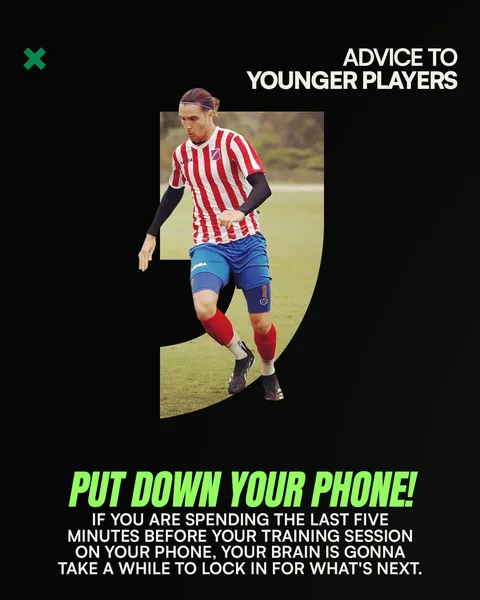
60:34 Dylan Watson Biggest thing at the moment, and this is probably a couple of things I'm tapping into, just stepping into fatherhood and things like this, and you know, with my life experience right now, I want to say, get off your mobile phone. Get off your mobile phone. I don't think we understand how damaging this is for young kids getting stuck on. These high dopamine apps, which are sucking time away from being a footballer. And I'm not saying you you don't completely get rid of your phone altogether. Like that's just not realistic, right? But Be putting things in place to get off it and get out into the real world, you know, by you know, playing more football, doing the right things, having that human connection by speaking to people physically. Especially in football. I think football is very, it can be a very relationship-based business, which I I'm probably a prime example of that, right? Don't get stuck behind that screen. It's I think it's a little devil, little devil trap right now. So if you're a young footballer trying to come through, trying to make it, cut out the doom scroll and you know, build whatever sort of plan that you need to to get there. Like I'm I'm not the guy that can sit here and go, hey, I made it, follow what I did, so I'd just be bullshitting you. But what probably what I can see now, and I think it's something that I'm noticing even in the last few years, the the trend in the new kids that I'm I'm speaking to and and communicating with, some of them are, I think, are struggling to have some real deep conversations. And I think in football you need to learn how to communicate, whether that's on the field, speaking to a coach, speaking to someone like me, even speaking to someone like you, Jan. You can't hold a proper conversation and get below the surface level and really get to understand who someone is, you're gonna struggle and I think the phones are really not helping this at all. So that would probably be my advice. I remember you sent me the sheet before and I read it and I thought, How can I answer? And I went, Bang, that's how I wanna answer that question because I just don't think people getting stuck behind these, like I said before, these high dopamine related apps and whatnot, I don't think it's helping them whatsoever in their in their mental game, which is a big part of football too. So bit of a different answer for you, but that's that's probably where my brain comes.
62:51 Jan No, I love it. Because I think the most important part that you mentioned is the the off field part. Every player can when they're on the pitch they can log in and they can communicate, bounce, turn, man on, whatever it is. But what I've experienced over the last two years, three years probably being in in squads where there's younger players. They're coming into the change room. They're sitting on their phone. We're going out to training.
63:12 Dylan Watson Hmm. Yeah. It's bad, hey.
63:16 Jan We're not really we're we're not really chatting. We're going back into the change room, they're back on the phone. I'm like, mate, we are a team. if we want to be successful,
63:23 Dylan Watson Mm-hmm.
63:24 Jan you have to contribute to team culture. You're gonna have to contribute. I need to know who you are, I need to know who your parents are, I need to know what you're doing everyday life. That's probably enough, but then I have a feeling of what kind of character you are. And
63:35 Dylan Watson Mm.
63:35 Jan that's something I I completely agree with you that has to be better from like overall society, but younger players also understand. If you are spending the last five minutes before your training session on your phone, your brain is gonna take a while to lock in for what's next.
63:50 Dylan Watson 100%. Like I didn't even think like that, right? Because I've not been in a change in room for a few years now, especially at that youth level. Like, yeah, if they're all just walking straight back in, glued to their phone again, it's like, and I I I I get it because I in my line of work I have to be glued to that thing all day. But I now set boundaries with it. Like certain time of night, my work phone goes on the airplane mode, it stays up here in the office and I'm downstairs and I'm present because otherwise,
64:19 Jan Yeah.
64:19 Dylan Watson like it just it eats your life away, man. And I do think for some of these kids I just don't there's enough research out there, but I think the older we get, staying away from the iPad, staying away from your phone, get out. There's a big, bright, beautiful world out there. Go and get amongst it, you know what I mean? So that's my opinion.
64:37 Jan Thanks, Dylan. I think that's a great point of advice. I love it. Man, good luck with what's
64:40 Dylan Watson Lost it by.
64:43 Jan what's for the rest of the year and the next years, and I'm sure I will see you around and we have to definitely catch up in this big beautiful world in person as well. and yeah, anyone
64:49 Dylan Watson Yeah, hundred percent. Hundred percent. You're a gem.
64:53 Jan who wants to reach out towards the US College Pathway, I think Dylan is a great guy to to start the conversation with. So thanks for coming on today. and I'll see you around.
65:03 Dylan Watson Thanks, mate. Appreciate ya.