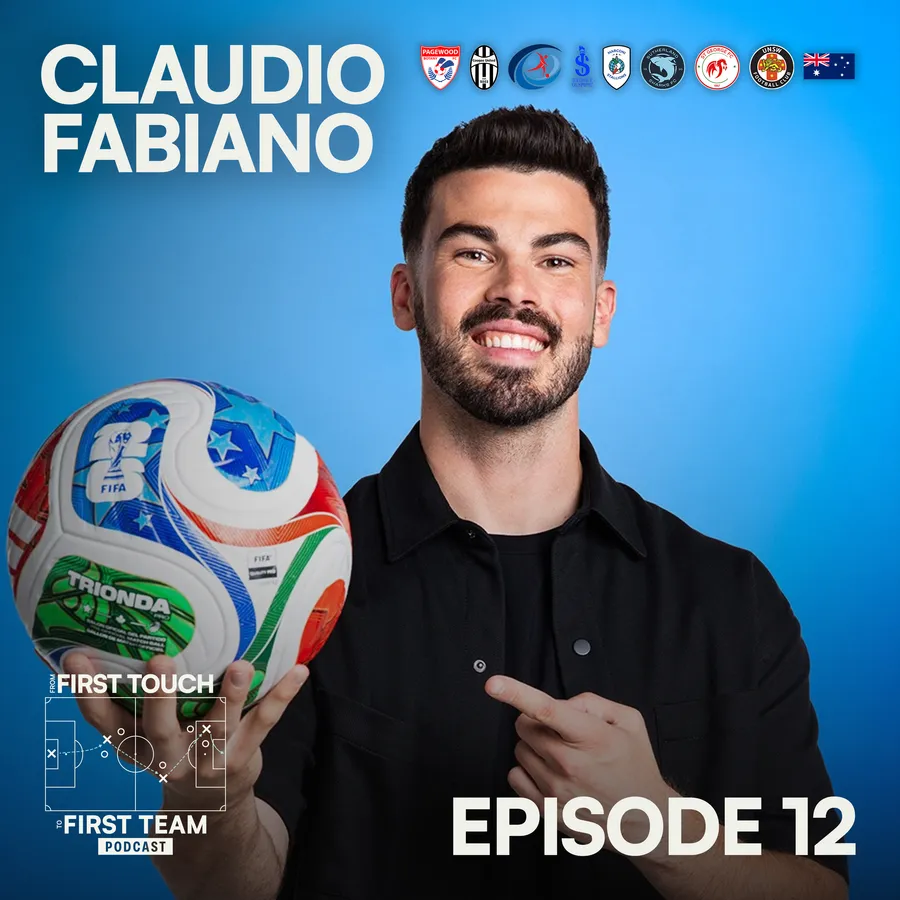
Jan Claudio, good afternoon. How you been my man? Recovering from a few busy weeks presenting the World Cup.
Claudio Fabiano That's it bro, good to see you, man. Thanks for having me on. Yeah, it's it was a very busy six weeks really. Now it's calmed down a little bit, but I'm the type that I can never really sit properly still. You know, I can chill for the morning and by the time I get to the afternoon I feel like I need to do something. So yeah, relaxing a bit more but but still definitely busy.
Jan first of all, like welcome to the podcast from First Touch your First Team. I believe I would say that nearly every single person that's listening to the podcast, listening to it because of football, so all of them should have at least seen you once watching a World Cup game. I actually looked up the stats, like there was over sixty percent of people in Australia watched the World Cup. would you say you had a big impact on that because you just have a beautiful face, so they wanted to tune in for that as well, or how how was it?
Claudio Fabiano That was amazing. It was so good. And and the funny thing is, working with SBS preparing for this World Cup, we knew it would be this big because the World Cup always is big. But we haven't seen a World Cup with these times that Australia has been in, right? The last one was 2002, Korea, Japan, but we didn't qualify. So we knew that the numbers in this one would be bigger than ever. But it's funny, it felt like the rest of Australia probably didn't expect those big numbers. And so we were really proud of it. We knew it would be like that. I mean, Australia's first game against Turkey 2 pm on a Sunday. The nation is not going to experience something like that for a long, long time. So it was really special to be a part of it. And SBS do it really well because they've got this long history of it as well. They've been showing World Cups for 40 years. So to it this one felt like it's got all that history, but it also felt like they kind of turned a page, not only me, some other people they brought in, they're very young and fresh. And so they're kind of going into this new direction. And from from what I heard from people, I think everyone really enjoyed it. You know, it still had that historical link, but it was a it was a bit different, a bit of a new way of of communicating football, hopefully. So it was a lot of fun for me.
Jan Yeah, a hundred percent when I enjoyed it a lot. Like I think I text it just like every time when it was an early game, it's like, I have to get up at five to watch a game, or then I tune in, you have like good guests, you have interesting people talking to you, there's a lot of football inside. before we go back into that media part, I wanna start the conversation more around your own football experience. and I would like to ask you to take us back in time. What was your first contact point with football? What was your first touch? How did you get into it living here in Australia?
Claudio Fabiano Wow. My first touch, my first contact with football came through family because I am part of a migrant family. My parents moved here. My parents were Italian, but they lived in other places as well. So my mum before moving to Australia lived in Germany. my dad before moving to Australia lived in Argentina. So they had influences from Italy, but they also had influences from the other places that they lived. And they brought those footballing influences here. So I grew up, you know watching a lot of Italian Serie A, watching the world game on SBS. My older brother's almost ten years older than me, so I'd go watch him play what was Super League and Premier League, which was the NPL back then. My brother played for St George, Fraser Park, Dullich Hill. So from from three, four years old I was I was at those grounds, you know, in in in what is now the New South Wales NPL, watching him play. And I couldn't wait to be old enough to to join a team myself. And my first team was E Pagewood, Pagewood Botany Football Club, which is in the Eastern Suburbs Football Association. I played there until Metropolitan League, which was the Metro Rep League at the time. So 11s and 12s used to go into this statewide league and you had to play in your area. And I remember that was the first time I ever felt like football was a bit serious. I was 10 years old and I went to this trial. For Eastern Suburbs and there was a hundred and twenty, a hundred and thirty kids for sixteen spots. That's how it was at back then. It was sixteen players would make it. And it was just an open trial. You get a number on your on your hand and I didn't know anyone. And that was a really cool experience for me because I was, you know, I didn't I don't know, I I think I didn't really rate myself at that age. You know, football was fun for me with my friends, with my family, but I never thought about it as anything more. And then I got selected in that team. And I think from then I had this bite of competitive football. Once I was selected in that team, and I went and played like state titles at the time, which I don't think that exists anymore. but then I started to get the itch for competitive football and trying to be the best in my position and and qualify for teams and yeah, it was a really special time.
Jan What position did you play back then? Centre back or did you already did you play higher up the field?
Claudio Fabiano I was a midfielder at at the club level. but then when I started that rep journey, they moved me quickly to I think it was sweeper first, 'cause we used to play with a sweeper back then. I'm starting I'm starting to feel old, bro. Like you're starting to realize football's changed in the last twenty, twenty-five years. Yeah. That's right, yeah, yeah. But I was a sweeper at first. And you know what? I wasn't very quick, I wasn't very strong, I was technically decent, but I wasn't amazing. What did it for me was
Jan Football has changed. That's that's a goalkeeper now as well.
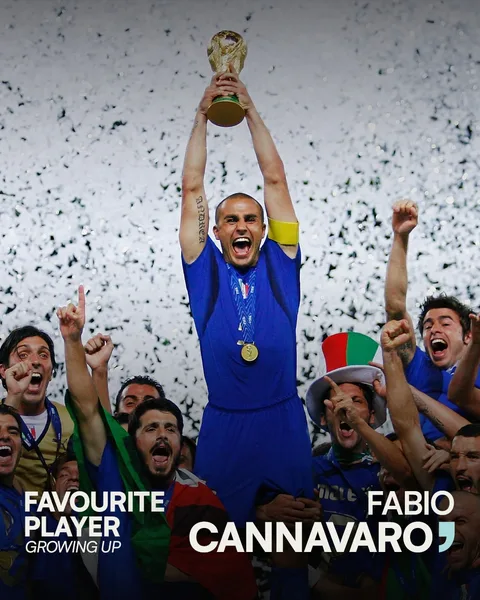
Claudio Fabiano I made all these teams, state teams, Metro rep league teams, and then I went to Sydney Olympic after that. I made all these teams on my mind. No joke, because I had watched so much football as a kid. I loved it so much. I still do. So because my family were always watching football, I watched a lot. Serie A, Carnavara, Nesta, Maldini. I loved them. So I would do things on a field at 10 years old that coaches were shocked because other players wouldn't do. So what I lacked, maybe technically or physically, I would play an off sidetrap. I would follow a player for a couple of steps and then I would step up at 10 years old and they were like, you know, so just because I I would want to imitate what the pros would do, you know, I would try and wait for some contact and then fall on the ball at 10, 11 years old. and that was normal for me, but it wasn't normal for a lot of other kids who played football but maybe didn't sit and watch. And so I I still think when I when I see young kids, I can tell the kids that watch 90-minute games and they watch their positions. You you'd be the same, you coach how many kids?
Jan Yeah.
Claudio Fabiano Like you can tell the ones that really have favorite players and they try and replicate what they see on telly.
Jan Hundred percent and and as you said, the amount of time you spend watching football, that makes a big difference because you can't really sus like how that works in the brain. But just from watching it, it teaches you something that just playing the game can't can't teach you. That's very interesting. So if we look back into that time, you with your experience now at your age, is there something that if you could go back in time you would spend more time with as a player rather
Claudio Fabiano Yeah. Yeah.
Jan Like you spent a lot of time watching the game, obviously you played, but would you do something different? Would you focus on a certain technique, on something more?
Claudio Fabiano I would probably my regret maybe at a young age would be my left foot. I'll be honest with you. That's one thing I wish, you know, a lot of people told me because especially playing out from the back, I ended up playing a lot of left centre back as my career went on. And you'd know, I think t I think in today's game, if you're a left footer and you're playing centre back, you've got a great chance of making teams because more and more players, coaches want to play out from the back and it sounds so nitpicky and niche, but having a left footer play out of the left side and a right footer play out of the right side, it it allows you to play a certain way. so my left foot was never brilliant. It was okay. It got me through, but to really for the levels I actually ended up playing, I thought my left foot was not quite at that level. But I got away with it. I had a very good outside of the right foot and all that and and and I kind of got away with it. But but I ended up look, I was quite a determined kid and when I was in my teenage years, I trained a lot. I think I really I really enjoyed training. I really loved getting better. I'll tell you a story. I was playing Metro League Eastern Suburbs before I went to Sydney Olympic. And we used to juggle as kids. And I'd just come from park football and I couldn't juggle for shit, right? And our coach before the Christmas break, our coach made everyone juggle. And I think I got like twelve juggles. And I was ten years old, I think, ten or yeah. And the goalkeeper got more than me. And then some kids were on like a hundred and and there. And I felt like destroyed and I went home and I just juggled during the Christmas break. And I became so I became so good at juggling, bro. Like when we came back first day we did the juggle challenge again and the coach had to stop me. There's like 300, 400. Like and I remember I juggled a thousand at home. My calves were sore. I love juggling and tricks and stuff like that as a teenager. And it all came from the disappointment of like I think it's I think it's healthy. It's that healthy competitiveness. And same with fitness. I wasn't the fittest when I got to Sydney Olympic at under thirteens.
Jan Yeah, I love it, love it.
Claudio Fabiano And I was just like, you know what? I'm gonna work on my fitness. Pre season under 15s, I won I won the beep test. I think it was like a 15-5 or 15-6 at the time, which was pretty good for a you know, 14 year old. so I was like that. I was a very determined kid and I trained a lot. I worked on my body. I probably had the best body of my life when I was 16, 17. I trained a lot in the gym. I had a personal trainer because I just wanted it really. And it coincided with my football going like that. you know, I was captain of Olympic, I was playing up an age group. At the time there was no A League Academies, but I started to get called into Steve Corrika's Sydney FC youth team to train with them. Things things picked up because of the work that I put in. But ultimately, I don't know whether some of the physical problems that then came after might have been from the work I was doing because I was making a lot of it up. I was just training, training, training, but not not probably with the guidance that I needed at that age.
Jan Yeah. Yeah, I think that's that's one part. It's so funny to you manage like the the juggling part and the running part because we've recently done like a performance testing with with one of the with UNSW and a few other NPL clubs and there's players, man, under fifteens, under sixteens, they can't juggle the ball using both feet fifty times. And it's like guys, if I go back to Germany, I get the under eights and they go 150 first try, no pressure. And you telling me you wanna go all the way, you wanna do something football. Come on. This is something that you can control yourself. You don't need anything else. You need a ball, you go at home, and you just juggle. So it's interesting you say that. I think that's a big reminder to a lot of players. It's like these are the simple parts that you can just control. You can do yourself, so just do it. from your point of view, then you obviously already gave us a short introduction. You were Olympic, you started to progress with there, started to play age groups up. Was there still at that time a moment you're like, I can I can make it in football, I can become a professional footballer. Was it always the dream? Maybe not. What was it for you?
Claudio Fabiano Yeah, I'd play a lot in the backyard, just like imagining scoring goals overseas and I wanted to play for certain things and I and like I yeah, I I played a bit of FIFA, you know, by then FIFA was already a thing and and I, you know, just imagined myself playing in in the Premier League or in European leagues and I I wanted to at that point. I didn't really know what the pathway would be. It's not like I had footballers in my family. but I wanted to and my my parents, you know, bless them. They were like, you know, they just They were very big on like, okay, all the effort you're putting in football, make sure you're putting it in school as well. As long as your school doesn't drop, we will back you in anything you want to do in football. And and they kept that promise to me because I was quite an academic kid and it helped me later in life. I I was good at school, I liked school as well. I was offered to go multiple times to other schools like Westfields in Western Sydney. 'Cause I was so then, yeah, I vent I end up at Marconi at about sixteen, but they they offered me to go to a few sports schools and my parents didn't let me. And I don't regret that because, you know, I I I love my school, I love my friends, and also I did very well. I ended up going to uni and studying. And I think if I would have gone to a sports school and and slacked off and just focused on football, I don't necessarily think that's the way to go. So I'm glad I did it. But but yeah, I I progressed through there and and I think at about 15, 16, I started to think, okay, I reckon I could do something here. I f I was finding NPL football. Which was the highest at the time, I guess. I was finding it quite easy. I started playing in the midfield, actually. I started playing six for Olympic, one age up. I was comfortable on the ball. Things were coming easy for me. And and then what happened was at 16, the Joeys, the Australian under seventeens team, were looking for a six slash center back. And actually one of the other guys in my team, his dad used to play for Australia, and he recommended me to the under seventeen's Australian coach. So then I I kind of was getting calls here and and then I had a guy offer to be my agent and I ended up it was for the Asian Cup under 16s, but I missed it by two months. My birthday's in June. I wasn't young enough to go to the Asian Cup. and then so I missed the World Cup cycle as well. I don't know. I don't know. But like I mean, to be fair, I don't think many, many from that team went pro, to be honest. It's a bit of a lost generation, the one I was in. But yeah, it would have been a great experience. I wish I could have gone. and but then at that time I my confidence was high.
Jan Maybe your career would have been completely different, huh? Ha ha.
Claudio Fabiano And then my uncle in in Europe, he you knew a couple of people in German football because he he worked in Germany and in Spain and he said, Look, if you've have you got a a a a video or anything? So I started videoing my games at that time and I sent one over at
Jan Well like your your dad or your mom with like a camera caller or like because back then there was not much, right?
Claudio Fabiano Or no, I think you know what? No. Someone was filming our games at Olympic. and that was quite common at that time. Like people were filming games and you could buy it like five dollars a disc and they used to give you the disc. yeah, I remember that was a thing. I don't know who was filming it, but yeah, so we started buying the discs and then like I don't know, Windows i movie, I just cut like my my parts and I sent that over and I didn't expect much, but then I got a call back from a a scout in Germany. and he put me in touch with a few clubs.
Jan okay. Love it.
Claudio Fabiano But one was Hoffenheim, which at the time had just kind of been on this meteoric rise. They got bought by a billionaire and they were on this rise. So I didn't know much about the place, but I went there. I have family in Munich. So I actually I actually visited Bayern Munich. I didn't trial or train, but I actually went into Bayern Munich and met with the under 17s coach. and they took me around the training ground and it was amazing. The under 23s were training, but I didn't see the first team. And they were kind of like, look, you don't just rock up and trial for Bayern, but
Jan And Yeah.
Claudio Fabiano while you're in Germany, like if things happen for you, we're gonna keep tabs and and they they were they kept cause I had a German passport 'cause my mum had one. So that helped. but anyway, I went to Hoffenheim. That was cool. That was in the middle of nowhere. Zutzenhausen was the name of the town that I was staying in. Yeah. And I was I was living I was staying in above like a a little German it was like a cafe pub and the lady would would make it was like
Jan Yes.
Claudio Fabiano five rooms upstairs and the lady would make breakfast in the morning. It was still the best breakfast I think I've had in my life. It was this German lady used to make pastries and I'll never forget it as long as I live. But yeah, so I was trialing for the Yeah man. Everything there. The food was incredible. Like the food is my my best memory of that time. But the football was was cool too. The just it was it was amazing for me to see coming from Olympic. I go there and like the kids were getting picked up from school at one o'clock. Then they were brought to the training ground. They had lunch made for them.
Jan Did you have bread cell bread cells as well, yeah?
Claudio Fabiano They had a video s I used to do a video session in German and I didn't speak any German. But most of the players spoke a bit of like a lot of English. but I learned like the football terms, but I I didn't really know what was happening in the video sessions. Then we'd like do warm-up, then we train on these pitchers that the seventeen sixteens, seventeen, and eight and nineteens, because it skipped the year, had their own facility. We had two pitchers next to each other, and then the twenty threes were at a different facility and the youth were at a different facility, and it was like incredible to see. Then they'd get dinner and they'd get driven home.
Jan Yeah. And and you know what, you would y you would be mind blown even these days because the club has come a long way, how it is now, because now it's considered one of the best youth academies in Germany.
Claudio Fabiano Yeah. Yeah. And even then they were starting to win a lot of like regional titles, national titles. I went to watch once the undercause I had nothing to do and it's like a pretty boring place. I went to watch the under tens or elevens play and they destroyed this local team. Like I think they won like twelve nil against this local team. But that's what I what I meant before what I was saying about how you see the the elevens and the twelves were playing like pros. They were scoring and they were celebrating like pros. Like they'd score and they'd like run to each other in the corner and like
Jan Yeah.
Claudio Fabiano And like and then the way they would win the fouls, and I was like, man, these kids look like mini pros, the way they were doing everything. And it was so cool to see. and yeah, so that was a cool little experience. They offered me to stay three months, but I ended up coming home. And it was a you know, my parents didn't force me to come home. They wanted me to keep going with school. I would say at the time I probably lacked a little bit of self belief that I could cut it at that level. even though I was doing
Jan So you you were six sixteen?
Claudio Fabiano Sixteen, yeah. So I was sixteen, I was with the seventeens, but I played actually one game for the nineteens. And this is my fun fact that I told the guys during the coverage of the World Cup and they pay me out about it because Kevin Prinz Booten and and Alex Baumjohan, both great Bundesliga players, were on a a German game with me. And I don't talk much about my playing. When I'm working, I'm just like a media broadcaster, I don't really talk much about, but they were talking about Julian Nugglesn.
Jan Sixty name. Yes.
Claudio Fabiano And they're like they're like they they they've heard stories about him, but neither of them have like met him, neither of them have played with him, whatever. And I just go, funnily enough.
Jan Yeah. And you you were there when you was on the nineteenths coach or
Claudio Fabiano I said, funnily enough, I played one game under him. I played for the nineteens when he was the coach. And they just like they're like, What? And I was Yeah, and we started talking about it. And then on air they brought it up and they're Well, actually the only one that's played under Julian Nugglesman is is Claude and like I was just like, Far right, that's the last time I say anything. But I played one forty five minutes for him, a number six, and obviously had no idea who he was at the time. He was super young. But he went on to have a really good career. So that was cool. But yeah.
Jan Yeah. What? Yeah. So could you as a player, could you as a player back then spot that there was something about and then we were like, this guy knows what he's talking about compared to maybe what co other coaches had experienced or not as much yet?
Claudio Fabiano I just remember thinking he was really young. Like he would have been in his twenties. Like he he was very young. But no, I mean not enough. I was literally just called in. I think they they were they were a player short for a a friendly and I just played the number six for him. But no, I like again, I don't even remember what he said to me or any instructions. It was just like it was a long time ago. Yeah, it was a long time ago. And and I I didn't even put two and two together up until I started working on a bit of Bundesliga football.
Jan Okay. I mean you were that's that's many years ago as well, yeah.
Claudio Fabiano And I was doing a game, covering a game that he was coach, and I went into his like history and I saw Hoffenheim 19's 2012. And I'm like, wait, I was there 2012. And then I put two and two together and I was, that's crazy. So the the funniest thing about that time was what confidence can do to a player. Because when I came back and I came back to school and everything, and I had some time away, I grew in confidence. And I was the exact same player as before. But because I'd just been there and people knew I'd been there and I was leaving Sydney Olympic because my coach
Jan Yeah.
Claudio Fabiano was going and everything. And so I was open for a new club and I wanted to go straight to 20s. I was like, I don't want to play 18s. I want to play minimum 20s. And so I went to a Sutherland trial at under 20s. And the team was already almost picked, but I killed it. And it's purely on confidence because I started trying things that I wasn't trying before. I was just so high because I felt like I just come from that environment. When you come back here, it's amazing. You know, and then I went, I signed my Coney 20s. So I skipped 18s and I signed for my Coney 20s.
Jan Can do it.
Claudio Fabiano and and it was and the Australian school boys coach was the coach there and it was great and it was pure confidence. And even right now at UNSW, we've got a young lad that was just on trial with an A-League team, right? And I've seen it in him. He went to to trial for this team for a week or two, he's come back, he's the same player, but he's slightly more confident. So because he's like, I was just putting A-League and now I'm back in the NPL, so he's trying more, he's scoring better goals.
Jan Yeah.
Claudio Fabiano And it's just incredible what the mind can do for a player, you know?
Jan So then on on that, obviously you were sixteen, it's a long time ago, but is there maybe something that you still remember from coming from Australia, having only experienced the Australian environment, to then being in Germany, being in the facilities, being around these kind of players that you felt like, well, this is the difference. There's something completely different around how it's run in Australia, how it's run in Germany, the level of the players. What would what would you say was maybe the biggest difference for you?
Claudio Fabiano Yeah, it was it was so pro and it meant everything to the players. You know, it was like as I said, they picked them up from school, they took them, they they looked after what food they ate. Like at sixteen I didn't really care what food I was eating. They n they knew what food they should be eating, they were doing prehab before training. I remember because I ended up having actually I had a I had a cartilage surgery before that. I had my my first surgery on my knee before that. And they were doing like you know, the FIFA eleven plus warm up like so They were doing like jumping and preparing your knees for impact before training. Little things that I I'd never really thought of or wasn't experiencing back home. and then they were just, they were very serious from the moment training started. They joked around with each other, but then they were very serious about what they were doing there. They were very serious with me. They weren't really interested in being my friend at all because they knew I was on trial. Even though I was non-threatening, I was like not really thinking I was gonna stay long term. They wouldn't. Give me the ball in little drills unless they had to. they wouldn't talk to me much unless they had to. And and and over time that got a little bit better. But yeah, they're very cutthroat from a young age. They know why they're doing this. They know what's at stake, and they want to become professional footballers, and they won't let anyone get in the way of them. They're so hungry. And and that was a bit of a wake-up call. and I remember in I was playing a bit of center back, but they actually moved me right back in midfield because they were huge. And I was like, bro, like I was, I was already.
Jan Yeah.
Claudio Fabiano Pretty big, like I was big as far as Australia was, but compared to centre backs there, I was tiny. I was I was smaller than all of them. And and that was a bit of a wake-up call. These guys look like men. And as I said, they do a lot of prehab, a lot of gym work. So their bodies, physically, they were already quite strong at that age. but I didn't think the level was too different at that point. And I always wish I went back two years later because even just that like little experience of the nineteens that I had and seeing the 23s train, I think between 15 and 20.
Jan Yeah.
Claudio Fabiano nineteen or even sixteen and nineteen, I think that's where the biggest jump happens that we miss here. Because everything under that, I think we're actually quite close. Like elevens, twelves, the elite of our twelves and the elite of the I think we can cut it. Then when it's time to take that step to men's football and that pro football and then it like makes a difference, your physical training, what you're putting in your body, how often you're doing this and that, I think we fall way behind. So I wish I went back at nineteen just to see the level. But Yeah, I think that's where we fall.
Jan I mean I mean if you look a if you look around the NPL grounds and if you look at the round like there's everywhere is a canteen and if I sometimes go out and I watch youth and then then I see the players just finish their game and they go to the canteen and the food they eat, like, you know, they're getting their selves a pie, they're getting themselves chips. It's like, man, you're sixteen, seventeen, eighteen years old. Is that right now the best food you should put into your body? Probably not. it's it's interesting you say that because I I've I have this conversation a lot that I I agree with you.
Claudio Fabiano Yeah. Yeah. Yeah.
Jan ten, eleven, twelve, thirteens probably is that that gap where it's it's quite close. I would say you can send players over there, they would they would slot into Bundesliga youth academies into the highest levels. But then it goes fourteens and onwards. That's where like the gap becomes bigger and bigger and bigger. Is there one thing that you can pick for you throughout your experience in terms of your own playing career, but also now having seen a lot in the NPL, having seen overseas what that one big difference is for for you, that why the gap gets keeps getting bigger and bigger?
Claudio Fabiano I definitely think there's a lack of professionalism and there's a there's a lack of match time as well. Like we don't play many matches. They're trying to fix that. The NPL now is thirty rounds, but when I was growing up it was twenty two rounds and that was it. And you'd play futsal during the summer. And these guys are playing a lot more games. They're exposed to much more football. As I said, like that friendly that I played was during the week because it wasn't an official game. I couldn't play I couldn't play official games, but they had games during the week. They had games against each other. And I just think there's also I think in Europe they're not afraid at a young age to train a player specifically to their position. And I felt like growing up in Australia, I grew up in what period was I in, man? I think I was in the Dutch period when we had a a f a technical director that was Dutch and everyone had to play the four three three. I started growing up with the four three three. And I feel like everyone is a number eight. When I was growing up, I felt like all the development was to make you a number eight, right? You were good at possession, but strikers can't shoot, defenders can't tackle, defenders can't header very well.
Jan It's
Claudio Fabiano Wingbacks can't cross. And I'm like, what's going on here? But then over there, as I said, the defenders were huge. But they weren't just huge. They knew how to defend and defend only. Maybe their finishing wasn't the best, but who gives a shit? Their career's not going to be based on that. The strikers give them a sniff, they hit the target. And this is what I feel like we don't do much in Australia. We're scared to give a player that's really young position based training. but I don't think we should be. I I think already at 10, 11, 12, I mean, I already knew I was a defensive player. Whether that was gonna be right back, center back, or six, whatever, but I knew I was gonna play somewhere there. So I wish I had more position specific training at a young age.
Jan Man, when I was in under twelve or thirteenth, I had a coach who worked he worked with like he coached us, but he worked with the Football Federation. And literally at the beginning of the season, he would hand all of us that were different positions. So back then I was like also six and and center back. He would hand us like a paper four where it says center back, a paper where it says six, and then said, Okay, these are your tasks like broad, in ball possession, out of ball possession, center back, six, this is your role in possession, out of possession. And then you guys like, all right, these the two positions I can play. I'm gonna focus on these parts. How do you play out from the back? What is your defending like? What is your defensive position? You have an idea, you know what you're supposed to do. And I think that tailors into that part why here the in my opinion the gaps the gap keeps getting bigger and bigger because there's no clear roles, there's no clear structure in the games, it's very transitional, so everyone just kinda like does a little bit what they think they should do. and they're probably like you said at the beginning, they don't watch enough games.
Claudio Fabiano Mm.
Jan let's go into that next phase from you. already great insights in terms of your journey. But you said then under twenties Maconi, did the career continue much after that or what was the point where you're like, Okay, I'm not sure if football is still gonna be the main income stream and the main goal?
Claudio Fabiano Yeah, I think when I when I came back and I got to Marconi at that point I still felt as though I could do something in football. especially maybe in the A League. So I was playing well that first year, but I I started to realize that you become an adult, my body was changing. and so I mentioned to you I had a bit of a knee problem before, but then when I started playing at Marconi, I I had a well actually on while I was playing for Sydney FC on trial in a friendly I had a bit of a medial ligament thing. It wasn't a complete rupture rupture, but it was a grade two. So that was a shame because it Steve Corrika was the coach. I was playing really well. I thought I was in with a good shot of playing what at the time was the National Youth League, NYL. and then I I did my knee. He came into the room and was like, Look, do your rehab, I'll come watch you at Marconi, things will will come back. But then it was a bit of a slippery slope for me. I I started preseason with Marconi. I felt this pain in my hip. And this is what ended up being the reason I stopped playing football was because I had this pain in my hip and it was weird. At the time, no one could diagnose it. They all said it was my hip flexor, hip flexor. there must be something going on there. But in the end, what I had was I had what they call a CAM impingement. So I had extra bone at the top of my femur that was grinding the cartilage in my hip. And it was becoming more and more painful. And I was starting to take painkillers. I was about I was 17, or maybe 16 still, 17. I think I just turned first year at Marconi. Was taking painkillers, and then eventually I it was the first grade team doctor that had a look at me in a preseason game or maybe first few games of the season and he knew what it was. He said, You've got a labrum tear in your cartilage, you've got a cam impingement in your hip. If you wanna play professionally, you need to get this fixed right now because it's just gonna get worse. I was like, Okay. So I went, I got surgery, three months out for Marconi. Funny actually, I was still playing well, hey.
Jan It's like the worst worst time that that can happen, right? That's exactly like you said, that transition period, you go into men's football, you wanna keep training, you don't wanna miss out at any week of football and then yeah, you go. Surgery.
Claudio Fabiano Yeah. Yeah. So s so I remember I was I was still trying to get back into Sydney, but then I had that three month gap. So I have the surgery, I come back last I think I played the last ten weeks of the season and I played really well. Like I remember I came back flying, I'd been watching for so long, I was itching. the team didn't do too well. So to give you a an idea of how we went in the season, I won player of the year in ten games, right? At Marconi. Crazy. Right?
Jan All right.
Claudio Fabiano but I I had a awesome ten games. But then the coach pulled me aside and he's Look, he goes, Corica came to watch a few games and he asked me why you weren't playing time and time again and I told him he had a hip surgery. Okay, shit, all right. So I felt like okay, I'm over that. I came back, I was feeling really good. the following year I stayed at Marconi and then I wanted to have another go at overseas and the assistant coach at Marconi had a had a mate in England. my brother was living in England actually at the time, so I wanted to go visit him anyway. And I just finished school. So I went on a trip over there and I ended up training with Akrinton Stanley first team. So they're in league at the time they were at the top of League Two. They were pushing for promotion to league one. So you're talking fourth division, hoping to go to third division. and that was a great experience for me because they were men. And that was probably I'd been training with Marconi first grade, but that was like my first view of first grade men's professional football. And they had some guys there on loan. They had a player on loan from Liverpool. They had another player sign for them who's gone on to have a good career, Windas. He's gone on to have a good career in the championship and stuff. They had some good players. And I got put through all the fitness testing. I did well. I was training with them for a while. And that was a really good experience for me. I got to know some of the guys. I was training. We trained on the field, which is like one of the smallest grounds in the football league. It's three thousand capacity. But we used to train on it every day. And that was a really good experience for me. I trained May until the end of the season. of League Two, but I wasn't registered. and then we were like, look, we go off to break now, but if you want to come back, we'd be happy to have a look at you in preseason. In the meantime, I went to another trial with Aldershot Town, which played in conference league. and they had like what they call an exit trial. So all the players that were dropped from the higher academies were coming to trial to try and get into Alder Shot in conference. Went there, smashed it. Played so well and they offered me what was at the time a third year scholar. So it was like 250 pounds a week to kind of like be a because I was still under 19, I could be a scholarship. But it was Conference League, which at the like honestly, in hindsight now, it's actually a pretty good level. A lot of Australians would leave Australia to play Conference League. But at the time I was like, it's not even pro, it's still kind of part-time. I just I don't know. I just I and again, I think in s deep inside I was scared of making that move as well. It was it was, you know, I was comfortable in Australia and I do think I was a little bit scared.
Jan Yeah. That is
Claudio Fabiano and I came home and Marconi had the worst year in its history. So in the twenties, we we c made the final, we did really well. But first grade got seven points all year. They were dreadful. And they got relegated. It was a big thing, Marconi relegated. And so they offered me a first grade deal to stay, but I left. I wanted to play NPL one at least. So I signed for Sutherland Sharks. and I had a really good time at Sutherland because even then at nineteen, I I I was, yeah, nineteen. And I was starting first grade as a center back in NPL one. And that was a great time for me because again, I'd just come back from experiencing a lot of first grade men in England. And now I got to play first grade men here in the NPL. And I was playing well. I was, again, back noticed by Sydney. At that time, it was Robbie Stanton who took over as the coach. He brought me back in training with Sydney FC's NYL team. I was doing really well. I was feeling really confident. And I was like, okay, I think I could forge a bit of an A-League thing here. But at the same time, I started feeling that hip again. And I was I just I could feel it was coming back. So I was playing on painkillers, I was playing on anti-inflammatories, I was taking all this stuff and I was just trying to push through it and I was still playing well. And then I would say, mate, I would say the moment that probably derailed my chances. We were playing Sydney United at home. And I I was fresh off like a few great games in a row. And there was a good Sydney United team, like Panny Nickas and all them. And they put a ball over the top and I was in a bit of a tussle with Chris Pain and my ACL ruptured. And yeah, and and I was I was close to my 20th birthday, I was 19, and that happened, and I I'd already been feeling hip pain again on my right, and now this happened on my left knee and it destroyed me. Like it mentally it destroyed me. And I remember I had the surgery, I did the rehab, nine months I was back. Sutherland re-signed me. I came back, but then I was having a lot of hamstring issues because I used I I took my hammy to put in my knee. And I tore my hammy three times that season coming back while I had the hip pain as well. And I was just like, and and Sutho pulled me aside and they were like, listen, like we think maybe you need just some time for your body to recover. And I'm getting another hip surgery at the end of that season to try and fix the hip issue as well. So I'm now just dealing with so many issues and I just, I just I was over it and I was in pain and I was twenty, twenty one years old. And that's the time when there's a lot of other opportunities in life to travel, to go to uni, to do all these other things. And I just said, Fuck this, I can't do it anymore. And I took a year off. I took a year off.
Jan Before before we go into the next part, d like one question is in my head because that that's like a recurring topic of other places as well. You said when you were in England, you obviously got offered a spot, but you said that you felt like you were not fully ready to make that move, you felt comfortable in Australia. Like in hindsight now, would you say what could have p maybe prepared you better or what could have been that did you say
Claudio Fabiano Yeah.
Jan You know what, I don't care, I can always come back to Australia. I'm gonna stay here even if it's for twenty two hundred and fifty pounds a week and just make it work. Like what what do you think was it that held you back to just say like, you know what, I'm just gonna jump into this opportunity, who cares?
Claudio Fabiano You know, I I I think about that time in my life and I'm like I don't know if it was because I I was also feeling like some physical pains. I don't know if it was because I thought that my body was going to break down. I don't know if I just didn't believe that I would go in there with a bunch of guys I don't know, kill it, go up to League Two, go up to League One, make a career out of it. I I don't know what it was at the time, but it could also be I'm I didn't feel this specifically, but I look back and I think I was a a clever kid. I did well at school. I got into uni. I had a lot of friends, girlfriends, I had a lot of opportunity for life to do other things. I'm not saying I I I didn't want to be a footballer, but I do sometimes think like if football was if that was my only thing, and I I talk about this, I talk about with
Jan Only things.
Claudio Fabiano with guys that come from, you know, I got a lot of family in Argentina and I talked to to people about that come from, you know, upbringings where football is their only opportunity. And s even speaking to Kevin Prince about it, because he grew up in a rough area of Berlin and it was his only opportunity. And I do think about like, yeah, if it was my only opportunity, of course I would have jumped at £250 a week and and and a and a chance at all a shot to prove myself. Of course I would have. You know, and honestly, like two years before that, I would have stayed in Germany for a trial for nothing because
Jan Yeah.
Claudio Fabiano It was still a trial and it was still a chance to stay. And yeah, I I don't know, it's a weird one. But I looking back, I probably didn't need it. And and it's crazy to say that because you grow up playing football, you love football, you want to do it. But if you don't really need it, when the going gets tough or it's a little bit uncomfortable, it's probably easier to go back to where he's comfortable. and I didn't it that wasn't my thought process at the time. But when I look back, I'm like, yeah, I think I probably was too comfortable here coming back into the NPL.
Jan Yeah. Okay.
Claudio Fabiano Fucking killing it, everyone knew who I was, you know, and that's a comfortable environment.
Jan Yeah, and I think I mean last week I spoke to Lloyd and Lloyd came out of like an a tough area in in England and and he kinda said the same thing. He he probably two hundred and fifty pounds a week, that DLD got offered, he would have jumped on it straight away at that age because he said as well, there was nothing else, there was the one way out. which I think sometimes is the the biggest challenge for players here in Australia because you have it so good here. It's an amazing country, you can You know, there's so many like you said, so many opportunities, but if you really want to do something with football, it means you're gonna leave all of this behind. You're gonna go to Europe, wherever country you go to, and you have to grind out through years where there's challenges, where's obstacles, where maybe living conditions are not great, where you maybe sometimes don't get paid, where you don't have family, friends. So there's so many parts that I think people or players have to be aware of that you have to be hundred percent determined. And don't even look at what could you have done here, what could happen here. You have to say, if I go over there, I pack everything up and I only come back when I've done it. Whatever that means. You know, whatever that that level is like. But that's that's I think what you have to do. So for your journey then, I think that gives an amazing insight. I didn't know some of these stories about you either. And we played together for two years. So obviously like coming from Germany, I I don't know all of these NPL stories and these all of these players that were like the
Claudio Fabiano Yeah. Yeah. It's true. It's true. Yeah, yeah.
Jan the the stars of the NPL and everything. but obviously for you two big injuries at a time that is probably the worst timing for Fulbright's career, but because 19, 20, 21, 22, that's like the time where you say you manif like you go into first grade, you play senior football, that's where you maybe can do another jump because you've settled into that environment. You then said, okay, I need to take a break, I need to give my body a rest, I need to reset. maybe now take us into that next journey How did you get to where you are now?
Claudio Fabiano Yeah. And th that's the important thing for me to say is that honestly I can safely say hand on heart now at thirty years of age, I've got no regrets in any of these decisions that I made. Genuinely, you know, and that that I'm really happy and proud to say that because at one point I felt like, Yeah, what have I done? Like I had an opportunity here and I've you know, and you you don't know who to take it out on injuries, but yeah, I I intended to take a year off. I ended up taking more, I ended up taking two years off because my hip didn't recover, so I had a I had what they call a hip resurfacing replacement. So I've got a ceramic hip in my body that I could put in at at 24 years old. and yeah, so from 21 to 24, I played it like half a season. but then I didn't I didn't play football for a long time. And I thought career was probably over. I was studying commerce business at at UNSW and I was working I worked in retail, I worked at a clothing store, I Then was working in a football store and I was just waiting to see when I graduate from unial. Hopefully, I applied for some business positions. Funnily enough, I applied for a graduate position to do business at Optus and I got denied. And then I ended up becoming the face of Optus sport years later. But but yeah, I I I was thinking of a business path. And then because I knew people in the industry and my brother, who was working a bit in football media in England, came home, he kind of gave me that that that bit of a He he reinvigorated me to be like, mate, you've you know football, you've played all your life, you're young, you're energetic, you've got a lot to give this game still. Like, why don't you think about maybe doing something in front of camera? And Alex Brosk, who we knew personally, he was captain of Sydney FC, he became part of a charity, which is Juan Mata's charity, Common Goal. And we knew some of the people from that charity and they said, Listen, it's unpaid. Would you like to sit down with Broski at his barber shop? And do a bit of an interview with him about joining this charity and how much it means to him. And we think he'd be cool because it's like it's like it's not the traditional interview. It's like a barbershop interview. You know, I always got haircuts. So they're like, it'll be it'll be chill. And I did it with him and and he enjoyed it. And the charity really liked it. And the video did well. And I just felt like I was talking to Broski. Like I didn't really think I was doing an interview or media. And they were like, you're really good at this, you should you should do it again. So I started creating some videos. It was a time. Then going into COVID as well, it was a time when there wasn't much and content was booming on, you know, your TikToks and your Instagrams and your YouTube. So I started just Adamo's a good friend of mine who also works for SBS and we went to school together. So together we started we watched so much football that we started making football content and like we'd we'd fight about Chelsea and Liverpool or we'd talk about Italian football here and there. And and you know, we s people seemed to like it because we were just two football fans, very different journeys. I was more playing football at a high level, he was just watching so much football at a young age. But we kind of met in the middle and and yeah, people started to notice it. And I started to think, okay, the first time was being sports during COVID. They had three channels on TV, but they had no football to put on the channels. And we met someone through like an a p an event and they were like, what would you do now that we're there's there's no football? And me and Adamo well we would we would simulate the remainder of the season on FIFA then commentate it as though it was like talk about it as though it was the real thing, like this is what happened, and do it every week until football comes back. And they were like, okay, you reckon you reckon you could entertain people? And I was like, we could try. And so that was our first show. It was a simulated show when when there was no football on. And we were obviously there's no football, so you have to be over an extra. So I would be like crossing to Adamo who's at Levante, but he's not, and he would like be telling me about the goals that Barcelona have scored and all these stuff, and we would use
Jan Yeah. Well
Claudio Fabiano And they they they liked it and then when football restarted, they gave us a show and it all kind of snowballed from there. Optusport picked me up and SBS and and then I started my own company as well because I started to really enjoy media, not just football media. I love cameras and mics and podcasts and I love the way media gets put together. So started this company with two others and it's been doing pretty well too and and yeah. And and you know what, that coincided with me Starting to play again. And sometimes I think when you take the pressure off yourself, when you you take the the intensity and the pressure off what you're dealing with, and when you're growing up in an elite environment, you think that this is the entire world. And you think that if you had a bad game, yeah, it's like that you're you're you're you're worthless because you had a bad game, because you gave away a goal, you know, and like and and sometimes it's hard to get that out of your head. And when I relaxed a little bit and my hips started feeling better again, I started running, I started doing things.
Jan And it's very it's it's it. Yeah.
Claudio Fabiano I had the opportunity through Gabe Knowles, the coach of UNSW, because I went to the uni and he knew me through student. He offered me to just come down and train. And they were in state league, which doesn't exist anymore, NPL four. And and I was like, Well, who am I to have an ego at this point? I haven't played in years. I'll just go and and kick about and see what it's all about. And I really liked the people there. And I had some other friends like Luke Burke, who you know, Berkey, Kevin Lopez, who's still the striker now.
Jan Well. Yes.
Claudio Fabiano They also weren't happy with their clubs and they were over it and they were starting full time work and I was like, Come down here, let's just have a kick about it. It's it's near home. And that just turned into a a really beautiful footballing journey.
Jan Yeah. So then then a few a few questions. First one, would you say your left foot when you restarted was better or worse?
Claudio Fabiano What, my left foot? It's it's it it it's never been good. It's never been good. Even now, even now I still hide. Playing NPL one, I'm still using the outside of the right to play balls down the line and stuff.
Jan You left it, yeah. For watching so much football after you I mean for for everyone that's listening, that that journey that you just like fully described from in playing at a good level, at a high level, still being young, being on trial in Germany, afterwards in England, having an opportunity to go, then having like all of that next kind of career steps kinda taken away by an injury or two injuries, then coming to the point where like, okay, I have to do something else. is probably the that main reason why I wanted to have you on the podcast because it's that part of for players to understand. Yes, until you reach these ages of twenty two, twenty-three, if football is your main thing that you want to do, give it your. But then also realizing that even if you're coming to the point that you maybe realise, okay, I'm not at that level that I need to be at to become a professional footballer. I'm not that close to it as I wish I would. That there's still other ways to make a career in the game, to make a career with football. And yes, you said there's other parts that you do that are not only football-related media, but in the end, looking at your journey now, a lot of it is around football. You ended up presenting the World Cup. You you over the last years you've interviewed and done a lot of work with different football people. and I think that's the important message to to a lot of players, like, hey.
Claudio Fabiano Yeah. Yeah.
Jan Yes, give it your all. Yes, try to get there to professional football. But if you can't, don't think that has to be it. You can still stay connected to the game. You can still make something out of it. And that's a question that when I prepared this episode came into my head before we go into that UNSW topic. But you've interviewed a lot of like high caliber professional footballers, right? Recently, like the boys from some boys from Chelsea C you you had Nessary on, who's hopefully one day going to come onto this podcast as well, and a lot of other names. But
Claudio Fabiano Yeah.
Jan When you're speaking to these guys, what kind of can you give us an insight? What kind of feeling do you get from them? Because I feel like lot of people from the outside, they always think, you know, they're standoffish, they don't want to talk to you, you know, obviously but fans are different. What feeling have you gotten from majority of these yeah, professional footballers that you spoke to? And maybe one or two, who were your favourites and why?
Claudio Fabiano You know what, they're young a lot of them, especially when you speak to the younger ones, they're young guys being tossed into a world that they're not used to either and it's new for them too. And so the majority I I can't really say I've dealt with any any disappointing footballers and I think when they meet me as well, they realize I'm just like them. I'm a football fanatic from young that played all my life, you know, and they realize I get it. I'm not a journalist trying to get an inside scoop as to whether you're injured or not. You know, that's not my that's not what I do for work. I I'm here purely to entertain and to like spread the word of white football is amazing. Right. And and when they realize that, they usually relax with me and we have a good time. I mean I I interviewed Joao Pedro on Monday this week. And he is just such a cool dude. And I looked before the interview. I'm like, well, he's twenty-four. You know, but you think like Joel Pedro, Strico, Chelsea. He's just a twenty-four-year-old guy that left home at eighteen from Brazil and now he's in London. And now he's playing for Chelsea and he's the player of the season. But he's just a regular guy. And so sitting with him talking, you know, about what he thinks of Sydney, and he's haven't been able to really get out of the hotel. They're not letting us do much. I'm like, what about Brazil? Like, what do you miss about Brazil? And he's like the food, and I'm like, any good Brazilian restaurants in London? And he just relaxed, told me about a Brazilian restaurant. I love talking to them about because I think the whole world just thinks they're a footballer. And they are a human being that plays football. You know? And once you start talking to them, I mean, we also asked them, Do you enjoy running? And he was like, No. It's like I hate it, you know. He's like, But I know I have to do it, you know? And it was just it was great to hear that even at that level, they hate the stuff that we hate. You know, preseason when they get there and there are no balls, they're like, Are you kidding me? You know, it's not they're not robots, they're just people.
Jan Yeah.
Claudio Fabiano But they're very, very good at what they do and they do it in high pressure situations. And yeah, I I really enjoy seeing the human side to them.
Jan I mean y you you you must have had a you must have had a good impact on him because I think he scored what three goals the game was last night when we record and he scored three goals in like five minutes or something. That that's a close effect. That that's a that's a close effect. What about the what about the maybe one or two favourite like players that you've talked to and and and why?
Claudio Fabiano Yeah. That's right. The next day you score the hat trick, yeah. That's it, bro. Yeah. Look, Kevin Prince is become a good friend of mine. from the moment I met him. I think we just we got along really well because he's been he's been at the heights and this is not only on the field but off the field, you know. He's played at World Cups, he's won the Serie A with Milan, he's won the Liga with Barcelona, he's teammate of Lionel Messi. So he's he he's he's done all that. but I think he's also seen a lot of the bad side of being famous, of having a lot of money, of of being a footballer. So he just wants like he he he can kind of see through bullshit and he you know and from the moment we met and I just kinda treated him like a human being because that's exactly what he is and he you know, we we became mates and he's a pleasure to work with. I like working with him because he doesn't care about social media and all the rest. He just says what he thinks about the game. And I think it comes across really good on TV because he can say that, you know, he can say, Yeah, when when I was at training with Messi this would happen. It's like how many players can say that, you know? So he's a straight shooter.
Jan Yeah. Yes. Yeah that's
Claudio Fabiano He's like a cool you know how Germans are. He's this funny mix of like he's German but he's African and he's like in the middle. So he always says that. He's like, I've got two cultures. Like part of me is so German, I can't be late for anything. Everything needs to be organized. But then he's got the other side. And nah, he's probably my favorite to work with because I've worked with him a lot recently. but yeah, so many of them. I mentioned Broski. He's still a good friend of mine. He's the first person I ever interviewed, and he's still a really good friend of mine and absolute legend as far as Australian football goes. Harry Kuhl's an absolute dream to.
Jan Yeah.
Claudio Fabiano to just hang out with and work with. Like for a guy that played at the highest level, won the Champions League, he's so down to earth. He's like the amount of like he just wanna play ping pong. He's competitive in everything. And he just wants to like he's like like like you're hanging out with one of your mates, you know? And and I love that about about certain players like that. They've they've seen it all, they've done it all, but you're hanging out with them and you're like, shit, it just feels like I'm hanging out with mates today. So yeah, it's a pleasure. And I as I said to you before about what it's a really good point you said about
Jan Yeah.
Claudio Fabiano young players realizing that if the professional football dream doesn't happen, well actually I'll take that back a second. If the dream of playing in the Premier League doesn't happen, they should also realize that we're part of a football world that is so vast. And I wish I knew this younger, because I knew some players that ended up having really cool careers throughout Asia, for example. And we've got Asia on our doorstep. And so I think kids need to also realize like there's something that you can do at the highest level and the next one under.
Jan Nick. Thank you.
Claudio Fabiano And the next one under and the next one under. And also I'm so grateful that I got back to playing NPL. Because even that, even playing first grade NPL for years, and that experience of competitive football, playing for promotion, you know, there's still football has a lot to give you, even if the the way you thought it would go doesn't happen. Because that happens for point zero one of the population, right? but I but so many great players just stop completely and fall out of love with the game. And that's a shame because football is so special and I hate when I meet
Jan Exactly. Yeah.
Claudio Fabiano Players that were so good and loved it and they don't even watch anymore. And it's like, well, that's not really the way it's meant to be. Take what happened for me as a as a as a media presenter. I'm one of the only presenters that you'll see on TV that actually played at a high level. Right. and I think that gives me an X factor that the others don't have. Because when I'm sitting with players, I can I can under I can talk to them on a level. We can place them to touch in the studio and they're shit, you got a touch, you know? And so that I think that if any
Jan But don't but don't play to my left foot.
Claudio Fabiano Foot No, no, that's it. I control around the back. Around the back. But for for any players that that you know want to go into media, by by having all that that knowledge and experience in football, it gives you a a lift on top of everyone else. Just this week for Chelsea, a friend of mine, a girl that I met at uni, she's working for Chelsea in London. So she's she's Aussie, she's working for Chelsea, now she's back here as part of their media team. Another guy that played NPL in Canberra, high level, he's working for Adidas. And I I work a bit with Adidas and he's got an awesome job where he flies to Germany and he's working on Adidas like corporate events and and like sponsorships. And he was an NPL player that didn't quite hit the the levels. So there's there's so much opportunity out there in so many facets of football, because this game is so big that you've got to just keep that passion and use it for something else because it you can still give so much to the game and the game can give a lot to you forever.
Jan I was just about to ask you for like your one advice to to players out there that what would you say they have to do in c like with with with besides football, like playing football to get there. I think you already gave a very good advice saying don't fall in love with the game. Understand there's so many levels to it. It doesn't need to be Europe, it doesn't need to be Champions League, it doesn't need to be World Cup, it can be on a way smaller scale. But football can still be your passion. And I think I spoke to a parent that gave me a bit of feedback about the podcast and she said, You know what? It's really refreshing to also hear that it doesn't need to be that big, big scale football part. It doesn't need to be crazy. It doesn't need to be millions. It doesn't need to be that it can be on a smaller scale. You're getting paid to do something with football while everyone else of your mates that you maybe went to school with went to uni with, they may be doing a job that they really don't want to do. But you get to do a job where part of it is maybe not amazing. But the main part is around football, whatever it might be.
Claudio Fabiano Yeah, yeah, absolutely. And not only that, you know what I see f friends of mine, a good mate of mine, actually Kevy, you know Kevy, Kevy Lopez. Kevy's dad is in his early f early fifties. We play six a side with him, right? He's in his early fifties, he's fit, he plays for multiple teams throughout the year. And I see that and there's a lot of others like that, and I'm like, I wanna be like that. And that's part of the reason why I always fixed all my injuries, because I'm like, I wanna be like that when I'm forties, fifties,
Jan Yes.
Claudio Fabiano I want still play football with mates. It's a social release. I want my kids to be able to play with me. Like this is the game that you love it for a reason and you're going to love it forever. So even on a on a smaller scale of just being able to play Six Aside when you're fifty years old or have a kick about with your kids. Like this is so important. You're going inspire them. yeah, it's it's I could keep going, but it's it's very important to to try and recapture that love with the game.
Jan Yeah, I know. Man, on the weekend I was suspended and I went down to Tamarama and played football two V two, you know, with just with the ball. A whole completely different game. I was like, I'm so glad that my body is still functioning. I can play that. And I went home. It's like, wow, that was an amazing day. last part for our conversation, let's let's go into that world of of NPL, because I feel like you are a perfect example of how small but also big the NPL is. what there's a lot of good stuff around it.
Claudio Fabiano Yeah. Yeah, yeah.
Jan You were part of Unis W and like you said in state team, it was NPL four. then I think that kinda got cut. It got put together into NPL one, two and three. So that was the first kind of promotion. but then obviously being in NPL three and I remember like Gabe called me back back then and I came off a big injury as well. It's like, you know what, I I don't wanna play, I don't wanna go to that level and then that was then the first year where you guys probably got promoted into NPL two and it's like, I live around the corner, this is exciting, this is This is a cool club that is building something. joined, yeah, amazing culture, played MPL2. and one thing I said to you at the beginning is the main part of what I miss now, not being part of that UNSW squad anymore, is the culture, not only from the club, but also from the change room. And I will give you big props. And I keep saying that to other people, it's like I give you big props because you're the captain of the team, but you've find ways to create a change room environment that everyone, regardless if they're fifteen, if they're nineteen, if they're thirty, they feel like this is my team, this is my family. And when I spoke to Lloyd, we spoke about culture and how important is that also young players bring in culture. So maybe you can give us a little bit of an insight into your brain, what you've experienced, what you think is important for players to understand about football, football culture and how to create a good change room environment because I think that's always not only ten percent, I think that's twenty or thirty percent of if a team is successful or not.
Claudio Fabiano Yeah, it's true. And when when we joined, I I I said to you, me and two of my best friends joined and then soon after a couple of other friends joined. So we had about five or six of us that all had similar upbringings. We all played for Marconi, Sadho, RPR growing up and we got to that twenties first grade level and we'd experience that type of culture. some A League youth as well, some overseas. And we'd experience that competitiveness. And that's also something that I think is really important. It's not just Having fun, going out for beers after the game. Yeah, that's cool. You can do that at park level as well. But in the NPL, what I thought was important was when I got to UNSW, we I personally didn't like the the attitude of a lot of the players. It was at state league, they were about mid table, if that. There were some decent players, but their training games might finish 6 0 one side. And I was like, How is the other side not furious right now? 'Cause you're losing six nil. They didn't care. That's fine, you know.
Jan Yeah.
Claudio Fabiano Or you'd tell someone to tuck in and he would just walk in. Tuck in and he would just walk in. And no one would yell at him for that. That was okay there. And I didn't like that. So, you know, I I I felt as though I took some of the good and bad from other clubs I'd played at. It's important to have really high standards for each other, but those standards are equal for everyone. That's really important. Not because I played, you know. NPL and I'm coming down, I get to walk, but you have to run. That's bullshit. Doesn't work like that. As long as the standards are equal for everyone, everyone works hard, everyone's held accountable. And yeah, we give each other some shit. They were shocked. I used to score a goal at training to make it 4-0 against the other team and give it to them. you shit, go home early, you know, blah blah blah. And they were like, they'd never experienced that before. But from where I'd played, that was normal. That was just competitiveness. If we compete on Tuesday and we compete on Thursday, guess what? We're gonna compete so much more when it's
Jan Normal.
Claudio Fabiano bunch of randoms that we don't know and we don't like on Saturday, you know? And that's what we started to build. And, you know, the players that had that attitude started to start. And the players that didn't have it would sit out. And they didn't like it. And they all moved on to other clubs. But we started to do that. And then we'd win on the weekend and winning felt good. And hey, where are you going? I'm going home. What do you mean you're going home? We're playing in, you know, we just played, I don't know, Fraser Park and there's a there's a pub around the corner. You don't have to drink, but let's go have dinner. they never used to have dinner together. Right? After games. So we started dinner together. And you how it was last year. It was dinner at training as well. We one one training session a week and the weekend. Because we really liked hanging out. At the end the day, it's we're all in this together. Pre season, we're all feeling sick, running our heads off together. So let's go and enjoy life together as well. And new players bring them straight into the mix. They got to sing karaoke. Let's go out on a night out. Let's take the new boys out. Someone just turned 18. You're out with us. Let's go, you know. And that was really important. It's like we all want to work really hard, but we all want to enjoy each other's company. And when it gets tough in the NPL, July, you're not winning games, you're not playing, you're not starting, it's cold. Why do you wanna come three days a week and hang out with these guys? At the end of the day, it's gotta be because you you're enjoying it, you know?
Jan I think that's the the biggest part and and some players that are young will maybe not not know that feeling yet, but they will notice that in the future. That you always know if you have a good culture and a good environment, if even if you're injured or even if you're like feeling tired, if you're still rocking up to training or not. And I would say that was a big part for us over the two years I was there as well, that players that were injured, they would still come even straight from work to just say hello, to have a chat, to to watch for half an hour and then they would go home again. Where at other clubs where you maybe don't have that culture or someone doesn't do that, that that part falls apart. And that's something that I really think is important for young players to know that even if you're a young player coming into a senior environment, you're part of a team, you're part of that culture. You have to contribute to that. It's not enough to just walk into a change room, go onto your phone, okay in five minutes training start, go outside, do the training session and then go home again. That's not it, that's not enough. It's having the chats with teammates, having a laugh, like checking in, like, what are you doing during the day? Like I would say all of us knew from each other what what's the name of the girlfriend, what's the the job, what are you doing the other day, what annoys you? This is the culture that you want to create, and I think it's important for for players to understand.
Claudio Fabiano Yeah, it's true. It's important. I I think for me as a as a as a captain as well, when I got to UNSW, there was one group chat and it was with the coaches and everyone. I what I introduced was I was like, let's make a second group chat. Let's have one with all the coaches and all all the staff because it's important for us to talk about football, talk about team things. Let's have a players one as well that you could just be yourselves. You could be a bit silly if you want. You can say that you're doing something that the coach might not like. It doesn't matter. Let's have our players circle. and there was even a period, I don't know if Yeah, you were there. It was it was the year that we stayed in NPL two, but we didn't get promoted. It was the first season in NPL two. We were losing a few games, things weren't going well, players started to not be happy. And and I looked around and I thought, okay, in my position here, it's very important that the players know that it for me, in a experience I've experienced change rooms where you can not like the coach. That's fine. But you can't not like the players. That never works. So we did a team huddle and and the coaches wanted to come and I was like, please look, I'm just gonna I'm just gonna do a team huddle with the players. And they were a bit like,
Jan Yeah, yeah.
Claudio Fabiano Fuck. And I'm like, you know, not necessarily to talk about them, but that was my way and we did a team huddle with the whole team and we just spoke about how shit's not going well, what do we have to change, what do we have to improve, and we just spoke together and we ended up recovering, doing a lot better, and then the next year we won the league. But I felt like that those moments are important for players to know that okay, we're together in this. You know, there were players that weren't starting and I'll pull them aside and go, I'm in it with you. Let's let's let's talk about this together. You don't wanna feel as though there are certain players that are on the coach's side and some aren't. I think it's so important for the unit to be together. And then and come on, you've you've probably experienced managers that if they don't even have anything to do with the players. That's that's fine as long as the players are together as a unit, you know? And so I found that that was very important. and even even this year we've had to say goodbye to some players that got let go in the window and you know, they sent beautiful messages like you did when you left as well. Like beautiful messages in the players chat.
Jan Yeah.
Claudio Fabiano And then they're still gonna come to end of season. We've kept them involved in everything. Cause it's like we're we're at the end of the day, we're brothers, we're all mates. It doesn't matter just because you've now gone and signed for someone else, like we're still in this together. I think that's really important to leave a lasting effect. Like you and I. You know, that doesn't happen at every club.
Jan Yeah. Yeah, yeah. And as you said, as you said, yeah, and as you said before, like you the older you get you you understand that this is this is football, but there is a whole world around it and that world evolves as well and that world is is very important. maybe one question that you can probably answer being like having been in the MPF for a long time, what is something that a lot of people underestimate or n don't know about what it means to play especially NPL men's football.
Claudio Fabiano I think it's it's a very difficult level to play, especially when you're juggling a day job and the older you get, I think it's really tough. I think there are elements and I've spoken to a few A League boys that I know that even say, bro, what you guys are doing's tough because we, you know, like especially I think for the younger guys, I think you're seeing the NPL is slightly younger skewed now because if you've got a job where, you know, y you can work a couple of days a week or half days, that makes it a lot easier. But for a lot of us boys that work you know, nine o'clock to five o'clock, take our training gear, get the training, quickly roll out and then get on the pitch. It's a very difficult level because the demands are still high. You know, we've got physios we've got physios now that are expecting our two K time trial to be roughly at the level almost of an A League player. And it's like, okay, that's cool, we'll do it. But like we don't also get to do what they do during the day. We don't get the massages during the day and the ice bars. I'm in an office and I'm sitting at a desk and other people are on the job site and in the you know roasting in the sun.
Jan hi. And you have stress. Yeah.
Claudio Fabiano Stress, right? So and then, you know, Saturday, come and perform and play on camera, play in front of a crowd, play for points, play for promotion, play at this level that it's like a demanding level. And when you don't have the same preparation to look after yourself and the science and all that stuff that the professionals have, I think it's really difficult. But I also think, and I say this to many people around the world, they look at me a bit funny, I think the NPL has got to be one of the highest semi-pro leagues in the world because In what other world does an A-League guy, so you're playing top division of a country, and then you just drop down and play in semi-pro? It's very rare. Usually there's a few divisions. You know, it's not like someone leaves by a Leverkusen and goes and plays semi-pro. There's, you know, there's there's a pyramid, right? But here there's no pyramid. So there's players constantly coming from A-League academies, coming from A-League first grade, going the other way. So it lifts the level of the NPL. And I do think the NPL is quite a
Jan Yeah, dead. Yeah.
Claudio Fabiano Quite a good level of football for what it really is, as in for the fact that it's semi-pro. and it it is demanding. It's it's not an easy thing to do. I've felt it as we've stepped up to the NPL. I felt that physically it's really demanding. I didn't feel that as much when I was 19 and training all the time, but now at 30, I feel like unless you're willing to put in the overs, unless you're willing to, as well as your three sessions, go into another session or two where you're in the gym, where you're recovering well, when you're in the pool, unless you're willing to do that, don't bother because it's it's starting to get to That level.
Jan Hundred percent. I was with the boys from Champagne football and we discussed exactly that. I said to them the the NPL is a very high standard of like you said, what it is training three times a week, four times a week. Players are getting paid a decent amount of money. So that's another story or another message I sent to players that are playing here in Australia, they're playing MPO in their youth. If you don't have the aspiration to play overseas, if you don't have the aspiration to play professionally, still don't stop. You can still play football, even play NPL two, NPL three. It's a good level. You're still gonna grow. You're gonna make new mates. You're gonna be hopefully part of amazing environments, change room environments. You're actually getting paid to play rather than having to pay to play. And you can still do something with football. Rather you know, you go to uni, you maybe start a job, all your other mates They they're going to do an extra job. They work in a cafe, they work maybe whatever it is what you do, you just say, like, I do uni and I get paid to play football. I would I I would know which option I want to take, and I hope a lot of players understand that as well. That don't stop with 18, don't stop with 19 just because you didn't make it yet. Try to progress into into senior space, try to progress into first grade, and I think that's that's an important part as well, that even if you don't
Claudio Fabiano Yeah, yeah.
Jan Turn pro, there's still so many ways, like it's so many lays that you can still do something with the game.
Claudio Fabiano You can do meaningful things. I will never forget this five year run with UNSW. No matter what happens next, right? I don't know what's gonna happen next, but I will never forget these five years because you know the club had never been in the MPO in 70 years. So it's like we we took a club from there and it wasn't just us, it was a lot of people, yourself, so many players came in, left, but this run all the way up and the trophies and the the the the experiences, yeah, they do count for something. They're important. In any other country in the world, if you tell them I went from what would it be? I went from fifth tier to second tier. That's a massive thing. In Australia we downplay it a little bit 'cause it's 'cause it's just the NPL. No, no, no. It's it's a serious thing and it's really cool to play for points, to play for something that matters. And and like you said as well, and as you get older and life starts to get away from you, man, stuff going to the gym four nights a week and that's your only exercise. You know what I mean? Like you get to play football and exercise without even feeling like you're exercised. Your body's still good 'cause you're running with your mates and you're not even thinking about it, you know, and
Jan Yeah. yeah, you know.
Claudio Fabiano So I I definitely think that too many players when they realise they can't go to the dream that they had, they stop completely. but this and like you said, there's so much opportunity for them to keep playing.
Jan And experiencing like a promotion, regardless from what level it is, is one of the best feelings you can get as a footballer and the stories and the memories you make, I know that V two will never forget.
Claudio Fabiano Yeah. Yeah. man, unbelievable. It was s such a great such a great run. We can't we can't tell all the stories. We can't tell all the stories. No, no, no. We'll save that for another podcast.
Jan But we can't we c we can't talk we can't talk too much about these Yeah. One day. Claude, already so many good stories. I think so much good advice. I like to finish the episode with a few just fire up questions, stoppage time questions. So fire them out as you as you like. Let's see. this is gonna be an interesting one for you, I think. The most unexpected place that football has taken you. And that can be through media as well.
Claudio Fabiano Yeah. The most unexpected place that football has taken me. It's taken me a lot of really cool places, man, through this media journey. Okay. Oof oof. look, I would s hmm Actually I'll say as a fan, I'll say as a fan, the Russia World Cup was I never thought I'd travel to Russia. I went to the World Cup, we went to so many cool random cities, we traveled the whole country, we met amazing locals. So yeah, that's another one. If you can get to a World Cup as a fan, go.
Jan Love it. I wish I would have gone to that one. I have two good mates that actually went traveled to Russia in like a VW van. And they on the on they traveled there from Germany and on that journey they slept at random people's houses because they did social media and they invited them and then they got they bought tickets in front of stadiums. It's like that's unimaginable now these days. So yeah, insane. if there's one moment in your career and that's now only football playing related.
Claudio Fabiano mad. Wow. Yeah. Yeah. Cycle. Yeah.
Jan That if you could relive it, which one would it be?
Claudio Fabiano relive it as in like not to change the outcome to just experience it again. Experience it again. yeah.
Jan Just explaining yeah.
Claudio Fabiano There were some good ones when I was young, but I think I would go again with that last promotion. Let's la I would love to just enjoy that again. Just enjoy winning the league, getting promoted, the the party afterwards, the club all coming together, you know, we partied for two days straight and then we took a few trips away and you know, that that that whole that whole emotion, I would love to live that again.
Jan Right. I I I think I'm with you. I think that's probably like one of my favorite memories so far in terms of football i in Australia. what other one did I have? Let me quickly check. Gonna cut that part out anyway.
Claudio Fabiano Yeah. Yeah.
Jan Fuck, I had a really good one for you. No, I just forgot it. actually we will just finish with the with the advice for for young players. Yeah. Claude's last one for you. I think along the the story or the episode you've already given a lot of advice, but if there would be now one football related advice, what would be your best piece of advice for every young footballer out there on their journey from first touch to first team?
Claudio Fabiano I think in f in football and in life, because I've one thing I've carried from football into my other career as well, is I am my own toughest critic. And I don't think that's a bad thing. I think too many people do something good and they want to pat themselves on the back and enjoy it. But I think it's very important to you know, when you do good, a lot of people around you might say it, but there is always still room for improvement and there's nothing wrong with that. So I think aim always want to be better. in everything you do in life for as long as you live. Because it's one of the best things we can do is improve as humans at everything. And football's no different. So one of the best feelings we can do is get better. I know I'm not going to be a professional footballer at this point. I've played football for many years, but I still enjoy doing something at training that I couldn't do last week and seeing that, you know what? That's really cool. I've just, you know, I've added a new facet to my game. And I think that's really cool. And I do that in media as well. I try new things. I listen to myself back. No one else picked up on it, but I used that word three times. Why am I always using that word? I'm gonna make sure I don't use that word again. And be your own toughest critic, get better, because at the end of the day, like when you're gifted, when you're gifted with health, when you're gifted to to grow up in a really cool environment like we are, let's make the most of it and be the absolute best we can be. And I think more people need to hold those standards really high. If you don't do it for yourself, no one else is gonna do it for you.
Jan Yeah, times. Hundred percent. I'm the same. I'm learning with every single episode. There's definitely many words that I've used over time and like, my god, I used it again. but I think at this stage we can say to you, and I feel like a lot of the Australian football company would say, Thanks for making the World Cup so enjoyable. That's one part why I'm wearing this jersey as well today. Like not only because became an Australian citizen recently, but also I think I will always associate that journey that sorry, that jersey with this World Cup.
Claudio Fabiano Yeah.
Jan Parts of me will always remember watching you in the studio, getting up early in the morning, having an amazing experience around this World Cup. And yeah, I know we're gonna stay in touch. I think a lot of people will probably keep following your journey in the NPL, in media, wherever it might take you. I know you have a few different aspirations as well where you want to take yourself in terms of media. So good luck for that next part of your professional career. And anyone who wants to see Claude, I think you will be very present across the media in the next seasons as well. So, Claude, thanks a lot for coming on and we catch up soon for our for our must overdue coffee.
Claudio Fabiano Absolutely. Coffee or maybe something else. But thank you very much, brother. It's always an absolute pleasure. And thank you for what you said about the World Cup too. World Cups are special. I think they remind everyone of why we love football and so make sure we we keep enjoying that throughout the four years. We don't just wait for World Cups to enjoy it either. But no, I really appreciate you having me on, bro.
Jan Yeah. Thanks. And I think that's a good word of encouragement for everyone to just say, like, okay, don't only support Australia when it's the World Cup, actually support the local game, support the NPL, support the A League, and let's try to help improve the game overall. Cheers, bro. Ciao.