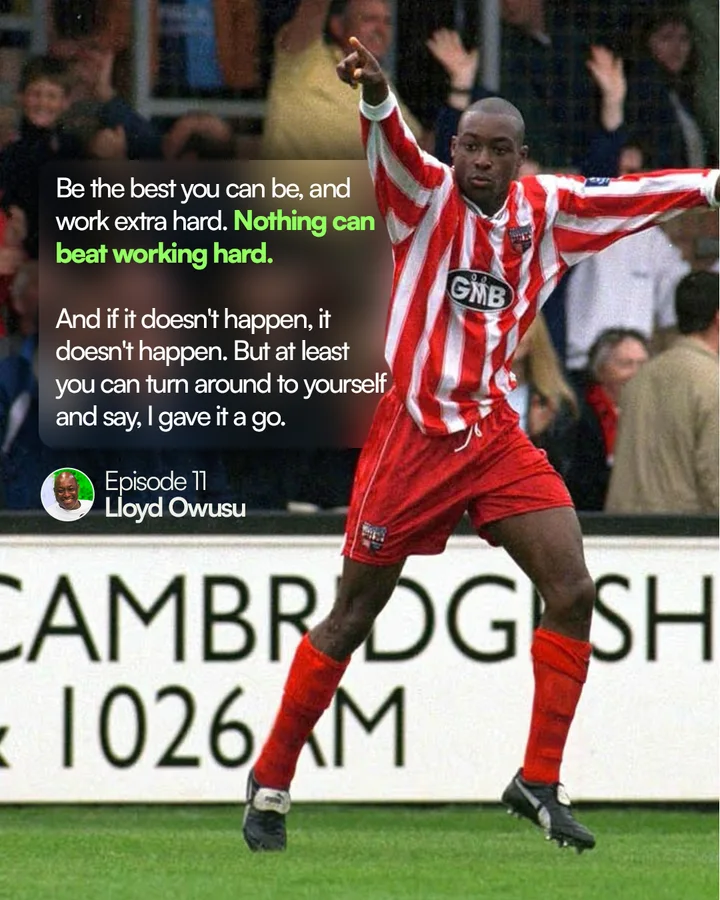
0:00 Lloyd Owusu I called my mentor, Danny Bailey, I said, Danny, listen, Larny is gonna jeopardize this deal for me. I wanna sign it. I don't care if it was 50 pound a week. You know what I mean? It's a professional contract. So Danny spoke to Lanry and Lanry said, okay, sign if you want to sign a contract. Once I signed it, I got rid of him. And as they say, the rest is history. The rest is history from there.
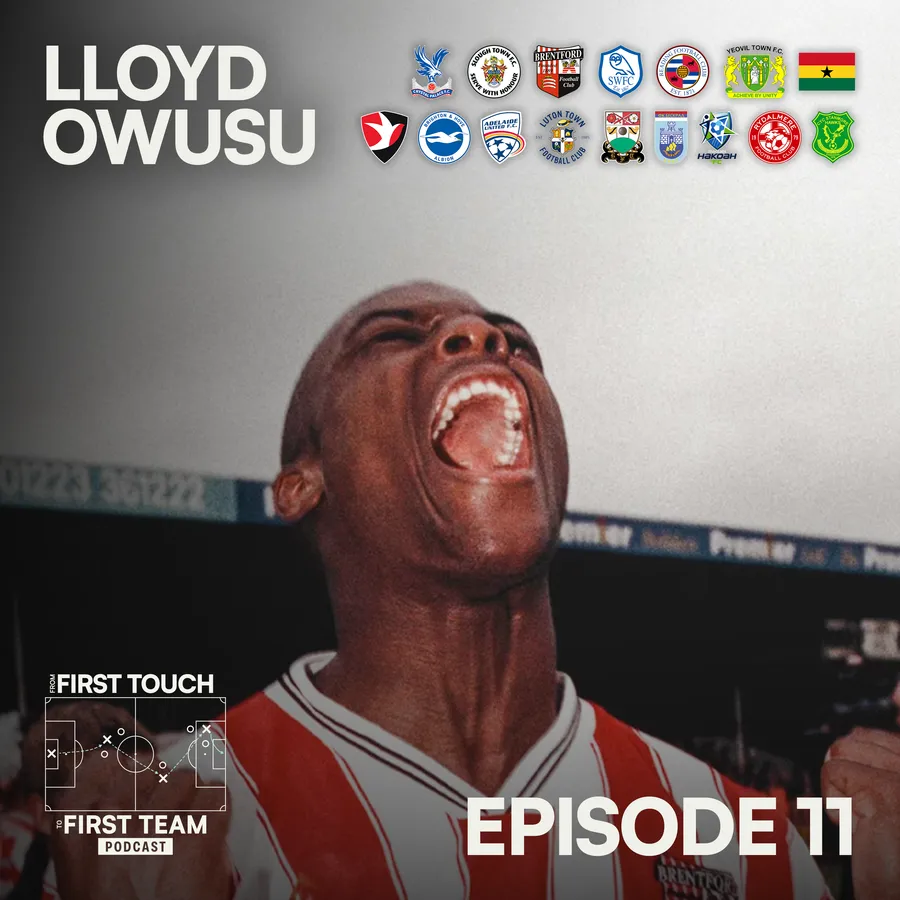
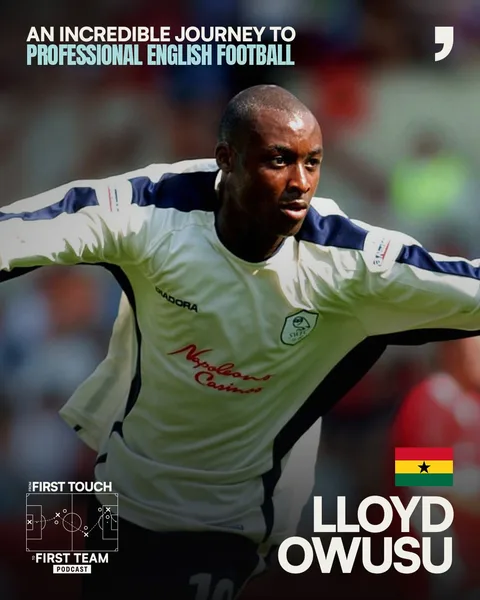
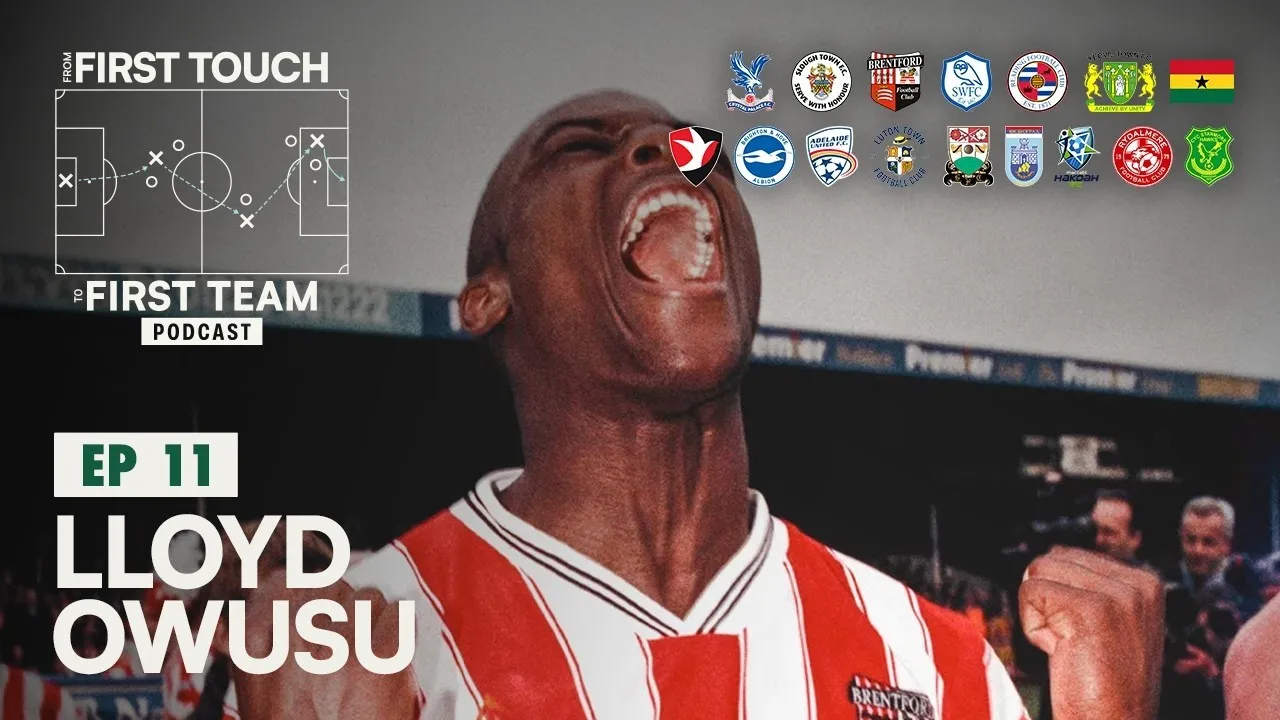
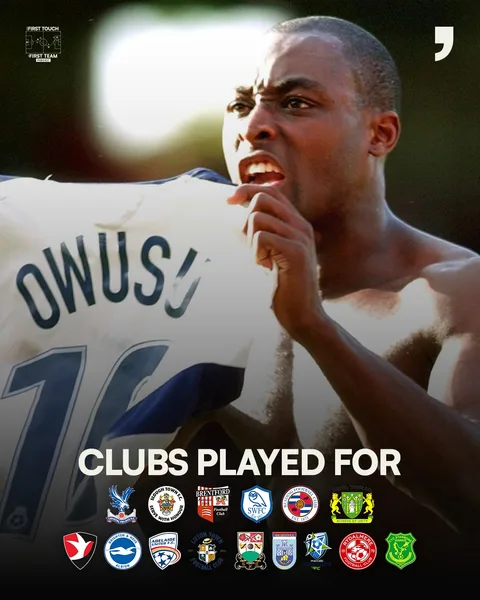
0:15 Jan Welcome back to From First Touch to First Team. I'm Jan, your host, and today I'm sitting down with Lloyd Owusu a striker who grew up just outside of London, never came through a professional academy and built a career across Brentford, Sheffield Wednesday, Reading Yeouvil Luton, and the A League here in Australia. This episode will be a little bit different to other ones we have done on the show so far, because Lloyd is not just going to give us a players perspective. He's gonna give us three different angles. The former professional who lived it, the coach who now teaches it, and the football dad who is watching his own son go through it right now. Throughout this episode, we are going to jump between all of these three angles, and I think that combination is gonna make this one a very valuable conversation for especially players and parents listening together. Before we get into it, if you want to help this show grow and keep these conversations coming, here's how you can help us. Share this episode with one player or parent who needs to hear it. Leave us a review on Spotify, YouTube, or Apple Podcast. And if you're following us on Instagram, share the reels, leave a comment on the ones that you can relate to. Because that is what is telling the algorithm the content is worth pushing to more people. Every share, every repost, every comment helps us reach more people and bring More guests and bigger guests to this show. For now, thank you so much for supporting us and I hope you enjoy the conversation with Lloyd Owusu Lloyd, good afternoon. Good to have you on board. How you been?
1:38 Lloyd Owusu Yeah, thank you. Good to be on the pod now. I've been looking forward to this, so thank you for having me.
1:43 Jan Yeah, first of all, welcome to the podcast from First Touch to First Team. today will be, I believe, a very insightful episode for a lot of players and parents out there. We're gonna do something different today. So we're gonna talk about your journey as a professional player, but always gonna try to relate that to you also now being a dad of a young footballer, also being a coach. So we're gonna mix these stories together, to give the best insight and advice, hopefully to young players and parents out there. Before we
2:13 Lloyd Owusu Beautiful.
2:14 Jan start, I always like to give my guests a chance to introduce themselves, so maybe in twenty to thirty seconds who is Lloyd Owusu
2:20 Lloyd Owusu Wow, yeah, Lloyd Owusu ex professional footballer. Started my career in England with the likes of Brentford, Sheffield Wednesday, Reading, Yeovil, Luton, and then had a lucky spell here in Australia in the A-League, which is probably why I'm here today. And then finished off my career back in England and then emigrated back here 2012. the story's quite interesting, so I'm looking forward to talking about it.
2:43 Jan Yeah, amazing. It's funny, y all of these clubs that you mentioned, I've been watching Welcome to Wrexham recently, because I was sick last week and I got and then out of
2:51 Lloyd Owusu in.
2:52 Jan nowhere there's all of these clubs that are still in these leagues that they're playing. maybe take us first back in time. You grew up in London. What was
2:59 Lloyd Owusu Hmm.
3:00 Jan your first contact point with football? What was your first touch?
3:03 Lloyd Owusu Yeah, so I first, I grew up just outside of London, an area called Slough, which is 20 miles south of London. And yeah, from my first experience, I would say my first real experience was from the age of about 10, 11. I always remember when I first joined football, my friend, one of my best mates, Gary Byrne, had just joined a new school and he saw me on the field like, he oh, this guy's really quick, I wouldn't mind getting him to my football team. So he said to me, oh, would you like to come and train with my football team? I didn't really know much about football really. So he said, I'll just come. I went to go and watch them training and then I joined in the session and he got on and I just liked it. And it was weird because after he goes, oh, the manager likes you. So a week later I went back again and they said, yeah, they want to sign me. So was like, oh, happy day. So I said to Gary, it only like a 10 or 11. I said, Gary, I said, where's my wages? Are we getting paid?
3:49 Jan Ha ha ha.
3:50 Lloyd Owusu I thought you got paid. He goes, oh, no. Because now you've got to pay them, you've got to pay them subs. It was £1.50 a week or something. yeah, that was where my first love for football come through my good mate Gary Byrne. But then from there, I just sort of loved it. And then yeah, the career started from there, I would say.
4:06 Jan yeah. I would imagine obviously growing up in London, everyone is big about football. As soon as you're in it, you can't stop, right?
4:13 Lloyd Owusu Hmm.
4:13 Jan What would you say from which age would you start to watch more football and then also think, wow, it would be amazing to become a professional footballer?
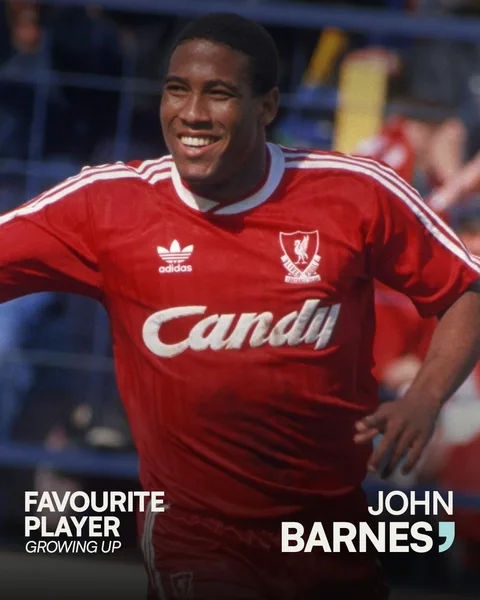
4:21 Lloyd Owusu Yeah, so for me, I would say my early memories were definitely from 88, I would say from the John Barnes era, the Liverpool era, that great team, Peter Beardsley Steve McMahon. You know what I mean? So that was my era growing up, So I was... Yeah, I probably about 10, 12. So, watching them kind of guys playing there and just thinking, wow, imagine one day if you could ever be a professional footballer. And then, I just kept watching football. We used to love it. Back in the day in England, we used have a match of the day on a Saturday. It would come on like at 9.30, 10 o'clock at night with all the games from the old Division One at the time, which is obviously the equivalent of the Premier League. And then, yeah, just used to sit there at night for an hour watching football and then just used to love it.
4:58 Jan I guess for anyone who's listening, it's hopefully maybe some dads being able to explain to their sons or daughters like who these players were, because I imagine some of these
5:07 Lloyd Owusu Okay.
5:07 Jan younger players that are listening would not know them. yeah, talk us maybe through the next years growing up, being in thirteen, fourteen, fifteen years
5:16 Lloyd Owusu Yeah.
5:16 Jan old. When did it become more serious? When did it become something for you where like, okay, I really need to lock in now?
5:23 Lloyd Owusu Yeah, yeah, it's a great question because, so I said, from I started at 10, 11 and then I was playing under just local, this is like proper grassroots football. And then I would say when I got to about 13, 14, I started to get, I was scoring a lot of goals and then it was like, oh, this is, this is something I could probably do. And then luckily for myself, when I was 15, myself and my best friend again, Gary, we got asked to go to a trial with Crystal Palace. So at the time, back in the days in England, you should be like a school boy. You should be like a center of excellence where you'd go one day a week and train with them and sometimes have a game on the weekends. So me and Gary went to this big trial, there's so many players went there and then luckily we got called back to go on the Sunday. So we went on the Saturday for the first trial and then called us back to come back on the Sunday for the next trial. And then on that second trial, myself and Gary, got taken out of the, we must've been playing no more than 15 minutes into a game. And the scout or the age of coaches, they just pulled me and Gary off. We like, sugar, if we done something wrong,
6:14 Jan ~
6:16 Lloyd Owusu 15 minutes, I don't think they like us. And right, ended the session. ~
6:19 Jan You were asking for too much money already.
6:22 Lloyd Owusu At the end of the trial, they said, yeah, you two have made it. So yeah, me and Gary, we've both got a year school boy forms. through that year of school, but this is under 15s and in England back in them days, you used to have a thing called the YTS Youth Training Scheme. So if you were good enough at 16, you'd get a two year contract to hopefully progress you from a youth team for two years to grow you into men's football, into the pro game. But unfortunately, myself and Gary, didn't make the cut. we just went back to our local team so now we were under 16s playing with our local team, Slough Town. But within this time, me, I progressed a bit more and I started to play a bit of reserve team football, which was I still playing with men. So I was 16, playing with men. So I was there for a few years. And then when I was 18, I adapted a bit more and I started training with the first team. And at this time, they were in the equivalent of the conference, the National League now, which is like the fifth division, the fifth tier. I was 17, 18, training with the men's team. And then I made my debut for Slough Town at 18. I made my debut for Slough Town and I always remember we won 6-0 and I scored four goals on my debut as an 18 year old. So it was like, it was unbelievable stuff and then from there clubs, loads of people heard about, this new young kid, new kid on the block, he just scored four goals in the conference. And then it was like, yeah, from there I was playing regular first team football at 18 and yeah, I guess the journey really, really started from there.
7:39 Jan So before we jump into that next journey, let's maybe start with that part that I introduced at the beginning of the episode.
7:45 Lloyd Owusu Mmm.
7:45 Jan Go back to your son, who's grown up here in Sydney, Australia, started to play football, grassroots as well. Is
7:52 Lloyd Owusu Yep.
7:52 Jan there parts that you can see that are similarities in between growing up here in Sydney, growing up in London the way he was exposed to football? And is there also stu something that you would say is very, very different?
8:02 Lloyd Owusu Yeah, very different to a certain degree. Firstly, obviously, I would say from his age, he started again, he started probably even younger than me. started at, yeah, he started under sixes and he was, or he was six and he was playing under eights. So just playing, that was by default. So he was always playing football from a young, young age where I like, cause I didn't start really till 10, 11. So I guess a bit more of an advantage for me then. The only difference I would say what I see when him growing up. compared to my time, it's reverse roles. Because nowadays I don't see many kids playing football on the streets and in the fields like where back in my days, if you found a patch of grass, you'd have two jumpers, a goalpost and kids would be out playing, we'd just be playing where now you don't see that. But then on the flip side, it's obviously football's evolved since my time to what he's doing now. So it's this bit more, I would say more structured football for the youngsters of this generation growing up, which is also a good thing. So yeah, his journey's obviously a bit different to what my journey was, but I like to always emphasise with him how my journey was so he understands what it's also, what it really takes as well. Don't think it's because you've got the good facilities here. I wouldn't say you got it easy, but you've still got to work hard regardless, no matter how you do it, you have to work hard regardless.
9:12 Jan Yeah. So then that's on that, put the coach's head on that you're you're a coach as well. There's always these discussions around nowadays football is too structured. And I think especially in Australia, there's not many possibilities to play in a cage because there's barely any cages out here, these topics. Is that something that you think should come back a little bit more again? Then rather than giving too much structured training and games, let the boys and girls from like When they start until the age of eleven, twelve, maybe play more freely and just compete.
9:41 Lloyd Owusu Yeah, definitely. think again now I find it too robotic the way they're trying to structure these kids into certain formations and certain positions. They're typecasting players. I feel like they should let kids, like you say, from that young age, just let them enjoy it. Just give them a ball. Just let them run around. Just, you know what mean? Loads of games, loads of touches, loads of contact time. I just don't feel there's enough contact time with a ball in this country anyway for the youngsters of this generation where, I say, back in my days, like you said, it was literally a football and that's it. football in the field and you just be play, play, doing all different skills. You'd be practicing. You'd be even find a wall and a ball. You know what mean? just remember when I was a kid growing up, I'd find a wall, just practicing my touch. I don't see that. You don't see that now. These kids, don't do it. they do is watch
10:22 Jan Yeah, not as much, not as much. Yeah.
10:24 Lloyd Owusu the tool. mean, yeah, they've got the YouTube, but that's not going to give them the real contact time of getting on the football and just having that love and passion of just doing it week in and week out.
10:32 Jan Yeah, a hundred percent. I I actually had a chat with my mom recently and she was like, Yeah, back in your days when you were growing up when you're a young kid, you would always go into the the backyard outside and
10:41 Lloyd Owusu Yeah.
10:41 Jan you would just juggle. But I was kinda would always come home frustrated because I could only get a very young ten, fifteen, twenty juggles and I always come home. It's like mom, I can't do it, I can't do it and she said But you still went out every single day and still tried. And at some stages just clicked and I feel like these are the parts as well where Then that progresses into I would be going out besides team training, I would go with mates, and we just play 2v2, 3v3, 4v4. We would play like shooting from outside the box, and everyone goes in goals. And you always knew that if you lost, there would be some sort of punishment, man. There would be some sort of punishment. And I feel like that's where the competitive mindset also builds. ~
11:17 Lloyd Owusu Definitely.
11:17 Jan which we want to get into this episode as well in terms of mentality. But
11:20 Lloyd Owusu Yeah.
11:21 Jan let's progress a little bit more so. a bit older, we're talking now thirteen, fourteen, fifteen years old. Obviously that's where structured training comes in. That's where here in Australia, in Europe, everywhere professional academies come in. You obviously didn't go through a full professional academy, right? So what would you say at what stage did you start to play against players that maybe you knew they were in a professional academy before, that were maybe experienced to more training maybe four to five times a week? And could you see a difference?
11:51 Lloyd Owusu Yeah, definitely. So back in our days, like I said before, like I said, when I was playing that Crystal Palace level under 15s, you would still allow to play for your club team as well. So you would train with your club once one day a week, your grassroots team one or twice a week. And then you would train with the professional club and then you'd play for your grassroots team on the Saturday and play for the professional team if you're in the academy on a Sunday or vice versa. So when I was getting to the age 15, again, there was players who were playing for the they would play their grassroots team, but they were at Arsenal. They were at QPR, were at Crystal Palace, they were at Tottenham. And you could see some of these boys were like proper good players. could tell we used to play against each in our club games. They used to be probably about two or three scattered in each team for all different clubs. And you could see the quality. And then that's what made me feel like, yeah, I've got to be part, I need to try and be a part of this.
12:39 Jan And then what what happened after that? when did the time come that you were you scored your first your four goals on debut?
12:46 Lloyd Owusu Yep.
12:47 Jan Did it go quite quick after that, that you you got picked up? Did a scout come? Did a coach reach out to you? How how can we imagine the journey there?
12:54 Lloyd Owusu Yeah, so from there, the journey was quite surreal because obviously I was 18 at the time playing regular men's football. So in a way you could say was it a boy fluke wonder, but... I kept continuing, I was playing regular football in the team for the first season. And then the second season, I was still playing regular as well. I wasn't like a one hit wonder, but a lot of clubs, professional clubs started hearing about this young boy scoring goals. So they were sending scouts and the managers and coaches and managers were coming weekly to Slough Town. So I would probably say for a good, yeah, a year and a half, year to a year and a half from when I was 18 to before I turned pro at 21, there was that window where clubs were coming looking just to make sure. because you know what mean, might, so all of them seeing, hearing that I'm scoring, I'm to see what's he actually like. And then, luckily for myself, yeah, was, oh, I said I was a latecomer really. I didn't turn pro to 21. So I had that bedding, but the great thing is I had that bedding of men's football for two years. You know what I mean, as an 18, 19, 20 year old for two years playing men's football regularly. And then luckily got the chance to sign for Brentford at the age of 21.
13:55 Jan So back then were you as a player aware that people were watching you especially, or did you only find that out at a later stage with reflection?
14:03 Lloyd Owusu Yeah, like I said, after the first four goals, it was all over the papers, know what Youngster scored four goals. So you had inklings that this is going to happen. And then you just hear through the grapevine that clubs are coming because you're playing, because you're such a young age and you're playing men's football. Because it's very unheard of a youngster playing men's football at that level. Even today's age group, don't see many youngsters playing like at the top level, so. A lot of clubs were coming, yeah, mean, were probably one or two clubs a game would come in each week and watch me. we had a few other good youngsters as well. So a few would come and watch us. then, luckily for myself, I got picked up by Brentford and signed there.
14:38 Jan So then the the question on that is, did that change something in terms of the mentality that you approach to the games? Because someone could think, you had then more pressure because you're like, maybe someone is watching today, I gotta perform or did that just more motivate you? what was it for you? Can you think back about that time?
14:55 Lloyd Owusu Yeah, just to be fair, for me it was just pure gut determination, what I really wanted. Nothing really fazed me, the way I was brought up. You just go and enjoy your football. If I knew clubs were coming, it wouldn't even bother me. I'm going out there just to play and score goals because I love scoring goals. So for me, was getting on the pitch. I'm making sure I'm having a good game today. Doesn't matter if someone's in the stand or not, I'm looking to score goals and that's what I was doing regularly on a regular basis.
15:20 Jan Which I think is such an important topic, which I discussed in one of the earlier episodes, is that too many players sometimes think, I only have to have this one game, this one time someone sees me. Yes, there will be parts but maybe there's one game where only one scout is there, and if you don't perform that they might kick on and forget about you. But at the
15:36 Lloyd Owusu Thank you.
15:36 Jan same time it's so important as a player to stay consistent because people will talk about that as well. And I think that's something that especially coaches look for. That players
15:44 Lloyd Owusu this.
15:45 Jan are not just One game top, one game bad, one game top, one game bad. It's about the consistency that everyone knows what they can expect from a player.
15:51 Lloyd Owusu Yeah, for sure, for sure.
15:53 Jan Then let's go into that journey of you being a dad again, your son, ages thirteen, fourteen, fifteen, from what you've seen here in Australia, what do you think is going well in the system and for him, and maybe what is something that could be improved?
16:08 Lloyd Owusu Yeah, look, firstly, Jani for me, if you've got to pay to play football, you're already killing the, what's the right word to use? You're already killing the crop of talent that's out there because, as you can appreciate, there's children and boys and girls who live in the poorer regionals of New South Wales or even all of Australia who can't afford to be paying two and a half, $3,000 to play football. So you're already losing out on quality players and a lot of that... players out west who just can't afford it. So already you're losing at that kind of quality. So for me, that kills the game already. But on the flip side, from what I've seen structurally, yes, it's very organised. love that especially now the youngsters are playing more games, which is always good. mean, what they're playing 30 games in the NPL under the 18s, which is good. So at least there's more game times there. feel like the minutes should be, I still think they should maybe even, I think they could play a bit longer than 35. I think 40 minutes could be nice. And then I just think... structurally, trainings from what I've seen around the way, it's good. But then again, on the flip side again, I feel for coaches and I feel for clubs because no disrespect If you're paying a coach only five grand. to coach a team. What's five grand to a coach? It's not even this full-time thing. Where in Europe, these coaches are full-time, so the kids are getting quality of training, getting structured, proper sessions. We're here. Some clubs have it and some don't. So again, it's 50-50. Some are getting good coaching, some are getting rubbish coaching. So how are you gonna develop kids collectively as a core one? It's a killer in this country at the moment.
17:41 Jan Yeah, I think you you you already you're spot on with that. There's a lot of points. We we don't want to take apart the system today. We don't want to talk about that too much because I think there's too many things that need to be fixed or could be improved. But let's go into the detail of how you've seen in terms of your son developing technically, tactically, physically throughout these age groups and what do you think is
18:02 Lloyd Owusu Yeah.
18:02 Jan for players in these age groups the most important. if you're a parent, just from a parent perspective. What should you focus on when you're twelve, thirteen, fourteen, fifteen years old?
18:10 Lloyd Owusu So for me personally, I think it beds slightly before that age. I think it beds before. with Tay what I not even did with him, it was just natural progression that I love, because I did it myself. Multiple sports. I based him around multiple sports. So when he was growing up, he was doing Taekwondo, karate, basketball. What else was he doing? Athletics. All these components. able him to aim towards what his main sport was, which is obviously football. So I feel like when you're a youngster at that younger ages, you need to bed everything so get the coordination, the IQ, the, you know what I mean? Everything, eye coordination, everything. So by the time he gets to that 13, 14, 15, when you're making a real claim to be trying to become professional or have some sort of career. You've got all that embodiment in you already to go into becoming a footballer and to become an athlete, not just a footballer. I say an athlete because it gives you the... For me, for Ty, luckily, he's got the hustle, he's got everything about him at the moment. He's got strength, he's got speed, he's got coordination, he's got technique, but he's still improving, he's still learning, he's still doing extras as well. So I think he's in a good spot where he is at the moment.
19:14 Jan Yeah, I think that's such an important message because what I see a lot is that a lot of young players, not sure if it's from the players or the parents, they're only doing football. They're nine, ten,
19:23 Lloyd Owusu Mm.
19:24 Jan eleven, twelve years old, where you usually just said the foundations are built through diverse sports, exposure of the body to different parts, especially coordination. where I oftentimes say like, Hey, let the kid be a kid, let them explore different ways. Don't go into structured training too much. Three times a week training football structured is enough. Everything else should be more freedom, should be more learning, different parts. Because 13, 14, 15, you will narrow down to one sport. You will have to if you really want to make something with it. Let's yeah.
19:53 Lloyd Owusu Thank you.
19:54 Jan Let's let's progress then with your journey again. sorry for jumping in between the times. I hope that's I think
19:59 Lloyd Owusu That's okay, that's okay, that's okay.
20:01 Jan I think I think it's a it's a cool comparison though. So
20:04 Lloyd Owusu Yeah.
20:05 Jan You said you then yeah, got scouted, you signed your first contract. Maybe take us back in time. What was that moment like? Because in terms of mentality and in terms of you saying you were hungry for that, that probably changed a little bit in terms of your life and the the outwards trajectory, right?
20:20 Lloyd Owusu Yeah, funny you say that. So I'll go back to the Slough Town situation. So I was playing for Slough Town and what happened was we had a really good season. My last season in Slough Town, which was 1998, we had a really good season. we ended up fourth in the league and then we lost out on a semi-final of the FA Trophy. We actually got robbed of the FA Trophy. So we had a really good season. However, the following season, the league, the football league, the conference, they changed the criteria for the league. So each team, each club had to have a certain amount of stadium. Their stadium had to be a certain amount of seats, X, Y, Z. Mind you, I'd signed, I had two year contract already, so I've signed two year contract with Slough Town So anyway, the following season, they said to us, Slough Town said to the chairman, you need to put an additional, I think it only like 50 seats or something to keep up to the criteria of the league. And he was like, no, our league, I feel like my stadium, and okay, if you're not going to do it, you've got to get demoted. So all the players are thinking, hold on, sure the chairman's going to put the seats in because otherwise we're going to get demoted. We've just had such a good year, we're building to try and get promotion to the old division three. And he's like, no, no, he was stubborn, he didn't do it. So the football league demoted us. They demoted Slough Town, we dropped down two, I think it was even two or three divisions. They dropped Slough Town down. And as you can imagine, there was a lot of those four or five youngsters who were up and coming with 17, 18, 19, who were looking to try and progress our careers to go either into the conference or in the professional game. And we saw our contracts left. We're like, no, I'm not going to go and play in a division, two, three divisions below when I'm trying to become a professional. So what happened was because that happened, was a breach of contract with our contracts. So... At the time, Brian McDermott, he organised trials for a few of us youngsters to try and see if he can get us contracts with either professional clubs or some higher conference clubs. So luckily for me, he got me a contract, he got me a trial with Walsall, who at the time were in so the League One now, they were in League One. So I went there on trial and as you can imagine, coming from conference, I'm like nervous, you know what mean? These are professionals, I'm just a, he trains twice, these guys train every day. So a month trial it was to have a look at me the first week I was baggy, bruv. was nervous just everything was just didn't really happen and then the second week I got a bit more confident got into it but then into the second week towards the second week I got a phone call from Brian and said, Lloyd I've I've just sold you to Brentford. I'm like what is he winding me up? goes, yeah I've just sold you to Brentford. I was like... He goes, you need to come back down south and sign. I was like, wow. So went to go and see the manager at the time who was Ray Gray. And I said, look, I heard it. I've got an opportunity. He goes, okay, look, we wanted to see you for another more weeks, but if you've got an opportunity, take it. So anyway, came back down south and then I met up with Ron Noades may he rest in peace, and Ray Lewington at Heathrow Airport to go and sign my contract. Cause they were about to fly to Malaga for pre-season training. So. I went to see him, was like, well, I miss this, this is a dream come true, I'm about to sign a professional contract. And at the time I had this agent, I had an agent called Lanry Oakey. So I said to Lanry, look, Lanry, you've heard of information I've got to go and sign for Brentford. He goes, don't worry, I heard about it, I'm gonna meet you at the airport, we'll go through the contract, blah, blah, blah. Get to the airport, met Ron Noades obviously Ron Noades at the time was ex-Crystal Palace, he was a legend, seeing them, seeing them flesh is like, you know what mean?
23:21 Jan You're like
23:21 Lloyd Owusu Famous, you found Ian Wright, you signed Ian Wright and my heroes. So anyway, we get to the airport and he offers, he shows me this contract and I'm like, oh my God, this is three year contract. at the time I was like, I was only on 50 pound a week at Slough Town, yeah? And the contract was 350 pound a week. I was like, wow, this is like gold dust to me. Thousand, thousand pound of gold. I was like, wow. Anyway, the agent gets the contract. He looks at it, he goes, no. He went, no. This is, we're not signing this. This is the rise we offer. My client's worth more than this. And I'm like, nah, I don't care what it's worth.
23:50 Jan No no no I wanna take it.
23:51 Lloyd Owusu It's professional contract. And one those guys, one of those guys, okay, if you're not gonna sign it, we're going to Malaga, That's it. So at the time I called my mentor, Danny Bailey, I called Danny, I said, Danny, listen, Larny is gonna jeopardize this deal for me. I wanna sign it. I don't care what it, I don't care if it was 50 pound a week. You know what I mean? It's a professional contract. So Danny spoke to Lanry and Lanry said, okay, sign if you want to sign a contract. Once I signed it, I got rid of him. I got rid of the agent. was just like, yeah, no more. yeah, luckily for myself, I signed that deal from there. And as they say, the rest is history. The rest is history from there.
24:19 Jan Yeah, I think that's a good moment again now, for us to go a little bit back in time or where we are now, younger players.
24:27 Lloyd Owusu Hmm.
24:28 Jan Fifteen, sixteen, seventeen, obviously, these days agents are starting way, way earlier, right? Agents coming sometimes around already when players are fourteen, fifteen. it's happening way earlier. From your experience of your professional career, and I assume you have dealt with a few different agents approaching, working together.
24:44 Lloyd Owusu Hmm.
24:45 Jan What is maybe from your perspective on advice to play some parents what to look for?
24:49 Lloyd Owusu Yeah, firstly, firstly, always say obviously they can't even sign into their 16 anyway with an agency anyway. So that's first and foremost. From my perspective, you have to have a feel at what I mean by a feel of an agent. You have to have a feel. Do they care for you? because it's all good these eight, there's over the years, I've seen agents with kids, they've all these big, companies, they've got so many players. No, just they don't, you're just another number. But if you've got an agent who cares for you, for me, even to this day, I'm coming up to 50 this year. My advisor, Leslie Fever, who found me many years ago, I'm still with him now as a big uncle, he's like my uncle, still a mentor to me now. If I go through football stuff, I still talk to him. It's like, you know what I mean? This is 30 years of friendship. But it's that, you have to know, you have to feel, Do they really care for you? Are they giving you the right information? Are they guiding you? Too many of these guys think, yeah, quick fix it. I just get this kid a quick move and they tell the parents this and that. I'll get you this, I'll get you that. But me, a lot of it is BS. But you have to have, I say you have to have a feel. If you meet someone, you'll feel genuine connection. When you meet an agent also, you'll feel that vibe of him. If you feel that vibe of a person and you got a real good feeling, yeah, happy those, go with it. Go with it. That's how I look at it.
25:56 Jan Yeah, I think I think that goes exactly what Danny said in one of the last episodes as well. He said you gotta look for the honest ones. The ones that tell you, hey, this is the level that you're at. This is potentially where you're gonna go. But in
26:08 Lloyd Owusu Mmm.
26:09 Jan between there's this topics that we need to work on that you need to improve in your game, that we can actually talk about these next opportunities. ~
26:15 Lloyd Owusu Definitely.
26:16 Jan What would you say, because I think that's a big topic these days and that's not only in Australia, that In terms of mindset from players.
26:24 Lloyd Owusu Hmm.
26:25 Jan I feel many times there's a lot of players now that say, I want to become a professional footballer, I want to play football, but that don't look behind the curtain of what that actually means. Maybe
26:35 Lloyd Owusu Yeah, exactly.
26:37 Jan give us a little bit more of an insight what that initially meant for you back in the days, the extras that you had to put in, maybe the travel time that you have had to put in the sacrifices to then relate
26:46 Lloyd Owusu Yeah.
26:46 Jan into the next topic of what that looks like these days, but maybe start with your journey with that.
26:50 Lloyd Owusu Great question because again, as you can imagine, I like, cause I was playing for Slough Town. I'm only training two nights a week and the game on a Saturday. Obviously professional, everyday game, fit, fit, fit. So I knew myself, if I need to get to that next level, I've got to be, if I ever get called upon, I've got to be at that level. So luckily for myself, I'll go back to the name again, Danny Bailey, who was my mentor, great guy. Still talk to him to this day, Uncle Danny. He was an ex-pro who'd been there, done it. was a proper top ex-pro, but he had come down. He was 33 at the time coming down, finished his career. So he, because of how it stuck with me, he saw me, after my first training session that he saw me, he pulled me in a change room said, you know what son, I don't know you, but you've got something about you. And ever since that day, he took me under his wing. So what I used to do, a lot of people don't even know this now. So after a game on a Saturday with Slough Town, I would drive up to East London to Walthamstow with Danny on a Sunday. And I would do a three, four hour session with Danny after I've played 90 minutes already. I would go up with him, we'd go swimming, we'd hill climbs, bike riding, technical football work, three, four hours every Sunday after my game on a Saturday. Cause I knew if I got called upon, I had to be at that level. And then at the end of the season, he took me, he used to take me for two years on a trot, took me to Cyprus, warm weather training every day, three hours a day, three, four hours a day, sessions morning, afternoon, training, training, because again, if I'm getting to that level, I need to be fit and it put me in good stead. when that, when that. contract came knocking on the door from Brentford knew technically, yes, technically I'm not as good as these boys because I've not had that nurturing of the academy system and everything. But at least I knew I could be with my work ethic and fitness because you can still work on your technique, you know what mean? But my fitness, yeah. So from there, just, I was already put, I was put in a good place. So lucky for Danny, Danny done that for me and yeah, I never looked back from there. So for me, for these youngsters now, When you're 13, 14, 15, even now, you've got to do extra. You've got to do more than the other kid who's sitting at home on their computer.
28:38 Jan Yeah.
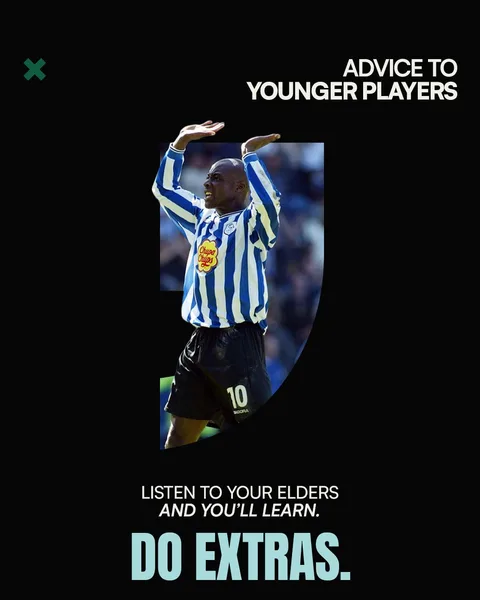
28:38 Lloyd Owusu I tell little man now, it's all good. Yeah, I know that we've evolved with technology. Kids have got phones and iPads, blah, blah. However, yeah, have your little fun time here and there, but you've got to spend half hour going to do that. Like I said, and find a wall. Go and get that ball, wall and ball, touches, kick ups, jiggles. Keep up these dribbling and cones. go and do some MAS runs, some fitness work. Just be extra to them what the other 15 or whatever age that you're with, do more than that other kid's doing. And that'll put you in good stead. Is it gonna make you a pro? No one knows. It'll give you that little 1%, as I call it, that little 1 %-s. So.
29:08 Jan Does it c does it compound over time? A hundred percent. And I imagine the the first part, or like what I want to touch base on, is you played on a Saturday. I imagine that in the team that you were in, a lot of the guys were after the games like, Yeah, now the weekend we're just gonna enjoy Sunday, we're gonna have a day off, we're gonna go out, do whatever they want. And you were like, Nah, I gotta go back to training. And I think
29:28 Lloyd Owusu I've got to train.
29:29 Jan that's that's such a big part where that's for me the difference of someone saying, I want to go there. And actually doing
29:34 Lloyd Owusu and
29:34 Jan the parts that you have to do to get there, to just be ready. And even if that means you're doing it for one year until that one slim chance comes, or the other
29:42 Lloyd Owusu Yep.
29:42 Jan ones that say, I want to do it, but then they decide on a day off, on the recovery day, to just be silly and not spend time with their body or rehabbing or doing S&C work, going to the gym, whatever it might be, to actually keep their body in shape. The the second part, which I think is amazing that you mentioned that, is There's this challenge of how much training is too much and how
30:04 Lloyd Owusu Mm-hmm.
30:05 Jan much is enough, right? But I think for a lot of players what I see here in Australia, the the the challenge is that they're thinking they're doing enough, but
30:14 Lloyd Owusu Hmm.
30:15 Jan all of it is the same.
30:16 Lloyd Owusu Yeah. Yeah.
30:17 Jan And that's maybe the next question for you being a dad and coach and seeing the environment, especially for the players that are 14, 15, 16, you have club training, club games, then you have maybe school training, school games, then you maybe do another team, small group session. But for me, when I look at that, all of that is the same kind of structure, it's the same kind of environment where
30:37 Lloyd Owusu Yep.
30:38 Jan many times I look at players and I say, You should probably skip that one team training and actually go to the gym. Because
30:43 Lloyd Owusu Mmm, good.
30:44 Jan If you don't start that part with 13, 14, 15, it will not be able to catch that up. you're not you're not gonna bench press 80 kilos and do squats 100 kilos when you're 18 from not having any experience doing that before.
30:57 Lloyd Owusu Correct.
30:57 Jan How would you approach that in terms of structuring like a training week nowadays?
31:02 Lloyd Owusu Mm.
31:02 Jan Because back in the days the game was different. Nowadays, if
31:04 Lloyd Owusu and funerals.
31:05 Jan you could say to your player and parent and give them advice like, hey, This is what you kinda be should be looking for. What would you say to them?
31:11 Lloyd Owusu So you say, school club structure is practically the same in regards of what they're doing. And even to a degree, the intensity is probably just on par as well. Maybe club, obviously when you go to a club level, it's a bit more intensity because you're playing with a bit better quality of player. However, you're still training all week. However, for me, if that was me or how I would address it even now, monday to Friday. Yes, so let's say they do three club sessions a week, one game. or two games because they play one for their school, some, if you're in a private school anyway, private school game, club school game, three trainings for the club and maybe two trainings for school as well. So it's quite, it is quite a lot, don't get me wrong, but it's all the same. It's just the
31:46 Jan Yeah. Yeah.
31:47 Lloyd Owusu same. There's no, you say, there's no, let me, one of them, one or two of them days, let me even just have one a day of a recovery. The second day might be some strength and conditioning, One might be a rehab day in regards of core stability stuff. Yes, two days of the week of technical just with a ball. And then one day, one or two sessions, team structured. So if you can balance that out collectively, then I think you're gonna be in better stead than just having that typical. Training, training, training, training, training, training, training. Because a lot of it just seems to be training, training, training.
32:15 Jan It's the same stimulus, yeah.
32:16 Lloyd Owusu Yeah, so you need to structure it and have different concepts to your training to adapt to become a better player personally.
32:24 Jan Yeah. And I think that's the important part because when you're at some stage arrive at the higher level, now we're talking eighteen, nineteen, twenty years old, it will be super hard to catch up. You either
32:34 Lloyd Owusu yeah.
32:35 Jan you're you're either ready or not, because as soon as you go into the environment where it's everything is performance based, everything is about points, everything is about winning games, no coach is gonna care. They're either gonna be like, Is the player ready? Yes, okay, I'll give him a chance, starting eleven or maybe coming off the bench. He's not, he can't control this ball with his weak foot, and I've seen it five times. Your chance
32:52 Lloyd Owusu Yeah. Yeah.
32:54 Jan is gone.
32:55 Lloyd Owusu Well, without a doubt.
32:56 Jan no that's the the question for me on that now is because we touched base on it for yourself, you never had all of that the training amount that all of these other players had. What would you say being able to reflect over the years, what was it that made you stand out and be able to not only survive in the professional environment initially but also excel in it?
33:16 Lloyd Owusu extra work, just extra work for me personally, that's what it came down to. It came down to my own self-belief anyway. I always knew that I always wanted to be just the best. the best goal scorer. Like I said, was never technically a gifted player. I never one of them ones who does all the step overs and all the tricks. No, Lloyd was just pure, I was more sheer pace and power. However, I knew that no matter what game I go into, my mindset was like, I'm the best player on the pitch. I'm going to score every time I'm going to be on the pitch, I'm going to score a goal. That was literally all come down to my mind and belief, but also extras. After training, I was either before session, I'd get a of balls, get a of the youth team players, a couple of the young boys, get a keeper half hour before training start, repetition, repetition, repetition. And then after the session, depending on how taxing the session was, I would be after the training session, 20 minutes, half hour, repetition, repetition, left foot, right foot, striking inside the box, outside the box, volleys, headers, practically every day.
34:10 Jan Yeah.
34:10 Lloyd Owusu Yeah.
34:11 Jan Because in the end that's what is needed, especially for you back then to catch up on all the hours that you missed out on, right? You you said you started later, then you also had not as much training. where I believe the training hours is not an issue these days anymore. Every kid can get three or four training sessions a week.
34:28 Lloyd Owusu Definitely.
34:29 Jan but it then again it comes down to mentality, and I think you acknowledging as a player that you're like almost not the most technical. I was not the one doing the fancy stuff, but I knew exactly what I was good at. I think that's an important part as well that I see a lot with players is you need to know what your position is and you need to know what your role is. So as a striker, your
34:48 Lloyd Owusu Yeah.
34:50 Jan the your final product is the goal. You don't
34:52 Lloyd Owusu to go.
34:53 Jan need to be the one playing the final pass. You don't need to be the one crossing the ball and you want to be the one in the box that's scoring the goal.
34:59 Lloyd Owusu it.
34:59 Jan The same applies for a centre back. Often I find I see players are like, Yeah, but I want to play with the ball. It's like, yeah, but isn't
35:05 Lloyd Owusu Thank you.
35:06 Jan your job initially your defender? You need to protect the goal. Yes, you need to play out from the back, but when I'm playing out from the back as a center back, my role is to get the ball up the field to the midfielders, to the wingers, to the strikers who are the ones responsible for scoring the goal.
35:20 Lloyd Owusu Good.
35:20 Jan So I think that mentality part for young players out there is is is important as well, that they have to understand what their role is.
35:27 Lloyd Owusu They have to know their roles, especially when you get to certain, like you say, when you get to that senior level, because I said, when you're 13, 14, I still feel like it's good to adapt to different positions on the pitch.
35:39 Jan Yeah, a hundred percent agreed.
35:40 Lloyd Owusu Very good. But once you get to that more 18s, this is my position. That's when you've got to try and forecast that your career and forge it towards that main area. If you're, if you're in the top three or if you're a midfielder three or if you're in the back line, whatever, that's where you got to, that's where you got to try and get your, get your game from. But so for me, when you're that age, that's when you got to start specialising more. And I for me, that was what I was doing. Specialising just technical finishing, finishing, finishing.
36:03 Jan Yeah, and spending all of these times repetition so that when it comes to the game you're just there and you you already know
36:08 Lloyd Owusu Okay.
36:09 Jan what's gonna happen and the the body brain connection is there.
36:12 Lloyd Owusu Yep, correct.
36:13 Jan we're now going back into the the story of your son, which has not happened yet because we're talking more the ages sixteen to nineteen, twenty. But from your perspective, what would be an ideal for him if he wanted to progress with football towards a professional level? What steps does he need to take or a a player in these age groups to be able to get them into the best position to get there?
36:35 Lloyd Owusu players in this country between 13 and 16, I think technically and technically and everything they're potentially on par with the European players. However, because there's so many different sports here, they're not, they're not focused on just that main aspect. So that's, that's what he that puts them on a back burner. However, I also feel if you've got something about you as a between 13 and 16, I personally, it's my own belief, you have to be in Europe. If you've got the opportunity to be there, you've got to be in Europe. Unluckily for a lot of kids here one they haven't got the passport so they can't go they still think they can go when I get all you get all these agents and Company saying yeah, we'll take you over to you guys. Yeah, it's all good You can't sign you can't sign from them. You ain't got a passport So if you've got a part in opportunity and you're good and you and you feel like you're good enough You've got to be able and that's why that's why Ty now. He's over he's over in Holland he's signed for Sparta Rotterdam So as much as I miss him to get me wrong, this is hopefully part of start of his journey where he's just turned 14 now so he'll go for their under 15s next year or next season, the season coming and hopefully he can start forging a career in every year getting better and getting better and getting better and hopefully something could happen at the end of it.
37:46 Jan So important question from my side now into that. You said that if a player has something about them, if a player is good enough, I think many, many times there's obviously every parent, and I'm not a parent yet, but I believe maybe one day if I will, I
38:00 Lloyd Owusu No.
38:00 Jan will feel the same that you always think, my kid is good. My kid is like better than these other ones, because obviously you're a little bit blinded and you are attached to the game. What would you say How can parents identify and say, my kid got something that is different or that's good enough to maybe get
38:19 Lloyd Owusu Yeah.
38:19 Jan that step?
38:20 Lloyd Owusu Again, and you just use the word there, something different. And that's a great saying, something different and something unique. You're playing here in Australia, and like I said, no disrespect, the level is, the intensity, the level is not as good as Europe because... In Europe it's dog eat dog. It's every kid, that's all they want to do is just football. Where here again, like I said before, all different sports, which is fair enough and I respect that. So there's not that real desire. But if a kid in this environment, i.e. Australian environment, is playing in a high end so-called NPL one, they, mean, NPL one, for me, again, that doesn't matter what level, as long as the kid's playing regular football. But if a kid's playing at that top end of his team and he is outstanding enough in his team and he's shining, surely that means that's saying something. If he's excelling if he's setting up goals, if he's a creator, if he's scoring the goals, if he's a great goalkeeper, shot stopper, if he's reging people talking about him, you hear it. You hear it in the
39:08 Jan Yeah.
39:09 Lloyd Owusu stands. You hear it the stands. You hear it within the club system. You even hear it within the kids. Who we playing today? they got that Tyrese Owusu kid. You hear it, you know what mean? So
39:18 Jan Yeah.
39:19 Lloyd Owusu they've got something about them. you've got to potentially give them the opportunity, I think, go and put them in the Europeans scenario. But then at the end, they'll go there and they'll see themselves. And the parents, if they're clued up enough, my son's either good enough or he's not good enough once he goes to Europe. When he goes to Europe, you'll be able to see. Then they'll be saying, you know what? You are a bit out your depth. Let's come back. But if you've got something about you, let's give it a go.
39:41 Jan Or even I think that's another important part, even if they're going or if they're like entering a new environment here that's maybe a level higher, and initially that they look a little bit out of depth, they're looking like, okay, now I'm like in a squad of eighteen players, number sixteen, seventeen, eighteen again.
39:55 Lloyd Owusu Mm.
39:56 Jan Let the player be in that struggle. Let them be challenged because as you said, when you get your first week when you were were trialling at a higher league, you're like, Man, I was rubbish, I was nervous, it was
40:06 Lloyd Owusu Mm.
40:07 Jan tough. But then week two, week three, week four, you adjust and you naturally become better. But you just need
40:12 Lloyd Owusu Correct.
40:12 Jan to give you give yourself the kid, everyone needs to give them the time to adjust. And I think I'd rather have a player that is having going through this stage at sixteen, seventeen, eighteen and struggle for a bit and have the challenge and
40:24 Lloyd Owusu Mm.
40:25 Jan get their first challenges in these ages than when they're twenty one, twenty-two, the first time in their career walking through an environment where they're not the best, where they're out of nowhere one of the worst.
40:34 Lloyd Owusu Mm.
40:34 Jan And then they're not being able to handle that because what like we had said already before, it's results based. They will not get the time, they will just sit on the bench.
40:42 Lloyd Owusu Yep, correct, yep.
40:43 Jan So on on that topic, was there ever a time in your career where you had a phase where you didn't get game time, where maybe things were not going your way, where you had to find a way to get back into a squad, maybe even after injuries, where you say this was a challenge, but now reflecting on it helped you in the long term?
41:02 Lloyd Owusu Yeah, luckily when I first turned pro, luckily for myself, I ended up playing 56 games and scoring 25 goals. So that was even dream come true because I didn't even expect to play every game. I thought I was going to play for the reserves and make my way through. But once I become more established player and then obviously I moved teams, for prime example, great story, went to Sheffield-Wednesday, for example. When I went to Sheffield-Wednesday, everything happened brilliantly for me for my first ever game, my first touch, scoring a derby. However... New manager came in, I wasn't his flavor. I'll give you the actual story. So we actually had a game against Wycombe live on Sky Sports. I started the game, I scored the goal, set up the winner and got man in the match. And then the next game I was dropped. This is
41:42 Jan But same manager, same manager. Okay.
41:45 Lloyd Owusu not the manager who brought me in, this is the manager who came in.
41:46 Jan Yeah. Yeah.
41:48 Lloyd Owusu So I'm thinking, I've just scored a goal, set up the winner, man of the match live on Sky, and then you're dropping me. And he dropped me and he just dropped me again, didn't play me a few times. I went to go and see him and he gave me some BS story how he didn't think I worked hard enough, blah, blah, blah. I didn't score enough goals, but like I said, I've scored a winning goal, blah, blah, blah. So for me, that was quite tough because I wasn't playing games now. So that was maybe because he didn't fancy me as a player, but from that perspective made me work even harder. So I showed him, said, you know what, you don't play me, I'll just keep doing what I've got to do. I kept playing, playing, kept training hard, working hard. And then when the time comes, I know that he's going to need me at one stage. But luckily for myself, then I actually got to move at... I actually got to move to Reading on loan into a higher division. So again, it's all down to mentality based. When you get struck down with adversity, how do you deal with it as a player? A lot of players will just probably crumble. But now, the
42:41 Jan Yes.
42:42 Lloyd Owusu way I was brought up mentality wise, I just said to myself, no, I'm not having this. I've got to keep working harder. Keep showing them that I'm made of stern stuff and just keep working hard and just doing that extra bit of work. Again, it goes back down to doing that extra bit of work.
42:55 Jan I think what always comes into my mind now is a statement that Nicolai Müller who played in the Bundesliga made in our episode. He said I always got dropped from a first team, I had to play reserve when I was younger. And the one thing that was always in my head was he said, I needed to be so good that the manager could not drop me. And I think
43:12 Lloyd Owusu Hmm.
43:13 Jan that's a mentality that like as you said, more players have to have to take on board because especially over the last years here in Australia I've seen and maybe that's happening in Europe as well. I'm not I can't tell. But I've seen a lot of players that it's round nine, it's round ten, it's round eleven. They're young players, they don't
43:28 Lloyd Owusu Hmm.
43:29 Jan get first grade game time, they don't get enough game time. They straight away start to question the straight maybe I should look for another club, or maybe the the coach doesn't like me, or you know what I'm gonna do next year. It's like you just had this the first third of the season. You have twenty games to go. There's always injuries in football, there's always players leaving, senior
43:44 Lloyd Owusu Yeah. Yeah. Yeah.
43:48 Jan football sometimes players are on holidays, there's something happening. You just gotta be ready for your for your moment and you just gotta stick it out. And you actually gotta take that as a motivation to say, Now hold on a second. I know what
43:59 Lloyd Owusu Mm.
43:59 Jan I can do. I'm gonna show the manager and I'm gonna be so good that even if the manager doesn't want to play me, my team is like, Why are you not playing? We want to we we want to play with you. I think that's
44:07 Lloyd Owusu Correct.
44:10 Jan the biggest part you can achieve as a player that's like your whole team says, Yeah, we need you to play. ~
44:14 Lloyd Owusu Mm-hmm. Yeah, I've had that before. Definitely. Yep. Yep.
44:18 Jan So then maybe maybe take another take the coach's hat on again. You are a coach as well.
44:23 Lloyd Owusu Mm.
44:23 Jan What would you say? What is the ideal way for coaches that are maybe listening to deal with players that they know they're good enough or nearly good enough to be a starting eleven, but they're they are that number thirteen, fourteen, fifteen, they're getting game time here and there, but are not yet started, maybe they don't trust them at the moment. How should coaches approach that? How should they deal with the players?
44:42 Lloyd Owusu and I've seen it since I've been in Australia in the NPL system. What I don't see enough of is be honest and real with a player. as a player, all I want is a manager to be honest and open with me, transparent. Some players need the arm around, some need the forcefulness from a manager, but from the coach, manager, be honest with that player. Just let that player know where he's exceeding or where he's not exceeding, where his strengths are, where his weaknesses are. Just be open, have a conversation. They don't wanna build relationships with their players. It's just easy task. this kid ain't doing nothing for me. I'll just let him be. I'll let him dwindle in the number 13, 14. No, have a chat with that player. Say to that player, look, Joe, Joe Bloggs, this is what the reason why you're not playing is because you're doing, you're not doing this for me. I want you to do this. Go away, go and improve. If you do that to a player, as a player yourself, just feel, you know what, the gaffer, the coach, the manager, he actually does care for me. I'm gonna go and do this, I'm gonna go and show him and go and prove to him. But there's not enough of that. I don't see there's not enough communication with players from coaches to players.
45:41 Jan percent. And and one thing that just kinda comes to my mind is I think players especially need to understand that a coach always has a plan, right? And we're not now talking about senior football. The goal is to win the game. And if that means Lloyd Owusu is not starting, but he's gonna come in for the last thirty minutes because me as a coach, I know that you're gonna score a goal when the defenders may be a little bit more tired, when the game is a little bit more open, because you can get runs in behind and you're gonna score the goal and the team wins, then shouldn't be that more important than the individual player saying, then start today I'm not happy.
46:12 Lloyd Owusu Correct, You've got to look. have to have faith in your coach's structure, philosophy, and be mentally strong. Just don't be, like you say, too many kids will just go, oh, you know what? Oh, I'm not involved. I just want to go, like you said before. I just want to leave. Oh, I'm not involved. I just want to go. Just be strong, man. Be mentally strong. Just suck it up. Suck it up. Especially like it's in men's football. Suck it up. You know what mean? Don't be a baby and spit your dummy out in there. No, you've got to be strong enough and deal with it.
46:36 Jan And I see it so often and that's maybe towards the last part of this of of this episode is culture is such a big big point.
46:43 Lloyd Owusu Mm.
46:44 Jan maybe before I get into my point of the culture, maybe you can give us an insight of what you feel like was the best culture you ever experienced in a team and
46:54 Lloyd Owusu Yeah.
46:55 Jan maybe one or two parts that players did that made that culture so unique.
46:58 Lloyd Owusu Yeah, I'll probably go two episodes because I've my first ever year at Brentford. It was a unique situation because I said, Ron Noades may he rest in peace. He brought a team of everything. he had just, Brentford had just got relegated from Division Two into Division Three and he had sold Crystal Palace and he came to Brentford and obviously with them, he had a lot of money. So it was a matter of him trying to get Brentford back promoted. So, his plan was fantastic. So what he did, and all the old players who got relegated before, some of them got released, What he brought in was a mix of ex-pros who've been there and done it in the league. Guys who were journeymen to a certain degree who were regular consistency. youngsters who were on the periphery of premiership teams, that 20, 21 year olds who were just on the Tifa in the reserves. And then some non league players, some grassroots players, which was myself, a guy called Martin Rowland, Gavin Mahon and Darren Powell. And all four of us ended up having very good careers, all come from non league football. So we had such a different, unique blend, which was, I think it was genius stroke from one note, because very rarely would you see three, four different connections of a wheel connected as one. And we just all just got along so well because first we all knew the mission was to get promoted. So for when he brought each player he said to each player we're getting promoted. You're coming here because we're getting promoted. So already there, you as a player feel freaking out. feel, I feel. 10 feet tall. Just imagine what someone's like to go and win. And we just, it's such a great synergy on the training pitch, the banter, in the changing rooms, everyone was together. Weekends after a game, we'd all go out together. Midweek, we'd have a little catch up And then it was just such a good synergy. And then I would also say my other time, Redding was very good. Again, Steve Kopel, great manager, of my best managers I've ever had. Again, he just had a, the team was so synergized together, it was unbelievable. We just had quality all over the park, but it wasn't even about the quality of the park. It was the quality of the person as a human. Each one of the boys, was no, excuse my language, there was no dickheads. They were all just pure, good, solid guys who just wanted one thing was to. try and be the best footballer they could be, improve themselves as a footballer and improve the club as an overall. And again, we would do things together. That was the thing that would make the team so special. We did things together. Everyone, even some of the ones who had girlfriends and wives, sometimes the girlfriends and wives, we'd all synergise together and do things together. There was such a family feel. It was connection. That's where the real culture comes from. And... We had certain leaders in the team who had standards.
49:41 Jan Yes.
49:42 Lloyd Owusu There was three or four senior pros who were like, boys, if you drop below this, nah, we're not having it. And they would pull you up. They would pull you up. So I remember when I was at Reading, we had people like Graham Murray, who was a captain. Who else was there? Eva Inger Marston, had guys who were like James Harper, even Steve Sidwell who was a young kid, but Sid had so much experience, had real leadership. And again, when I was at Brentford, we had real characters. Our captain, Paul Evans, was a leader. Jamie Bates, who was a leader. Real men, men of football, and men who wanted the right things, and they just gave us leadership and just gave us cohesion, and we were just together, and this was brilliant.
50:22 Jan I think that's a that's a great summary. Maybe if you could give us two or three points of characteristics or what players can bring into a team, into a change room, because I feel like change room is so important. But what I've seen here in Australia, many, many times a lot of teams, especially in youth, they don't have a change room. They don't go even into the change room, they rock up to the pitch, they they change their boots, they're starting to train. And I'm like,
50:44 Lloyd Owusu Yeah.
50:45 Jan the the best parts that I remember from my youth where I made my mates On the weekend,
50:49 Lloyd Owusu Yeah.
50:50 Jan I already thinking about what in a few years' time when I don't play anymore. The one
50:54 Lloyd Owusu you
50:55 Jan thing I'm gonna miss the most is not the warm up, is not the I'm gonna miss the change room. Going into the change
51:00 Lloyd Owusu Yep.
51:00 Jan room, talking to everyone, talking about the weekend, whatever happened, talking about the game. So what are the
51:05 Lloyd Owusu Mm.
51:05 Jan two or three points that you think each every player in a team, no matter what character they have, but is the minimum that they should bring into the culture and to create cohesion?
51:15 Lloyd Owusu Yeah, firstly, just be yourself. Don't change to be someone that you're not. Just come in as who you are, then you'll, because otherwise you'll get caught out. You get found out. you
51:25 Jan Yeah.
51:26 Lloyd Owusu try and be something that you're not, you get caught out. And that's why I go back to just being, I always say, just be real. I would say just... leadership from everyone within the party, have everyone have a common goal. If you all have a common goal with what you want to achieve, that makes it easier for everyone in that change room. And say, the banter you have in the change room, like you said, there's nothing better than coming to a game, put some music on, just chatting with your boys in the change room about, sometimes we did even talk about what we're doing after the game before games even started, ~
51:56 Jan Yeah.
51:57 Lloyd Owusu Just things like that. Yeah, what we're doing tonight after the game, you know what I mean? We're to go X, Y, Z, Just things like that, just that banter you would have. then even taking the mickey out of certain players, there were certain players that
52:07 Jan Yeah.
52:08 Lloyd Owusu you knew you could just dangle, could just, you can reel them in. You know what mean? Just things like that. Just that whole quantity of characters that we had, and we had that in abundance at both all my clubs that I've been at, to be fair.
52:18 Jan Okay, now you already gave us two very good ones. Is there maybe something else that you would say that that needs to be created or that that you've seen over the years here in Australia that is kinda sometimes missing?
52:28 Lloyd Owusu What's missing? You know what, frankly, the change rooms I've been, since I've been, when I was playing even in the NPL world, the change rooms I've been at at all the clubs was actually quite good. There was actually a lot of synergy. And that again, that came down. I guess in a way, I don't want sound big headed, but I guess it sort came down for me because of my experience anyway, because I've been in that European system as well. just came in every, so when I came to Hakoah Stanmore, Rydelmere I just brought my own realness and my own jokey self and made it fun. Not everything's too many people, too many people serious, too serious. It can't be too serious. You have to enjoy it. You have have a bit of freedom. on the pitch, have a bit of freedom. When you're on the changing room with your mates, just have a bit of freedom. Feel free. Don't feel like anything you do is everything's watching. No, just relax and enjoy it. So I would say, yeah, over the years I've seen, think over my experience in Australia, it's been good. there's been no, I can't think of anything that could say where else could they improve on? I think there's always been that good synergy.
53:24 Jan Okay, then then maybe I rephrase the question to maybe not the senior level, but you also being a dad and being like part of a team for your son. Was there ever something that you felt like, this is something that where it could be better in terms of how parents interacted, how the players hung out, how the players organized themselves from the coaches? I don't know, something that you would say, this is maybe done a little bit different in Europe in terms of how they're creating culture.
53:47 Lloyd Owusu Firstly, one thing, the way the kids come to games. here in this country, I've seen kids rocking up in what them shoes called, them...
53:56 Jan The crocs.
53:58 Lloyd Owusu mate. Already, for me.
53:59 Jan you're gonna get it you're gonna get a lot of hate for that.
54:03 Lloyd Owusu I'm sorry, I'm sorry, but you're walking up to a game in Crocs, it's not a fashion show. It's not a fashion show. You know what mean? I feel like a lot nowadays, the way the kids are, and I hate all the way they have their trousers and their shorts down to their waistline and then down to their bums. Just small things like this, know? These are small things that, even as a manager, as a coach or a scout, I'm looking at a suit, if I'm looking at two players... and I'm looking at their appearance and attitude, they might be technically both the same, but I'm taking the kid who looks more professional. I'm not taking that kid who rocks up with look, everyone has their own flavor and don't get me wrong.
54:39 Jan Everyone has has their s sense of freedom, but there is ~
54:41 Lloyd Owusu I think there's a level. There's a level, some are just over the top. I'm just seeing all these, you know what mean? Just like these crocs on and frigging their tracksuit bottoms up to their thighs and their trousers down and necklaces and all their double headphones and just, I just find it too much.
55:00 Jan Kinda kinda kinda behaving like they're already at the professional level, looking at looking at all the players on social media
55:04 Lloyd Owusu Yeah. Yeah.
55:09 Jan of what they're doing and the way they present themselves. And it's like guys, here here's here
55:11 Lloyd Owusu Perfect, perfect, perfect.
55:14 Jan here's the difference. These guys are there, they can do whatever they want. They have
55:17 Lloyd Owusu They can do it.
55:18 Jan the po they have the professional contract already. No like no
55:20 Lloyd Owusu Yeah.
55:20 Jan one's gonna judge them. Everyone's gonna look to them like, yeah, but he's gonna perform, we know. They're gonna
55:25 Lloyd Owusu to it.
55:25 Jan look at you as a player and they're like, Who are you?
55:27 Lloyd Owusu ~
55:29 Jan You you're not even
55:29 Lloyd Owusu Exactly.
55:30 Jan performing. You're like you're you're nowhere close to that.
55:32 Lloyd Owusu you're rocking up like you are pro. That's one thing I would say about the Australian youth system, I've noticed. They need to be bit more tapered back, take it back a bit, just strip it back. Just be humble, just be relaxed, go and play your game, do what you got to do, then have to do the right things after, but not rock up before the game's even started, you're already there and you've done it, you've been there, done it,
55:56 Jan Okay, I'm gonna I'm gonna challenge everyone that's out there now and gonna
55:59 Lloyd Owusu Yep.
56:00 Jan say if you're rocking up like that where everyone's like, who's this guy? Then at least you gotta put it out on the pitch. And that means man, if you're if you're an attacker, you gotta deliver goals, you gotta go assist. If you're a defender, goalkeeper, you gotta make sure you're not losing any 1v1s. Your team has
56:15 Lloyd Owusu Yep.
56:16 Jan a clean sheet and you can walk off the pitch like
56:18 Lloyd Owusu Yes.
56:18 Jan I can rock up like this, but I'm also doing my job. Then then we take it, right? Then both of us we take it.
56:21 Lloyd Owusu Correct. As a coach I say, know what mate, okay, you produced, you've got that little swag, I don't mind that, but if you ain't got that swag and you're rocking up like this and you can't even do it on the pitch, no, go home, go home, serious.
56:37 Jan So let's come into the last part in terms of
56:39 Lloyd Owusu Mm.
56:40 Jan what is a big topic for me as well, and I think that's something where you can give great s insight as well, is the topics of general mentality, but I'm gonna go a little bit more defined. Is you said when you saw your first professional contract, you would have taken that contract and been fifty quid a week, I take it, I don't care because I wanna play this level.
57:00 Lloyd Owusu Yep.
57:01 Jan Now here in Australia the sense is what I gather s many times is everyone's like, yeah, professional career, playing the A League, yeah, yeah, it's it's pro football, but it's not the real deal. It's like, hold on a second. You're gonna get paid. Whether the salary is the same as in Europe, it's not, whether it's less, but you're gonna make a full time salary from from playing football.
57:23 Lloyd Owusu Mmm.
57:23 Jan You gotta get there first.
57:24 Lloyd Owusu Yep.
57:25 Jan And you gotta be not thinking about the money, you gotta think about what it means to be a professional footballer, that you get to play football every single day, you get to train every day. And just because you're starting in the A League doesn't mean that you have to finish in the A League.
57:38 Lloyd Owusu Correct.
57:38 Jan So what would you say from your experience of like you having the mentality of I don't care how much I'm getting paid, I wanna play and I wanna score goals? What is that one part that maybe here in this in in this environment in this culture has to change around what it means to become a professional footballer, what else is there to achieve that is besides the status and what it c what comes with it.
57:57 Lloyd Owusu Again, all goes back to, do you really want it? Do you really want to put in that extra yard and do what it takes to potentially, hopefully, because it's no secret, not everyone's guaranteed to become a professional. It's small margins.
58:11 Jan Yeah.
58:12 Lloyd Owusu But them small margins that you do do give you that extra edge against someone else who's not doing it. So are you really willing to put in that extra work? again, that will go down to going to a park and doing work, maybe meditating, thinking about visualization. Are you doing extra visualization? What I want in life, what I want as a player? Are you actually doing things like these? These small things, are you actually doing them? If you're not doing them, if you're not even attempting to do them, you ain't making it, full stop.
58:40 Jan Yeah, full stop
58:41 Lloyd Owusu Full stop, you're not even making it. But if you potentially have that drive to try and do the extra bit, you've got a chance. for any player, parents who are listening to this podcast do that extra. You have to do that extra. If you don't do that extra, you've got no chance of making it. Yes, there might be the one in the generational child who might make it. Yes, that's no lie. However, the rest of us or the rest of kids who are out there now, You have to work harder. You have to do more than what the other Joe Bloggs is doing. It's just, it's a given. It's a given. If you don't do that, you've got no opportunity. But if you do that, you have some opportunity.
59:15 Jan Yeah. And I think that's the importance and why I've started this podcast and having these conversations with former players like yourself, that it's not about you being that one in a million player that is gonna play the Champions League final or the World Cup final. There's so many layers that you've elaborated as well that you played for different levels, but you were a professional footballer for many, many years. You played at amazing clubs. It brought you to Australia. You played internationally. That's part of the journey. It's not about only about these players that are seen everywhere. You can also, if you like you said, if you put in the work and if you have that long term vision and dream and you are compounding what you're doing in everyday life, that you can earn a salary from
59:56 Lloyd Owusu Efforty.
59:56 Jan playing football. And that does not mean millions, but it means
59:59 Lloyd Owusu Hmm.
60:00 Jan rather than all your mates working in a coffee shop, working wherever, you're going
60:04 Lloyd Owusu Mm.
60:05 Jan to the football field.
60:06 Lloyd Owusu Yep. Yep.
60:06 Jan You're waking up in the morning and all you think about is how am I gonna be the best version of myself on the football field today? And you get the enjoyment of being in a change room. And us being like a bit older now, you already finished with your career, I'm close to finishing up. The main part you're gonna miss is that being on the football field with your mates, going into the change room, having the banter, all of these
60:27 Lloyd Owusu Yeah.
60:27 Jan topics. And I'm sure that if you could go back to some of these memories, you would, right?
60:31 Lloyd Owusu Just yesterday I was talking to two of old teammates from Brentford, from my championship team from 1999. Jamie Bates who was the captain, first time I spoke to him in 30 years, and the number one Danny Boxer. And we were just saying, when we talk about it, it feels like yesterday. The banter, the camaraderie in that change room on that field going out with 11, 12, 15, 20 man squad going to war together. Everyone for one main focus purpose was to go and win games and to do the best we can. It's just, you can't beat it. You can't beat it. It's such a great feeling. It's just too good.
61:04 Jan Yeah.
61:05 Lloyd Owusu Yeah.
61:05 Jan Hundred percent. Lloyd, I think we covered a lot today. I think we gave a lot of advice and I hope
61:13 Lloyd Owusu Mm.
61:14 Jan that especially hearing it from someone like you, that is not someone that's just selling a dream, that actually has lived the dream, that's actually seen what's around, that's raising a child that's trying to make it as well, where there's a lot of honesty, where there's a lot of I think, yeah. just realistic outlook into what it looks like and what it what can it look like and what it's important. I hope that
61:35 Lloyd Owusu Definitely.
61:35 Jan parents and players are listening to this and saying, okay, there's a one or two points that I'm gonna take away from this and I'm actually gonna apply them. I hope that.
61:42 Lloyd Owusu Yep,
61:45 Jan I will finish up the episode with just firing through some questions towards you that are gonna be a little bit more relaxed. You don't you don't need to go like Too too detailed, just fire out whatever you think, whatever
61:55 Lloyd Owusu No,
61:55 Jan comes to mind. and then yeah, we see what you're gonna give us. What is
61:58 Lloyd Owusu Sure thing.
62:00 Jan the most unexpected place that football has taken you?
62:03 Lloyd Owusu Unexpected place I would probably have to say when I went to China Yeah, when I was at Adelaide United I got opportunity to go to China and that was never expected to go to China and That was a that was different very different Yeah, for sure for sure it sure did
62:14 Jan Okay. Okay, we keep that saying it was different, but it was something that opened your mind to some extent, right? Yeah. If there's one moment in your career that you could relive it again, which one would it be? It's only one. It's only one.
62:30 Lloyd Owusu you're on your... mate. That can relive again.
62:35 Jan Yeah.
62:37 Lloyd Owusu I guess... I guess it'll have to be the winning goal I scored again, came down to the last game of the season for Brentford against Cambridge It was literally winner-take-all. We were both already promoted, but whoever won that game... won the actual championship and I scored that one goal to win it. I can't, it's just goosebumps. World class stuff. Just, yeah, unbelievable.
62:58 Jan Yeah. Love it. And I am glad that even till today, that's so many years already, you're still getting these feelings and goosebumps. And that again, that's something that no one can take away.
63:07 Lloyd Owusu Exactly.
63:09 Jan Now you said you started playing football when you were ten years old. Now
63:13 Lloyd Owusu Hmm.
63:13 Jan we are talking to this ten year old Lloyd. What would you say that little kid seeing this or hearing this podcast, seeing the full journey that you took, ending up living in Australia, having had a professional career as a football player, been a coach, being a dad now, raising a child that's like got some talent that's hopefully gonna do something with the game? would the ten year old say to you now about what you've achieved, the journey that you had? Could you imagine doing doing that? What would he say?
63:40 Lloyd Owusu Nah, I couldn't imagine it. Could never imagine to say what I'd done, but it would say fair play. Just fair play to what you've, fair play no matter what's happened, ups and downs in your life, fair play. You've achieved something that you visualized.
63:55 Jan Yeah, and I think that's already an important message to every player out there that you have to have some sort of dream. The dream has to
64:01 Lloyd Owusu Yeah.
64:01 Jan be realistic, right? It has to be realistic, it has to be something feasible. But have a dream. Have something where you wanna get to. Whether it's playing first grade football in your club that you're playing in, where players are getting paid semi professionally. That can already be a dream. That's a dream that's that's feasible. Whether that's
64:15 Lloyd Owusu Yeah.
64:17 Jan being in an academy and saying like I want to make it to the first team. Whether that's being nine, ten, eleven years old and being like, All right, I would love to play at this team one day. I think that's
64:24 Lloyd Owusu Hmm.
64:25 Jan so important that players have that. So that was a little bit of my advice. Last
64:29 Lloyd Owusu Yeah.
64:29 Jan question What is your best piece of advice for every young footballer out there on their journey from first touch to first team?
64:35 Lloyd Owusu Okay, so probably in two parts though, I would always say that the one I got from when I was growing up from my mentor, Danny Bailey, if you listen, you learn. If you listen from your elders, you learn. I've always put that every time I talk to kids, be the best you can be. And also just work extra hard. Just work extra, just work hard. nothing can beat working hard. And if it doesn't happen, it doesn't happen. But at least you can turn around to yourself. You know what? I gave it a go. I gave it a go.
64:58 Jan Yeah. Man, I think that part of saying that there's no regrets in the future because you knew you put all the work that you could in and some parts can always be tweaked, but you knowing that to ninety five percent of the time you gave it your best and gave all, I think that's the most important part because then you can look back in the future and say, I've done it. I've done the parts.
65:17 Lloyd Owusu I've
65:17 Jan Did I reach where I wanted to go? Maybe not, but I I will
65:20 Lloyd Owusu Hmm.
65:20 Jan look back and say I've done e I've tried everything. Lloyd
65:23 Lloyd Owusu Yep, sure.
65:24 Jan Amazing episode. looking
65:26 Lloyd Owusu Thank you.
65:26 Jan forward to see you in person soon again, catch up again. I hope a lot of advice. If anyone wants to reach out to Lloyd, I think you're always open for conversations as well, especially parents year round. I wish Ty good luck. I hope he's
65:39 Lloyd Owusu Thank you.
65:39 Jan gonna yeah, rise to the challenge of living overseas. And I'm
65:43 Lloyd Owusu Yep, yes.
65:44 Jan sure we will catch up when he's back in Sydney as well. Okay. Lloyd, thank you so much. Ciao.
65:48 Lloyd Owusu Thank you. Ciao.